Last-minute fare from New York to Tokyo $922 round-trip

012415_EWRNRT

A last minute fare exists on United Airlines for travel from New York to Tokyo, costing just $922 round-trip. It’s a great deal if you want to spend a weekend in Tokyo.

You must depart from Newark Airport on the morning of Wednesday, January 28 and connect in San Francisco, arriving in Haneda Airport at 10:35 PM on Thursday, January 29. You are then free in Tokyo on Friday, Saturday and Sunday before departing early Monday morning, February 2, from Haneda on an All Nippon flight to Hong Kong, connecting after a 6 hour layover to the nonstop United Airlines flight from Hong Kong to Newark Airport. Arrival time back in Newark is 1:50 PM on February 2. You can check up to two bags at no charge for your itinerary.

The information in this post is accurate as of Saturday, January 24, 2015 at 1 PM Eastern Time and is subject to change.

Double American Airlines Miles to/from Japan

Announced this week is a promotion for American Airlines AAdvantage frequent flier members to earn double the normal number of miles on select routes to/from Japan and a few other cities in Asia that are operated by either American Airlines or Japan Airlines. If you are big on frequent flier miles, this is a promotion you may wish to consider.

The offer is valid on all First class, all Business class, and “select” Economy fares on NONSTOP American and Japan Airlines flights between Tokyo Haneda airport and San Francisco, and between Tokyo Narita and the following cities: Chicago (ORD), Dallas (DFW), Los Angeles (LAX), San Diego (SAN), New York (JFK), Boston (BOS), and Vancouver (YVR). Click here to read the full terms and conditions, and to register. You must book and complete all travel by March 21, 2015.

In addition, double miles are being offered on nonstop flights on Japan Airlines from Tokyo to the following Asian cities: Shanghai, Beijing, Guangzhou, Dailan, Jakarta, Hanoi, Singapore and Delhi. Click here to read the full terms and conditions, and to register. You must book and complete all travel by March 20, 2015. Blackout dates are: From Tokyo, February 23-March 1, and returning to Tokyo, February 13-18.

Read the terms and conditions carefully, because the most discounted fares are ineligible for the double miles promotion.

For example, if you wanted to fly from New York to Japan in February (from the 4th to the 11th), I sampled a fare of $1,328 round trip, connecting in Los Angeles on the way to Tokyo and connecting in Chicago on the way back. You’d think you’d earn the double miles on the Los Angeles-Tokyo and Tokyo-Chicago legs, right? But upon closer inspection, the prospective flights would be booked in O and Q classes, which are all ineligible for the double miles offer.

To see what would be eligible, we can go to Google ITA Matrix and search for the fares. Pull up the advance routing codes and enter for both legs of the trip:

AA,JL+ /f bc=s

This forces the matrix to search for any direct flight on AA (American) or JL (Japan Airlines) with the booking code of S, which is the least expensive fare bucket permitted for the double miles.

When we search now, we get a result of $1,704 round-trip, which is for the nonstop from New York to Tokyo on JAL, booked through American Airlines codeshare. Quite a hike from the original $1,328 fare quoted!

If we add an X to the routing codes to look for connecting flights, so that it looks like this:

AA,JL+ X /f bc=s

We then get a $1,696 round-trip fare, connecting in Los Angeles. For that, you might as well pony up $10 for the nonstop!

If the matrix does not come up with any results, you can change the S (in bc=s) to the next letter that is permitted, such as V, L, etc.

It turns out that you CAN book this round-trip on the American Airlines website, and the S fare will show up. In case it does not, however, you might have to give American Airlines a call and ask them to make a reservation that is eligible for the double miles bonus, and hold the reservation. Then you can go online to your AAdvantage account to complete the ticketing. I have read some people that have done this to save on the $25 American Airlines telephone charge, but I’ve never tried this on my own.

In effect, you will be paying extra to secure the double miles. How many miles would you get?

Great Circle Distance of 6,745 miles between New York JFK and Tokyo Narita
x 2 (round-trip) =
13,490 miles
x 2 (Double miles bonus) =
26,980 miles

Congratulations, you just earned yourself a round-trip MilesAAver domestic ticket for one person on American Airlines within the contiguous US and Canada! Essentially, any nonstop AA or JAL flight over 6,250 miles booked accordingly will give you enough miles for the free domestic ticket. Boston, Chicago and Dallas flights are over this number, while flights from the West Coast will leave you a little short.

If you have an American Airlines credit card, you can earn bonus miles from the cost of the airfare… 3,408 miles in the New York-Tokyo example.

Is it worth it to pay the extra to secure the miles bonus? In an era where other airlines are switching miles-earning to a revenue model, which to many is making American Airlines the more frequent-flier airline (failed grammer of the day on that one), this is an offer to seriously consider. Then again, if you are more price-conscious, don’t worry about double miles. Besides, for February 4-11, the cheapest fare is still $1,328 on American. 🙂

As always, I disclaim any responsibility if you decide to do some fare-hunting. Corrections from any savvy travelers out there would be greatly appreciated! The fares in this post are correct as of January 24 2015,12 Noon Eastern Time, and are always subject to change.

New Rail Passes for Japan in 2015

Last week, West Japan Railway – the JR company that runs trains on the western part of the Japanese mainland for the most part – announced a new set of rail passes for foreign tourists visiting the west part of the country, while announcing an expansion of rail passes that already exist. In order to qualify, you must be in Japan as a tourist – specifically, the “Temporary Visitor” stamp must be on your passport.

These are additions and changes that are being made by JR West – the national Japan Rail Pass right now remains unchanged as far as coverage.

Available from March 1, 2015:

San’yo-San’in Area Pass: 20,000 yen for 7 consecutive days (1,000 yen discount if purchased overseas)

San’yo-Hiroshima Area Pass: 14,000 yen for 5 consecutive days (1,000 yen discount if purchased overseas)

Hiroshima-Yamaguchi Area Pass: 12,000 yen for 5 consecutive days (1,000 yen discount if purchased overseas)

Kansai Area Passes from JR West will have coverage expanded, and prices will go up for tickets sold on or after March 1, 2015:

Kansai Area Pass: 1, 2, 3 and 4 consecutive day passes ranging from 2,300-6,500 yen (100-200 yen discount if purchased overseas)

Kansai Area Wide Pass: 9,000 yen for 5 consecutive days (500 yen discount if purchased overseas)

All passes are sold at a discount of 50% for children aged 6-11.

These will replace some other rail passes: The JR West San’yo Area Pass and the San’yo-Shikoku-Kyushu Area Passes will both be discontinued when the above passes take effect.

I will talk more about these passes soon, but in the meantime you can read the brochure on JR West’s website: https://www.westjr.co.jp/global/en/

The To-Do List for my next Japan trip

I figure I would share with you some things that I have not done in Japan in my three trips there so far (2004, 2008, 2013) and what I would like to do on my next journey, whenever it happens. I hate to admit it but the way the yen is going, THIS year would probably have been better than LAST year for a trip 🙂

I don’t think that my wife Jordan and I will be returning to Japan in the very near future… maybe sometime next year we will re-evaluate. I am setting the year 2019 (when I turn 38) as the “due date” target, though of course I’d like to go much sooner than that. Why 2019? It is quite possible that we will get to watch some international rugby (Japan will be hosting the Rugby World Cup that year).

So in order of preference:

1) VISIT A RYOKAN

You will probably all be stunned at this, but this is the truth. I have NEVER been to a Ryokan (traditional Japanese inn) in my three trips. I’ve traveled at a pretty quick pace, which is one of the reasons why this never happened. I am assured by some friends, however, that an attempt WILL be made on our next visit to go to one.

2) GO TO TOKYO SKY TREE

Our plans to visit Tokyo Sky Tree in September 2013 were scuttled by long waits to purchase tickets and go up. As we had other plans for the day, we had to move forward. I would have to say that this is my “pet peeve” from the trip. They don’t make it easy for foreigners to purchase tickets to the Sky Tree (at least, that was the case for us). The Sky Tree is so popular, thus the large crowds and long waits. You can make advance reservations for a time slot on the Internet, but only in Japanese, and with a Japanese credit card. If I am unsuccessful next time, I might just head on over to the Sunshine Building in Ikebukuro, which a few of my friends recently visited with rave reviews.
Otherwise, until they offer English bookings the only real way for a foreigner to visit is to:
– Ask a friend living in Japan to purchase tickets for them and invite them along to go up,
– Purchase from a tour agency as a prepaid voucher or as part of a tour
– Book a hotel that has a plan including admission to Tokyo Sky Tree, or
– Just plan to spend a full day at Tokyo Sky Tree, budgeting time of arrival, getting a set time to return, purchasing tickets, returning again, and going up

3) VISIT HOKKAIDO OR KYUSHU (probably one or the other on a single trip)

These are the two prefectures that I have not visited yet, as I made a trip to Shikoku in 2008. While there I saw most of the shrine maiden’s dance at Kompira Shrine that started a three-day festival. Right now I think the lean is toward Hokkaido. It’ll become a little easier in 2016 when the bullet train opens into the southern part of Hokkaido, but many of the main cities in Kyushu are now served by the bullet train line that has been linked with the mainland since 2011.

4) CONSIDER A DETOUR TO KANAZAWA

The newest bullet train line to Kanazawa will open up next year (March 2015), which will make it easier to visit a city that has an impressive new train station and the garden known as Kenroku-en, considered one of the best in Japan.

5) TRANSITING THE TOKAIDO ROAD (or some other ‘golden route’)

One of the many “side projects” I have created is to trace the old Tokaido Road and determine the best way to travel it by train. If we had a few days to stop at a few cities along the way, it would be a great way to experience more of Japan. Actually, I might have written a post about it…. ah yes, five years ago (which means it might need updating soon… :P)

6) TAKE A BUS?

Another way we could possibly experience more of Japan is to take a long bus ride in between cities. Buses have to make a few rest stops, and I have recently read about how Japanese expressway rest stops (known as “Service Areas” or the smaller “Parking Areas”) are becoming a big hit for the variety of food and souvenir options offered. Then again, major train stations will all offer similar fare 🙂

What is on YOUR to-do list for your next trip to Japan?

So You’ve Landed In Japan – Airport to Hotel

Last week I wrote about what you can expect during customs and immigration procedures when landing in Japan. Today I’ll write about the best ways to get to your hotel, or wherever you may be staying the first night. Consider this an update to what I wrote several years ago.

Many of Japan’s major airports are a good distance away from city centers. This is true for Narita Airport serving Tokyo, Kansai Airport serving Osaka, and Chubu (Centrair) Airport serving Nagoya – the latter two of which were built in the middle of the sea on man-made islands.

When traveling from the airport to the place of your first stay, you must carefully consider the options that are available, and determine what will be best for your budget.

Cash

First, naturally, you will want to make sure that you have some cash on hand, especially in a country where cash is still king (but contact-less cards are still trying to change that). As soon as you finish the arrival formalities, the first thing you will want to look for is a place to obtain cash – either an ATM machine or currency exchange.

Preferably, you will want to look for an ATM machine as they tend to offer better exchange and conversion rates than the staffed currency exchange counters. Many of the major banks in Japan will have ATMs in the arrivals area of the international airports. The ones that you will want to look for are: JP Bank (Japan Post), Seven Bank (7 Eleven) and Citibank. These ATMs will accept International banking cards, not just at the airport but at all of their locations. They also offer an option to conduct your transaction in English. When you continue around the country, you can access JP Bank ATMs at many Japan Post Office branches, and Seven Bank at a nearby 7 Eleven convenience store. Citibank can be found in major cities in Japan – though bear in mind that Citibank is looking to sell its personal banking services and therefore their ATMs will probably not be along for much longer.

If you need to go to a currency exchange counter, then my recommendation is to take only what you need for a short period of time (including transit out of the airport, meals for the first day or two, etc). Once you have arrived at where you are staying, locate an ATM so that you can get a better exchange rate.

Luggage Delivery Service

If you have any large pieces of luggage, it could be cumbersome to haul them around. That’s when the Luggage Delivery Service, sometimes called Takkyubin or Takuhaibin, can come in handy.

True story – I knew nothing about luggage delivery service when I visited Japan for the first time, and so proceeded from Narita Airport into Tokyo by train. Upon arrival, it was a mistake for me to go up the escalator with my two pieces of large luggage. When I got to the top, a wheel from one of my luggage pieces got caught and I tumbled over to the ground. Japanese people behind me were quick to hop over me as if they were in a hurdle race, with cries of “Daijoubu desu ka?” (Are you all right?)

I vowed never to make the mistake of hauling all of my luggage on my own again! So on successive journeys I would pack whatever I didn’t need for the short term in my large suitcase, and any items I absolutely need in a smaller suitcase. Then I pay to have the larger piece of luggage forwarded to my hotel, which typically occurs the very next day (in occasional instances, two days).

What I would also do is print out, in English and Japanese, the address of where I would like my luggage to be forwarded – in my case, the hotel. The address of your hotel should be on the confirmation e-mail that you receive for your stay. To find the address in Japanese, look up the hotel on the Internet. In some instances, a Google search will turn up the hotel address in Japanese. Otherwise you can go to the hotel’s Japanese web page. You’ll want to look for a mark that looks like this: 〒  This is the postal mark for addresses in Japan. It will be followed by a series of numbers (the postal code) and the address of the hotel.

Here’s an example: For the hotel I stayed at in Kyoto last time, Citadines Karasuma Hotel Kyoto… If you were to search this on Google: Well what do you know, they have the Japanese address right there:
下京区五条通烏丸東入松屋町432, 京都市, Kyoto 600-8105, Japan
You can easily copy and paste this into a printout that you can show to the person at the luggage delivery service desk, in case they cannot understand English.

The Luggage Delivery Service charges by piece, with different pricing brackets based on the size of your item and its weight. Whatever falls into the larger of these two is the price that is charged.

For a piece of luggage that falls into the bracket where the maximum weight is 20 kg (44 lbs), you can currently expect to pay around 1,600 yen to send your luggage short range, from the airport to the major city closest to the airport. This drops to as low as around 800 yen for light or small-sized luggage and/or parcels. You can also use luggage delivery service when traveling across Japan, and for return service to the airport – your hotel’s front desk will arrange the service and process payment for you, or you can bring your luggage to a convenience store and they will probably be able to offer the service as well. Note that if you use the service back to the airport, you will normally have to send your luggage two days in advance of your travel date, and a small surcharge will be added to the regular rate.

With your bulkier luggage safely on its own, take your smaller luggage with you as you proceed to your final destination.

There might be one time where you do NOT need to use a luggage delivery service…

Airport Limousine Bus

The Limousine Bus is the name given to many of the public bus services operating between the airports and cities, either stopping at major hotels or transit hubs. Not only are the buses comfortable and convenient to use, they will naturally take your luggage as well. Each passenger is allowed two free bags to be “checked” into the belly of the bus.

If you are going to a hotel that happens to be served by a limousine bus, then it’s not necessary to use luggage delivery. On the other hand, if you are going to a major transit hub, such as a train station, and you have to continue from there to your final destination, luggage delivery might still want to be considered.

Many bus operators are offering competitive discounts for travel out of the airport, from discounted coupons to the actual fares. For example, one airport bus service runs from Narita to Tokyo Station every hour for as little as 900-1000 yen. These buses, however, usually allow just one piece of checked baggage per person.

Trains

Another way to travel out of the airport – and my personal preference – is by train. Each of the major airports will have at least one, sometimes two, train companies that run services into the main city and beyond. Japan Railways offers services out of Narita and Kansai airports. Other private companies compete for passengers too: Keisei Railway from Narita and Nankai Railway from Kansai. Only one train company – Meitetsu – runs trains out of Nagoya.

Services offered range from cheaper, regular commuter trains to premium limited-stop services. From Narita it’s the JR Narita Express or the Keisei Skyliner. From Kansai it’s the JR Haruka or Nankai Rapi:t. From Meitetsu Airport it’s myu-sky trains (symbolized μ-SKY). Like the limousine buses, many of the train operators are competing for passengers – something that has become very aggressive in recent years.

Taxis

Taxis from the airport to your hotel are only good in one of two situations – you either have a lot of money, or you have enough passengers to reasonably split the cost. Taxis, while offering a personalized service, are very expensive to use from the airport to a major city, simply because of the large distance in between. As an example, a cab hailed directly by yourself from Narita Airport to a random Tokyo hotel – let’s say the Hotel Mystays Asakusabashi, the last hotel I stayed in – costs approximately 20,000 yen for the distance traveled, PLUS highway toll fees of another 2,000-2,500 yen depending on the road used. This can change based on traffic congestion. For that price you could comfortably stay in a Tokyo business hotel for several nights.

The best bet, if you have to use a taxi from the airport, is to use a flat rate or fixed fare taxi. Taxi cabs from these lines offer a set price for your journey, and will generally be a little cheaper than a direct taxi hail – though highway tolls are usually NOT included in the price.

You can also book taxis in advance – which are sometimes referred to as hired taxis. Most of the fares from hires DO include highway tolls. Some travel agencies also sell airport transfers by taxi.

Remember to not accept taxi rides from strangers. Licensed taxis in Japan will have a GREEN license plate, as opposed to the white and yellow license plates of regular vehicles.

Shared Shuttle Van

A small number of companies also offer shared shuttles, much like SuperShuttle in the US, where you ride from the airport to your place of accommodation with other passengers. Example: at last check, there is a service from Narita Airport into Tokyo which runs the shared shuttle for 4,800 yen per person each way, while a service between Kansai Airport and Kyoto runs for 3,600 yen per person each way.

My recommendations

Obviously, you’ll want to do your research to figure out the best way to get from the airport to Tokyo, with your budget as a primary factor. Here’s a checklist for you to consider, assuming you have not made any advance booking of transportation.

– After leaving customs and immigration, do you need cash? If so, you can go to an ATM at the airport (or less recommended, currency exchange) to withdraw Japanese yen.

Does a direct bus serve the hotel that you are staying at? If so, go to the bus counter and purchase tickets for the bus.

Do you have a lot of luggage? If you do, go to the luggage delivery counter and make arrangements to have some of your luggage sent to your place of lodging, paying the appropriate fee.

– My suggestion for your next step is to take public transportation – bus or train – from the airport into the city.

– After you are in the city, then take either local trains or a short-range taxi to your final destination.

Here’s how I would apply my checklist if I were traveling from Narita Airport to Hotel Mystays Asakusabashi:

– When I land, I could probably use some cash to cover any expenses during my first few days, so I will want to go to an ATM.

– Learning from my mistake on trip #1, I would go to the luggage delivery counter to forward my large piece(s) of luggage.

– After that, there are a few things that I can consider, noting that the hotel is near two train stations: a JR station that is one stop away from Tokyo’s Akihabara, the electronics district, as well as a subway line that offers direct and connecting service to Narita and Haneda Airports.

Note: Number 1 will change from March 2015 when the special one-way price is discontinued.

1) If I wanted to take something comfortable, I could take the Japan Railways Narita Express. Right now, they are offering a special one-way price of 1,500 yen per person for foreign tourists, traveling from Narita Airport to ANY JR station in Tokyo. You take the Narita Express into the city, then change to a regular commuter train to go to a station near your destination. So, I could take three trains – Narita Express to Tokyo Station, Yamanote Line to Akihabara, and Sobu Line to Asakusabashi  – and pay just 1,500 yen for the entire trip. If I feel like taking three trains is too much, I could get off at Tokyo Station and change to a taxi, which would cost an extra 1,600 yen (800 yen per passenger for 2 people).

2) I could take the Keisei Skyliner, which is on the other train line that runs out of Narita Airport. It’s the fastest, traveling between the airport and Tokyo’s Ueno in as little as 41 minutes. Keisei sells discounted vouchers for foreign tourists at a cost of 2,200 yen (a 270 yen discount) on their website, which are then turned in for tickets on the next available Skyliner. With this I could go to Keisei Ueno station and take a taxi from there to the hotel at a cost of around 1,100 yen (550 yen per passenger for 2 people). If I felt like continuing on by train, I could get off at Nippori, which is directly connected by the JR, and take two trains to Asakusabashi for only 160 yen.

3) If I arrived early enough in the day, I could just take a commuter train from Narita Airport directly to Asakusabashi station on the Toei Asakusa Subway Line – only a few blocks from the hotel – for 1,290 yen if I didn’t mind the other commuters. If arriving later in the day I’d have to change trains once but the fare would still be the same.

4) If I wanted to, I could still use the limousine bus…. Right now, the limousine bus service is offering an anniversary campaign fare of 1,900 yen (a discount of 1,100 yen) from Narita Airport to the company’s Tokyo City Air Terminal (TCAT) in Hakozaki, good until the end of 2014. From TCAT I could go to the connected subway station and take two subway trains to Asakusabashi (280 yen) or take a taxi to the hotel (1,600 yen for the ride).

5) I could also take the budget 1,000 yen bus into Tokyo. I could get off at Tokyo Station and take two JR trains to Asakusabashi (160 yen) or take a taxi to the hotel (1,600 yen).

Once I’ve finally decided how to get in to the city and I finally arrive, my luggage that was sent from the airport can be expected to arrive the next day.

So as you can see, there are so many things to consider. With a little bit of planning, you can find the best option for your needs at the price that you want to pay.

One more thing – if you plan to do a lot of travel in Japan then you might want to consider some form of rail pass. If you use the rail pass from the day that you arrive, and it’s valid for a journey that you want to use, then that journey should be your primary option. For example, if I was on a Japan Rail Pass going from Narita Airport to Asakusabashi, I would stick with the Narita Express and JR trains to my destination. My travel is included in the Japan Rail Pass completely. Or I could just pay for a taxi to go from Tokyo Station to the hotel, as described above.

Any questions? I’ll be happy to answer them. Thanks!

So You’ve Landed in Japan – Customs and Immigration

February 2020: I have updated the information in this article in a new post called So You’ve Landed in Japan – Arrival Procedures. Please refer to the new post for the most up-to-date information. 

This post will be left up for the time being for historical purposes, but comments are now disabled.


Original post from 2014 follows:

Today I wanted to offer a brief overview of what you can expect when you land in Japan, mostly in the form of customs and immigration procedures. No matter what International airport you land at in Japan, the arrival procedures will be the same. This applies for all foreign visitors to Japan.

Of course, you will want to ensure that you do not need a visa to enter the country, and for many travelers this is the case. Those coming from 66 countries, including the US, Canada, United Kingdom, Australia, New Zealand and the European Union countries can stay visa free in Japan for up to 15, 30 or 90 days. The law states that the visa period is the “shortest period long enough to cover the purpose of stay of the foreign national”… though in my three trips to Japan, each of which were two weeks in duration, I was given 90 days every time. Any stay over 90 days will require some sort of visa application beforehand.

Prior to landing, the flight attendants on your flight will hand out two (possibly three) forms to fill out. One is the Embarkation/Disembarkation Card, a rectangular document with a detachment in the middle. This form is for the immigration authorities. Another is the Declaration Form for Japanese customs authorities that has the words “Customs Declaration” at the top. Some travelers on certain flights, or arriving from certain countries, must also fill out a yellow Quarantine Form from the Ministry of Health and submit it upon arrival. In this article, I’ll just write about the first two in this article.

Once you step out of the airplane, you will walk down the designated corridor to begin the immigration procedures. Along the way, you will pass an international connection counter. If you are connecting through the airport to another international flight, you would check in here and then go to security to connect to your international flight. Most people arriving in Japan, though, will proceed to the immigration/customs procedures directly.

There have been a few instances in the past where those transferring to domestic flights at certain airports would go through the International connection counter to connect to the domestic flight – in those instances, their domestic flights would be considered “international”. For example, if memory serves me right Japan Airlines used to have connecting flights from Narita in Tokyo to Nagoya designated for international passengers…. in which case, customs procedures would be carried out in Nagoya, not Tokyo. These days, though, I don’t think they exist, so if you are connecting to any domestic flight you will have to go through immigration/customs at your first airport.

Now let’s look at the embarkation/disembarkation card. It’s a pretty straightforward form to fill out, but I’ll go over the key points.

japanimmigrationFirst, there is ONE FORM PER PASSENGER, so each person fills out their own card. You should NOT detach the form yourself. Immigration authorities will detach and keep the “disembarkation” part, and staple the “embarkation” part to your passport. The “embarkation” part is collected by immigration when you depart Japan.

Your NAME on the form is written in the form of Last Name, then any Given Names.

DATE OF BIRTH is written down on this form as DAY, MONTH, YEAR. So, March 1, 1980 would be written 01/03/80.

LAST FLIGHT NO./VESSEL should be the airline flight that you are flying into Japan on. So if you were, for example, flying in on United Airlines Flight 79 from Newark, NJ, you would write in United 79 or UA 79 (the two-letter designation for United).

INTENDED ADDRESS IN JAPAN should be the location of your first place of lodging. So it should be the name of your first hotel, or the address of where you are staying if it’s a residence.

On the back, you will have to answer some immigration questions – including the amount of cash in your possession upon landing – and sign the form.

You can fill out the “embarkation” part right away, if you wish, with the flight you plan to leave Japan on. It’s probably best to fill this out at the same time as “disembarkation” so as to not worry about it later. As stated before, the “embarkation” part will be collected by immigration when you depart.

Now let’s move on to the Customs Form. A direct link to the customs form can be found here, on the Japan Customs site. There is ONE CUSTOMS FORM PER FAMILY, so if you have a family of three on the trip you only have to fill out one form for everybody.

At the top of the form, you’re asked again for your Flight number/vessel, and also for your point of embarkation. This is the city from which your flight to Japan departed. So, if you were on United Flight 79, for example, you would write in Newark in this section.

Read both sides of the customs form and answer the questions. Pay close attention to the duty-free allowances. If you are carrying anything in excess of the duty-free allowance you have to declare it.

Now let’s review the procedures for arrival.

First up is QUARANTINE. Most passengers will just walk through Quarantine, but if you were given a yellow quarantine form to fill out you should surrender it here. Next to the Quarantine Area is a Health Consultation Room. You should check in here if you think you feel ill or sick upon arrival – you can be checked out by a doctor here. A few years back, passengers from North America had to fill out quarantine forms during the H1N1 epidemic.

Next up is IMMIGRATION, where you will go to the line for foreigners and turn in your passport and the filled out embarkation/disembarkation card. Only one person at a time should visit the immigration officer. The officer will take a photo of you, and scan your index fingers from both hands. This is part of recently-introduced anti-terrorism laws, and a growing number of countries – including the United States – are instituting these procedures for foreigners.

After that you will claim your baggage and go to CUSTOMS. As in many countries, there is a Green Channel and a Red Channel. If you have nothing to declare, go to the green channel. If you have items to declare or are not sure, go to the red channel. In any case, you will present your passport and the customs declaration form to the officer, who will conduct an interview with you on the spot with questions such as “Where are you from”, “How long are you visiting”, and “Do you have anything to declare.” One time, a female customs officer at Narita kept me for a few minutes asking about my precise itinerary… “So you will take the shinkansen on this date to go to Osaka?” , etc.

If you have any duties to pay, you have to pay them to the cashier next to customs before leaving. Also, Japanese airports have quarantine stations for plants and animals, including pets and meat products. You will have check in at one of these stations before proceeding through the main customs area. If bringing animals, you will have to make arrangements in advance with Japanese Customs – though many visitors, of course, should not bring their pets unless they are intending to stay for quite a while.

Congratulations, you have completed the arrival procedures! That means it’s time to either connect to your domestic flight or move on to your first destination in the Japanese city that you are arriving at. I will probably tackle some arrival tips in future posts. In the meantime, here are a few more sources of information to look at concerning Arrival and Departure procedures in Japan.

Ministry of Foreign Affairs Guide to Visas
Japan Customs for Passengers
Japan Airlines has a page with the videos shown to their arriving passengers at Tokyo Narita, Osaka Kansai and Nagoya airports.
Tokyo Narita Airport Arrival and Departure Procedures (click the correct terminal for more information)
Tokyo Haneda Airport Guide to Departures and Arrivals (International departures/arrivals, and terminal transfers)
Osaka Kansai Airport Arrivals and Departures
Nagoya Centrair Airport Arrival/Departure Procedures
Fukuoka Airport English Website – Click on the procedures appropriate for your flight
Mount Fuji Shizuoka Airport Boarding and Arrival Procedures
Ibaraki Airport Boarding and Arrival Procedures (International Flights)

Disclaimer: Please note that this blog does not offer advice or answers on detailed questions concerning immigration status, visas, etc. It is my policy NOT to address these questions, which are best answered by your local Japanese embassy or consulate. Thank you.

Hilton Japan 50% Off Sale – Ends October 31

THIS SALE IS OVER

A quick post to point out that the Hilton Hotels in Japan are offering a sale for 50% off of the regular rates of 11 properties in Japan. This includes three Hilton and Conrad properties in Tokyo as well as the Hilton near Narita Airport for those who need shuteye right away after their long flight.

The link to the sale is here: http://hiltonhoteldeals.com/jpsale/en/

You must act fast because the sale ends on Friday, October 31 at 1 AM Eastern Time (which is 2 PM Japan Standard Time).

These are high end hotels, which usually carry high end prices. There are probably better deals to be found for lodging, but if you don’t mind a little bit of high class then these deals are worth considering.

At the Conrad Tokyo in the Shimbashi district, for example, the rate is currently 30,000 yen per night for a king room double occupancy, compared to 60,000 yen a night. The Hilton Tokyo Bay – which is an official hotel of the Tokyo Disney Resort and offers connections to both Disneyland and Disney Sea – is 10,000 yen a night instead of 20,000.

The above quotes are samples for a one night, weekday stay in late November and may not include  taxes or additional fees. As with all promotions, everything is subject to availability.

Kudos to the Magic of Miles blog for the information! Their post is here: http://magicofmiles.boardingarea.com/2014/10/28/promo-hilton-50-japan-south-korea-flash-sale/

Japan Railway Improvements Coming in March 2015

It’s sometimes hard to imagine that in a small, densely-populated country like Japan, they somehow find the room to carry out large transit improvement projects. Two major projects will be opening in March of 2015, that will make transit around Japan much easier – both for the locals and for the tourists.

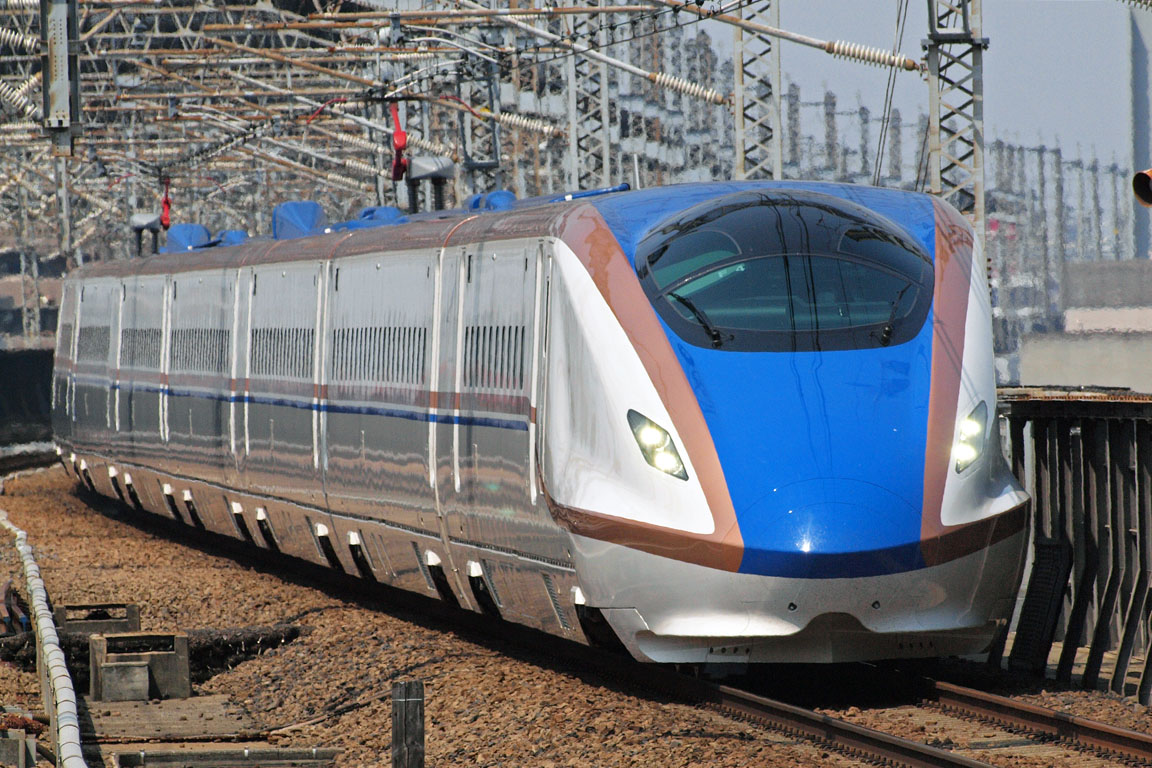
New E7 Series Shinkansen in service. Photo by Tokyo Sakura, CC by 2.0

New Shinkansen Line Opens between Nagano and Kanazawa

On Saturday, March 14, 2015 – the Saturday in March selected next year for all Japan Railway lines to carry out an across-the-board revision of their train timetables – Japan’s flagship bullet train system, or Shinkansen, branches out with the opening of a new extension between Nagano and Kanazawa. The current Nagano Shinkansen, operating between Tokyo and Nagano, will thus extend itself and be known as the Hokuriku Shinkansen. It is the first opening of a bullet train line since 2011, when the Kyushu Shinkansen link between Fukuoka and Yatsushiro became operational.

The bullet train opening will bring with it seven new stations in Nagano, Niigata, Toyama and Ishikawa prefectures.  The terminal city, Kanazawa, has preserved much of its heritage as the city was spared from World War II allied bombings. Its main attractions are Kenroku-en Garden, known as one of the Best Three Gardens in all of Japan, and Kanazawa Castle Park. Many other sites to visit in Kanazawa can be found on the official Kanazawa Tourism website.

The bullet train will also open in Toyama, a beautiful city whose prefecture is part of the Japanese Northern Alps. The new bullet train line will make the city a more important transfer point to the city of Takayama and the world heritage site of Shirakawa-go. Another station of interest to to tourists will be Kurobe-Unazukionsen. The station will connect to the private Toyama Chiho Railway for Unazuki Onsen, a small hot spring town. This town, however, is also the start of the Kurobe Gorge Railway, which winds its way around the mountains and the Kurobe Gorge, one of the deepest gorges in all of Japan, where the views of nature are stunning. It is only operational from May until November.

Currently, if you are traveling from Tokyo to Kanazawa, you have two options: Ride the Tokaido Shinkansen “Hikari” service to Maibara and change to the “Shirasagi” train for Kanazawa, or the Joetsu Shinkansen to Echigo-Yuzawa and change to the Hakutaka train. Both of these options take approximately 4 to 4 1/2 hours. However, the new bullet train on the Hokuriku Shinkansen will link Tokyo to Kanazawa in only 2 hours, 28 minutes on the fastest service! Tokyo to Toyama will only be two hours, compared to about 3 hours 20 minutes currently.

If you have the Japan Rail Pass, they have not made an official announcement about validity but I would presume that it would be valid for all trains on the new Hokuriku Shinkansen route. The route will have new trains with GranClass, a premium first class experience that is not fully covered by the Rail Pass (to experience GranClass you have to pay an additional fare, as the pass will just cover the basic fare).

And now for the train name lesson – there will be FOUR different kinds of trains operating on the route. These are:

Kagayaki (かがやき) – This is the fastest service that will make the fewest stops, primarily Tokyo, Omiya, Nagano and Toyama. Selected trains will also stop at Ueno, north of Tokyo station.
Hakutaka (はくたか) – This service will typically serve Tokyo, Ueno and Omiya then run express to Nagano. After Nagano it will make all local stops to Kanazawa. Selected trains will also make stops between Takasaki and Nagano.
Asama (あさま) – This service currently operates on the Nagano shinkansen route from Tokyo to Nagano, and will continue to operate between these two cities only making a mix of local and express stops.
Tsurugi (つるぎ) – This will be the new shinkansen shuttle service that runs throughout the day linking the cities of Toyama and Kanazawa only.

Note that when the Hokuriku Shinkansen opens, several JR lines will be changed over to new private railways, which has been a standard practice over the years. This includes the stretch between Kanazawa and Toyama. Limited Express trains from cities such as Osaka, Kyoto, Maibara and Nagoya will no longer operate between Kanazawa and Toyama, and so passengers (including Rail Pass holders) continuing to Toyama will have to change to the bullet train – primarily the Tsurugi, or whatever is available.

Also, since a few overnight trains from the Kansai region to Hokkaido will now run over private railways, Rail Pass holders will have to pay supplements for using non-JR track if using trains on these lines. Though in a few years, when the bullet train line from Tokyo is extended into Hokkaido, these overnight trains will probably cease to exist.

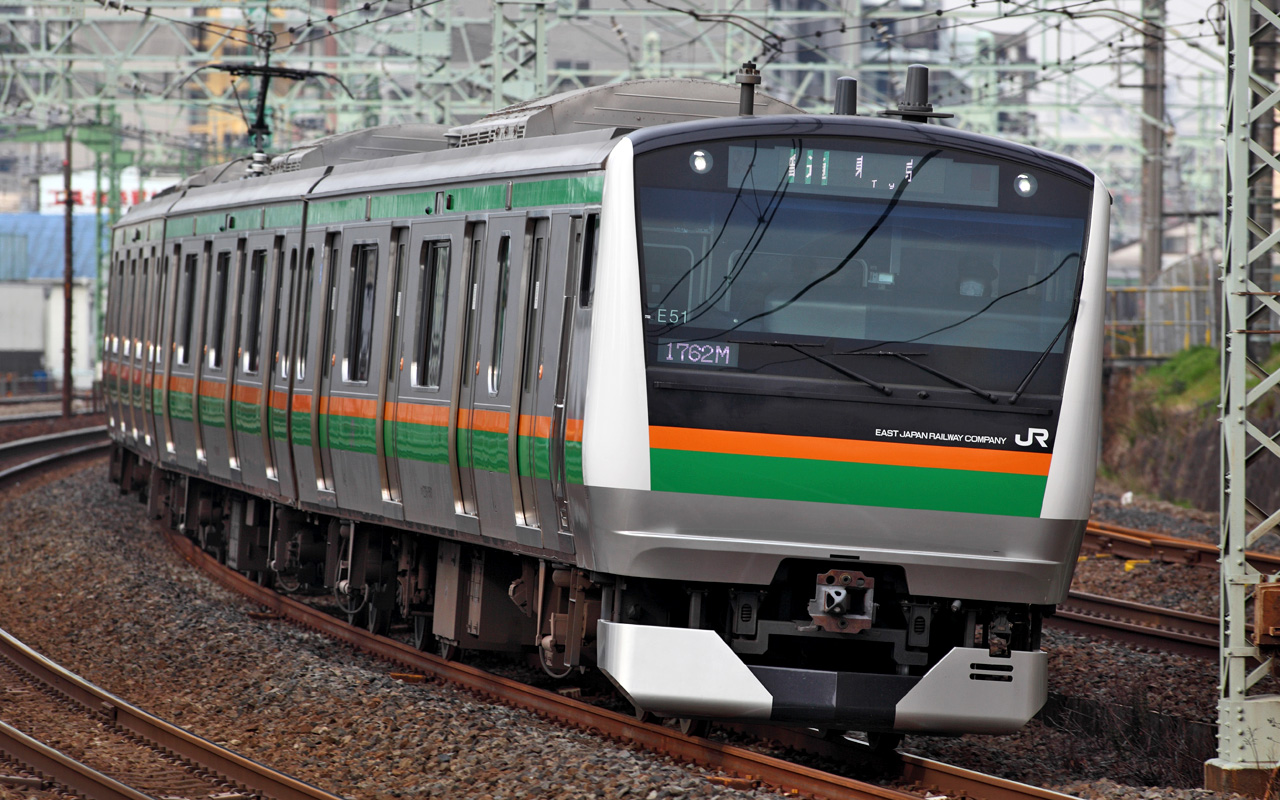
JR East E233-3000 train that will typically be seen on the new Ueno-Tokyo Line. Photo by Tennen-Gas, CC BY-SA 3.0

Ueno-Tokyo Through Line Opens

The second major development that is expected to dramatically improve transit within Tokyo is the opening of the Ueno-Tokyo Line. This line will connect local JR trains running from the northern and eastern parts of Tokyo to the Tokaido Main Line that runs south to Yokohama.

Why is this so significant? Many travelers who are traveling over these routes currently have to get off at Ueno, change to a loop line train like the Yamanote Line that goes to Tokyo, then change again to the Tokaido Line. This poses a capacity problem between Tokyo and Ueno, especially during rush hours. The opening of this line will mean no more transfers to the Yamanote Line will be necessary, meaning congestion should see a significant reduction. Ueno-Tokyo through trains will shorten travel times for passengers by a few minutes, which is important in a country where time is essential.

Many of the trains from the north and east that run into Tokyo will continue on to Shimbashi and Shinagawa. It looks like many trains will end at Shinagawa, with a few trains continuing on to Yokohama as well.

Those are some of the improvements that are coming to Japan Railways in March of 2015. Usually, all of the changes that will come with the national timetable revision will be announced by the JR rail companies in simultaneous press releases around mid-December.

Tokyo to Kyoto for $21… and other cheap ways to transit Japan

Thanks to everyone for reading this hobby blog of mine for the last few years. For some reason or another, everyone keeps reading and commenting on my post about traveling from Tokyo to Kyoto for 2,300 yen (under September 2014 exchange rates, about $21)… So because so many people are interested, here is a list of some ways that you can travel around Japan on the cheap!

– Bring a few friends to Japan and travel with the Seishun 18 Ticket 

If you bring a few friends, or know a few friends willing to travel around with you, the Seishun 18 Ticket – a travel ticket offered at certain times of the year – could be your best friend. Literally translated “Youth 18” and initially targeted to those traveling on school breaks, the Seishun 18 is actually offered to everyone. The ticket has gone up in price slightly this year because of the national tax rate hike, but it’s still a value at 11,850 yen per ticket. The ticket is valid for unlimited travel on LOCAL trains all around the Japan Railways network – this means, you cannot use the bullet trains, you cannot use premium “limited express” services that run on conventional railways (with one exception), and you cannot use most overnight trains. You can also use the ticket for the JR Ferry that runs to the island of Miyajima (typically a 180 yen trip).

It’s important to note that the ticket can only be purchased and used during school holidays. There are three periods of the year when the ticket is offered:

Spring: Purchase between February 20 and March 31 for use between March 1 and April 10
Summer: Purchase between July 1 and August 31 for use between July 20 and September 10
Winter: Purchase between December 1 and December 31 for use between December 10 and January 10

There are five “spaces” that are stamped by manned station staff every time the pass is used, with one space representing one person traveling in a single day (midnight to midnight). By maximizing the spaces used, you can save a considerable amount of money. If you are a solo traveler and chose to make five long trips in five days (which don’t have to be consecutive), each trip would cost only 2,370 yen! If you have four friends and make a long trip over the course of a day – such as Tokyo to Kyoto – each person pays only 2,370 yen! There are many combinations possible as far as usage – a group of four, for example, can travel a long distance in one day on the pass for 2,960 yen.

It’s important to do some research to see if the Seishun 18 is best for you. Long-distance journeys such as Tokyo to Kyoto or Osaka will pay off, but if you’re only doing a short trip from, say, Tokyo to Yokohama, it’s not worth it.

A few other notes: You are permitted unlimited stopovers on each day, and the price of the Seishun 18 is the same for children and adults – there are no discounts for kids.

– Buy a local ticket that allows stopovers

On any day of the year, buying a long-distance local ticket can save on per-day travel costs because under Japan Railways rules, the longer you travel from point-to-point, the longer you have to make the journey.

The rules are: Within a major Japanese city or for all journeys 100km or less, you have one day to make the trip, and in many cases stopovers are not allowed. From 101 to 200km, you have two days. From 201 to 400km, you have 3 days. For each additional 200km traveled you get one additional day.

To find out the distance of your trip, look it up on timetable search engines such as Hyperdia, being sure to clear the checkmarks on everything except “local train” and “Japan Railways” otherwise you will see a few bullet trains and airplanes!

A few examples:

Tokyo to Nagoya is 366km over the Tokaido Line at a cost of 6,260 yen. You can take the trip over a course of 3 days, so if you decide to stop and spend a night at two cities along the way you will be paying about 2,086 yen per day, and if you spend one night along the way it’s 3,130 yen per day.

Tokyo to Kyoto is 513km over the Tokaido Line at a cost of 8,210 yen. You can take the trip over 4 days! So, traveling over the course of 2 days splits the cost to 4,105 yen…. 3 days is 2,736 yen…. 4 days is 2,052 yen per day!

With this plan, you can direct the money saved on travel into reasonably-priced hotel accommodations along the way – many of which will be considerably cheaper compared to staying in larger cities. This will also allow you to enjoy more of Japan, including some areas that many foreign tourists will pass over.

You are allowed unlimited stopovers along the route that you are taking – it’s important not to stray from the route that you paid and are ticketed for, otherwise there may be a difference in fare. You’ll also want to know that since these are regular fares, there are discounts for children!

Also, major cities in Japan are designated into certain “zones”, and travel in between two major cities is sometimes designated as traveling from one zone to the other. For example, a trip from Tokyo to Osaka would be defined as the Tokyo ZONE to the Osaka ZONE. Stopovers are NOT allowed in zones of your origin or destination, but are permitted anywhere in between. Kyoto is close to Osaka, but since Kyoto has it’s own ZONE you could technically stop over in Kyoto on the trip from Tokyo to Osaka without any extra charge, as long as it’s within the days permitted to travel and, as mentioned earlier, you don’t stray away from the path ticketed. Once you stop anywhere in Osaka and get out of the system, the ticket is considered USED.

Please visit Takeshi’s JP Rail page which gives a lot of great information about this.

– Use the Japan Bus Pass for cheap trips on highway buses

The Willer Express Japan Bus Pass was introduced for foreign tourists in Japan a few years ago. At a cost of 10,000 yen for 3 days of bus travel and 15,000 yen for 5 days, you can make considerable savings over regular bus costs. There are many other bus operators in Japan, including those operated by branches of Japan railways, but the Willer web site allows reservations and bookings in English. Rather than go through a lot of the details, simply read my recent post about the Japan Bus Pass.

– Fly to Japan on a Star Alliance or oneworld airline and take advantage of domestic air passes for tourists

If you travel to Japan on a certain airline, you may qualify for an air pass for tourists. The Star Alliance Japan Airpass is valid for travel on All Nippon Airways (ANA) and can be used if you travel on Star Alliance airlines (including ANA, United, Air Canada, Air New Zealand, Lufthansa). The Oneworld Yokoso Japan pass is valid for travel on Japan Airlines (JAL) and can be used if you travel on oneworld airlines (including JAL, American, British Airways, Qantas).

For each pass, you can take between one and five trips by plane, with each trip costing just 10,000 yen plus tax. It’s a great and quick way to travel around several regions of Japan. You will always find flights from Tokyo’s Haneda Airport to Osaka’s Itami Airport as they continue to compete with the bullet train – but longer distance flights can pay off if you don’t have much time to spare – Tokyo to Fukuoka or Tokyo to Sapporo are great examples. Note though, that there ARE a number of blackout dates where these passes cannot be used.

If you do not qualify for these fares, i.e. by traveling on a different airline, both ANA and JAL offer regular tourist passes – up to 5 trips at a cost of 13-14,000 yen per trip. A minimum of two trips is required.

– Fly domestically on low cost airlines

Over the last few years, the low cost airline concept has boomed in Japan. A number of carriers are springing up offering tremendous fare discounts. Some of the top airlines that you can make reservations with in English include Skymark, Peach Aviation, Jetstar and Vanilla Air.

As these are low cost carriers, services and amenities are reduced compared to carriers JAL and ANA, and the airlines sometimes serve airports that are not close to the center of the city… but the airfares are sometimes hard to beat.

A random fare search for a weekday in November yielded these one-day fares:

Skymark: Tokyo Haneda to Sapporo for 8,500 yen
Peach Aviation: Tokyo Narita to Osaka Kansai for 3,390 yen … ?!?!
Jetstar Japan: Nagoya Centrair to Sapporo for 6,590 yen
Vanilla Air: Tokyo Narita to Okinawa for 8,200 yen

– Use a Japan Rail Pass

If you’ve got a limited amount of time and intend to visit a lot of places around the country, a Japan Rail Pass is still a great way to go around. You get unlimited travel on Japan Railways, and unlimited seat reservations on nearly ALL bullet trains and limited express services for 7, 14 or 21 consecutive days. Prices start at 29,110 yen for seven consecutive days of travel, or about 4,160 yen per day. The 14-day pass starts at around 3,300 yen per day, and if you do the 21-day pass it’s about 2,800 yen per day. Green class (first class) passes are higher.

– Use a Japan Rail Pass and stay on the cheap

Utilizing a Japan Rail Pass when traveling between major cities, you can make an intermediate stop at a small city along the way and potentially save with hotel rates that are cheaper than in major cities. For example, if you travel from Tokyo to Osaka by bullet train, you could opt to begin your travel in the evening and stop at one of the intermediate bullet train stations such as Hamamatsu. In Hamamatsu there are hotels where you could spend as little as 4,800 single occupancy or 6,800 yen double occupancy, complete with your own bed, bathroom and shower – then just move on the following morning to Kyoto and Osaka. (The quote is from the Toyoko Inn, a national chain of business hotels)

– RESEARCH!

The best way to save on your trip is with research. I’ve presented you with a few options, but these just scratch the surface. There are so many deals out there that one can take advantage of in Japan. The key is to price what you want to do (transit, food, lodging), and do price comparisons to see what is best for you.

Of course, if you ever need advice about your next trip to Japan, leave a message and I’ll be happy to reply when I can.

New Hotel Opening at Tokyo’s Haneda Airport International Terminal

Several news outlets in Japan are reporting the opening in a few days of a new hotel directly connected to the International terminal building at Tokyo’s Haneda Airport, and from the looks of it, the hotel may be of tremendous benefit to international travelers who arrive late in the evening or those who are transiting in Tokyo to other countries.

The new hotel is the Royal Park Hotel – The Haneda, part of the Royal Park’s oddly-named “THE” series of hotels. There are over 300 rooms in single, twin bed and suite configurations and the standard amenities. This will make this hotel an ideal location for those who land at Tokyo Haneda airport in the late evening hours when the availability of public transportation becomes sparse.

What is even more interesting, on the other hand, is that a small number of the hotel’s rooms have been designated to be in the *secure area* of the airport. I know of a few hotels like the one in the middle of DFW airport that has its own security entrance to the airport, but this hotel is the first I’ve ever heard of where some of the rooms are inside security! The secure area of Haneda’s International buildings will provide access to 17 bedrooms and eight rooms with showers. So if you plan to stay overnight at Haneda before continuing on to another country, you will be able to stay here – in the part of the hotel dubbed “Tokyo Transit” – without having to go through immigration formalities.

One thing that will have to be kept in mind is the price, as the price is in the high range for Tokyo accommodations. A random search for a weekday night in November yielded room rack rates of 15,000-23,000 yen, but there are discounts available for booking in advance… you just have to scroll down the site and tab to different pages to find the best rate. (There were 48 different “Stay plans” for the date I had selected!!)

With a location that benefits late-arriving International and International transit passengers, The Royal Park Hotel – The Haneda seems to be a promising option! No more TRAVEL WOES!