Autumn Fare Sale for flights from New York, Houston and Washington to Japan

One of the most difficult aspects – and one of the biggest expenses – of a trip to Japan is the airfare. Right now (April 14, 2014) the round-trip airfares from New York, for example, are a staggering $1,500 per person. So it helps to occasionally do some research to see if there are any good airfare deals.

I stumbled upon a few cheap airfares that are worth mentioning if you are interested in making plans to visit Japan in the fall.

First is a fare sale that Air China (Star Alliance carrier) is having on its flights to Beijing from Houston-Intercontinental and Washington-Dulles, which then extends to connecting flights operating out of Beijing to Tokyo and Osaka. I am guessing these fares are on sale because they are relatively new air routes. If you don’t mind a longer trip (18-19 hours or so each way) and an evening arrival in Japan then you may want to look at what they are offering.

The second cheap airfare is something I’ve mentioned before – it’s the service from China Airlines (Skyteam carrier) that operates from New York-JFK nonstop to Osaka-Kansai three times a week, as part of its route that continues to Taiwan. While Air China also offers a similar fare sale from New York to Tokyo and Osaka via Beijing, China Airlines’ nonstop to Osaka is, in my opinion, the better and less time consuming deal.

Before continuing, a reminder that these airfares were researched independently by myself on April 14, 2014 and the expiration date for sales is not known. Information provided is for use at your own risk and subject to the Jose’s Japan Tips Disclaimer.

NEW YORK TO OSAKA KANSAI (Nonstop on China Airlines)
$1,111 round/trip including taxes and fees.
The fare is valid for outbound travel from September 15 through November 22 and requires a minimum stay of 6 nights in Japan. Maximum stay is 30 days or returning on November 29, 2014, whichever is sooner. Travel between New York and Osaka operates on Mondays, Thursdays and Saturdays in both directions. There is a free checked baggage allowance of two bags per person.

HOUSTON TO TOKYO HANEDA/NARITA (via Beijing on Air China)
$909 round/trip including taxes and fees.
As the Houston to Beijing flight is a redeye (leaving 1 AM and arriving 4:50 AM), you can choose a flight to either Haneda or Narita airport. The flight to Haneda is recommended since it arrives one hour sooner than the flight to Narita (12:50 PM vs 1:55 PM), and because Haneda is closer to Tokyo than Narita.

HOUSTON TO OSAKA KANSAI (via Beijing on Air China)
$913 round/trip including taxes and fees.

WASHINGTON, DC TO TOKYO HANEDA/NARITA (via Beijing on Air China)
$1,051 round/trip including taxes and fees.
The flight from Washington requires an overnight layover in Beijing, yielding an arrival in Japan two days later. You can choose a connecting flight to either Haneda or Narita airport. The flight to Haneda is recommended since it arrives one hour sooner than the flight to Narita (12:50 PM vs 1:55 PM), and because Haneda is closer to Tokyo than Narita. On the return trip the layover in Beijing is only 1 1/2 hours.

WASHINGTON, DC TO OSAKA KANSAI (via Beijing on Air China)
$1,054 round/trip including taxes and fees.

All of the AIR CHINA FLIGHTS are valid for outbound travel from September 5 through December 8, with a few blackout dates (more from Washington than Houston). The maximum stay is 30 days or returning on December 31, 2014, whichever is sooner. With Air China there is a free checked baggage allowance of two bags per person.

No matter how long your layover, Beijing has a transit visa waiver for passengers staying in the airport and connecting to another flight within 24 hours. When transiting in Beijing you will have to go through border inspection for your transfer, followed by a security checkpoint.

There is also a 72-hour transit visa waiver for citizens of over 50 countries, including the US and Canada, who stop and sightsee in Beijing en route to a destination outside of China.

Of course, if you live on the West Coast of the US, the flights are pretty competitive, with nonstop flights in the fall – particularly on ANA, as well as Singapore from Los Angeles – going for about $1,000 round/trip. 🙂

I hope this information helps you if you decide to go and experience the wonderful country of Japan in a few months!

Suica & N’EX package for tourists to be retired on April 1st

A note to foreign travelers to Japan that JR East’s “Suica & N’EX” package that had been sold for the last few years will be discontinued on April 1st, with the final sales taking place on March 31st. The “Suica and N’EX” package allowed tourists to travel on the Narita Express from Narita Airport to Tokyo and receive a SUICA card for travel around the Tokyo area at a reduced fare. One-way and round trip packages, as well as standard and green (first) class accommodations were all available. However, JR East has decided to retire this option. My guess is either due to low use or because of the pending increase in the consumption (aka sales) tax in Japan.

In any case, JR East is now pushing it’s one-way “N’EX Tokyo Direct Ticket” which is a flat 1,500 yen fare in standard class from Narita Airport to stations in Tokyo. The new package does not include a Suica card, does not include a round-trip (the return fare has to be paid in full), and does not include Green Car accommodation (which also has to be paid in full).

More details on the JR East Web Site: http://www.jreast.co.jp/e/pass/nex_oneway.html

Tokyo to Kyoto for only 2,300 Yen!?

For more up-to-date information, please read the September 2014 post Tokyo to Kyoto for $21… and other cheap ways to transit Japan

I’d like to take an opportunity to thank those of you who are reading my blog. I’m happy to share my thoughts about Japan travel and assist people in any way that I can!

My most popular post on this blog is how to travel from Tokyo to Kyoto for just 2,300 yen. That post was written back in 2009, so I think it’s time for me to update this information to reflect current events.

Without question, Tokyo and Kyoto are THE two destinations that should be included if you are intent on visiting Japan for the very first time. Of course, Tokyo and Kyoto are separated by some 231 miles (372 km) if you were to draw a straight line.

Between Tokyo and Kyoto, the two major methods of public transportation are the train and the highway bus. (You might also add air, if continuing to Osaka, but this article will focus on the first two methods of transit.)

So how much will you pay for a ride between Tokyo and Kyoto? This article breaks down the various bus and train options by price.

Obviously if you have a Japan Rail Pass then this question is moot; simply use your rail pass (Hikari or Kodama only) to make the journey.

But if you do not have a Japan Rail Pass, then you’ll want to examine the prices carefully to see what fits your budget. Note that the prices listed here are rounded to the nearest 100 yen, and are subject to change, including a variance of a few hundred yen either way depending on the time of the year.

18,200 yen: For this price you will get a reserved first-class seat (called the “Green Car”) in the premium Nozomi service. You may expect to be personally greeted by a Green Car attendant as you enter the train, and the attendant will check your ticket. Hot towel service is provided and you can order food and drinks on board. The seats are wide and comfortable, and the lighting is noticeably softer than in the other seating areas.

13,300 yen: For this price you will get a reserved standard-class seat in the premium Nozomi service. You sit in the standard bullet train seats, and food and drinks are sold on board. In these first two instances the travel time from Tokyo to Kyoto is 2 hours, 20 minutes.

Running about 500 or 600 yen cheaper than the above prices are the respective surcharges for travel on the Hikari and Kodama services, which are slower than the premium Nozomi because they make more stops. In the Hikari service, hot towel service is provided in the Green Car, but you are not “greeted” as you board. There is no “greeting” or hot towel service in Kodama trains, and as of 2013, there is no food or drink service on board Kodamas either. Hikari trains make the run to Kyoto in 2 hours, 45 minutes; Kodamas, which stop at EVERY station, take 3 hours, 45 minutes.

My recommendation if you’re purchasing tickets “a la carte” is to spend the extra 500-600 yen and take the Nozomi. There are more Nozomi trains than the others and it is the fastest way to get from Tokyo to Kyoto. Fall back only to the Hikari (and worst case, Kodama) if the Nozomi sells out.

9,800 yen: You can make a cheap trip aboard the bullet train at this price, but it is strange why it’s only marketed to Japanese travelers. I haven’t tried this, but I have read reports of other foreign travelers that have used this method successfully. For 9,800 yen you can purchase a “Puratto Kodama Ticket”, which is a discounted one-way ticket on the Kodama (the slowest bullet train service). You must make a reservation at least one day in advance at a JR Tours office located at a station served by the Shinkansen, i.e. Tokyo or Shinagawa in Tokyo, or at Kyoto station. The JR Tours office is operated by JR Central, and is recognizable by their orange colors. As a bonus, when you purchase this ticket you are entitled to one free drink – since food and drinks are no longer sold on board Kodama services, you pick one up at the train station before getting on. The “Puratto Kodama Ticket” is also available in the Green Car for 11,300 yen. The prices go up during times of high demand. If you get stumped, you can visit the website for the Puratto Kodama Ticket (http://www.jrtours.co.jp/kodama/), print the page and show it when you want to purchase your ticket.

8,000 yen: At this price you can make a journey on local JR trains from Tokyo to Kyoto, via the Tokaido Main Line.  You will be sitting in regular commuter trains and will have to change trains frequently along the way. On the other hand you’ll be passing through the rural and urban Japanese landscape, getting a better and closer look at areas that the bullet train will just whiz through. Connection times can range anywhere from 2 to 20 minutes for each train that you take. The travel time is approximately nine hours – but that doesn’t figure in the time that you might need for pit stops or a meal.

Extra Tip (Added 6/9/13): As pointed out on the Rocketnews blog, regular tickets allow you to hop on and off as many times as you like within a certain time period, as long as your ticketed journey is at least 200 kilometers. If your journey is between 200 and 400 kilometers you can complete your trip in a two-day period. You gain an extra day of travel for every additional 200 kilometers. Since the route from Tokyo to Kyoto via the Tokaido Line is 513.6 kilometers, you have up to three days to make the journey… you’ll have to stop along the way once or twice to rest (Nagoya makes a nice destination for a few nights) but if you factor only the trains this will make the travel cost 2,660 yen per day.

7,000 yen: For this price you can travel overnight between Tokyo and Kyoto by bus. There are many bus operators between Tokyo and Kyoto, and JR is one of them – bus tickets can be reserved at several channels, including green ticket windows at major JR train stations. On their “Dream” service, which is their standard overnight bus service, you are entitled to a comfortable reclining seat with head and foot rests on a double-decker bus that is configured in a 1 x 1 x 1 configuration; in other words you will have no other passengers directly next to you – you’ll either have an aisle or window. There are also blankets and slippers at your seat, and a toilet is on the first floor of the bus. The price is valid for weekday travel; add about 1,000 yen or so for weekend or holiday travel. An advance purchase of 5 days lobs 1,000 yen OFF of the price. Travel time is 7 1/2 hours from Tokyo Station; buses also run from Shinjuku Station on a different route, taking eight hours. A bus also operates from Tokyo Station restricted to female travelers.

6,000 yen: At this price you can use the same buses described above for a DAYTIME journey between Tokyo and Kyoto. The trip takes eight hours and the bus makes several stops along the way, including a few stops at service areas. There is a discount of 1,000 yen for a 5-day advance purchase. The price does not change depending on the day of the week or whether or not it’s a holiday.

5,000 yen: This is the price for a bus trip from Tokyo to Kyoto on the “Seishun Dream”, translated as “Youth Dream”. It is discounted because it offers less amenities than the regular bus service. Seats are configured 2×2, just like you’d find on a North American Greyhound bus. Seats offer recline, and there is a toilet on board. Regardless of time of day or holiday, the price is 5,000 yen with a 500 yen discount for a 5-day advance purchase. Travel times are similar to the other bus services.

2,300 yen: At last, the price tag of 2,300 yen. Is it possible to travel from Tokyo to Kyoto at such a low price?? Indeed, it IS possible, but as the old saying goes, “Certain restrictions apply.”

The rules are as follows: First, you must travel to and within Japan during one of the country’s three designated school holiday periods: March 1 – April 10, July 20 – September 10, and December 10 – January 20.

Secondly, you must travel with four other people… either four of your friends who want to go to Japan, or four Japanese friends, etc… finding the four people to go with you is your choice, and of course, your responsibility.

Finally, one person must purchase a ticket sold DURING the school holiday periods, called the “Seishun 18 Ticket”. This ticket sells for 11,500 yen and allows for unlimited travel on JR’s LOCAL TRAINS only: NO BULLET TRAINS!

The Seishun 18 Ticket essentially has five “SPACES” that can be used. Each space is good for one person on one day. So one person could use it for five separate days within the validity of the ticket. Or two people could use it together for two days, etc.

Indeed, FIVE people can use the seishun 18 ticket on a single day, as long as travel is completed by 12 midnight. What a cheap way to travel! Simply purchase the ticket, and make sure everyone stays together. As you go into the system, your ticket is stamped five times. So all five of you are set for the journey.

As mentioned above, you will travel on local trains only – no bullet trains. The travel time is about 9 hours, not accounting for pit stops or meal stops. But here’s a good thing: with the Seishun 18 ticket, if you all stay together, you can exit the system at any station and return to the system on the same day – just show your stamped ticket. With this in mind, perhaps you can exit the system at a major train station – say for example, Odawara, Shizuoka, Hamamatsu, Toyohashi or Nagoya – and head into a restaurant within the station, or enjoy some treats within the floors of a Japanese department store.

This 2,300 yen plan also works for other long-haul trips such as Tokyo to Nagoya or Tokyo to Osaka. The ticket price of 11,500 yen, divided by five, equals 2,300 yen. Even if four or three were to take the trip, the trip breaks down to 2,875 yen or 3,830 yen per person respectively – which can very well be a TREMENDOUS savings compared to standard train prices, or even bus prices.

My motto when it comes to Japan travel: always research as much as possible about your trip. This way it will make your trip much more enjoyable when it happens – not to mention it MAY just be a little lighter on the wallet!

With that, here is an idea that someone could use to travel from Tokyo to Kyoto by local JR trains. This itinerary assumes a regular weekday in May of 2013, leaving at 6:30 in the morning – just as the morning rush begins to ramp up.

Train 1: Tokyo-Numazu
Leave Tokyo at 6:34 (Platform 8)
Leave Shinagawa at 6:43
Leave Yokohama at 7:00
Arrive Odawara at 7:57
Arrive Atami at 8:20
Arrive Numazu at 8:39

From other parts of Tokyo, you can take the JR Yamanote Line to Shinagawa and change to the above train. These Yamanote Line departures will give you about 10 minutes to transfer at Shinagawa:
Ikebukuro: 6:05
Shinjuku: 6:13
Shibuya: 6:20
Ueno: 6:12 (Keihin-Tohoku Line)

Train 2: Numazu-Shizuoka
Leave Numazu at 8:42
Arrive Fuji at 9:01
Arrive Shizuoka at 9:36

Stay in Shizuoka one hour for a bathroom and meal break.

Train 3: Shizuoka-Hamamatsu
Leave Shizuoka at 10:42
Arrive Hamamatsu at 11:51

Train 4: Hamamatsu-Toyohashi
Leave Hamamatsu at 12:02
Arrive Toyohashi at 12:36

Train 5: Toyohashi-Nagoya (Special Rapid Train)
Leave Toyohashi at 12:51
Arrive Nagoya at 13:41

Stay in Nagoya one hour for a bathroom and meal break.

Train 6: Nagoya-Ogaki (Special Rapid Train)
Leave Nagoya at 14:45
Arrive Ogaki at 15:16

Train 7: Ogaki-Maibara
Leave Ogaki at 15:37
Arrive Maibara at 16:12

Train 8: Maibara-Kyoto (Special Rapid Train)
Leave Maibara at 16:18
Arrive Kyoto at 17:12
(Train continues to Osaka at 17:43, Sannomiya/Kobe at 18:06, Himeji at 18:47)

The total travel time from Tokyo, including breaks, is approximately 10 1/2 hours. Of course, you can tailor the breaks/rests to suit your needs.

I’m going back to Japan!

Welcome to the occasional update of my Japan Tips blog, this one starting with wonderful news!

My girlfriend and I have booked our air tickets to Japan for this September! It is the third trip for me, and the first trip for her. We are both excited about the opportunity, and I hope to perhaps provide regular updates here as best I can during the trip.

We’ve decided – since the airfare would be a difference of only $10 – to do an OPEN JAW itinerary. We will land in Nagoya, Japan (one of Japan’s newest International airports) and then fly out of Tokyo Narita about two weeks later. We’ll spend the first few days around Kansai, mostly Kyoto, and then move on to Tokyo from there. We’ve got a lot to plan out… how to go about, what to do, and most importantly, who to see (we have a lot of friends living in Japan!)

There’s still 4+ months to decide, of course…

So there is good news, and unfortunately some sad news, which I will point out in another post shortly… and here it is.

Odakyu’s new English travel website highly recommended

If you are interested in making a day trip out of Tokyo to some great destinations, a great method of doing so is by the private Odakyu railway. With trains mostly running out of Shinjuku station, Odakyu trains serve the hot springs of Hakone and the seaside of Enoshima. Some trains also connect to the city of Gotemba, which is home to a large outlet shopping mall, and trains also go out to  a residential and retailing district called “Tama New Town”.

One of the keys to inviting foreigners to utilize the services of Japanese companies – whether it be a hotel, a restaurant, or travel – is to have a good foreign language website. I believe that the Odakyu Railway has done just that with the upgrade of their new multi-language Odakyu web site, which occurred this month. The website for the English version is at www.odakyu.jp/english ; they also have the new website in Korean and two Chinese languages.

Screenshot of the new Odakyu English web site.

The new slogan for the Odakyu Railway is “Odakyu Has A Japan”, and the new website shows this perfectly. Here are some of the great features of the website:

HOW TO PURCHASE A TICKET: The website shows how you can purchase any Odakyu ticket from one of their vending machines. Most Odakyu ticket vending machines have an English option. You can purchase a standard ticket, a ticket for their premium “Romancecar” trains, and even purchase an Odakyu Free Pass for unlimited travel in whatever region you are visiting. My favorite part is the one that shows you how to snare the lucrative window seats – either seats facing towards the front or towards the rear – on the trains where the driver sits in the high cab. These are great seats for a panoramic view of all of the action – and it’s available at no extra charge.

HOW TO NAVIGATE SHINJUKU STATION: Shinjuku Station is recognized by Guinness as the busiest train station in the world, with over 3 million people using it every day. It is also a place where one can easily get lost if not paying attention. Odakyu’s website shows you how to get around Shinjuku Station and how to access the Odakyu Railway from other train lines serving the station.

HOW TO TAKE TRAINS: The new Odakyu website gives a detailed description of each of its train services, from Romance Car to regular commuter trains, Express to Local and everything in between. It also shows you how to travel on these trains and the manners you should follow as well.

ODAKYU RAIL PASSES: This gives you a breakdown of all of the Odakyu Rail Passes that can be purchased, and the areas covered.

SIGHTSEEING GUIDE AND ITINERARIES: A comprehensive review of the major destinations served by the Odakyu Trains, and suggested day trip courses are provided. Interestingly enough, one of the reviews provided is of Shinjuku. A hint: Each of the major destinations served by Odakyu is accompanied by a brief video presentation (linked to YouTube). Maximize your screen and get ready to enjoy sneak peeks at what is in store for you.

With all of the positive enthusiasm of my post, you might think that Odakyu was behind this posting. Trust me, Odakyu has nothing to do with it. I am just amazed at how much information is available on the new website in a way that is very easy to understand. I highly recommend using the website if you are considering future trips to Tokyo, especially since using Odakyu trains tend to be on the cheap side, compared to the Japan Railways which will be more expensive.

One more note on this subject: Once you are in Japan, feel free to visit the Odakyu Sightseeing Service Centers located at the major stations, including Shinjuku. They have staff in English that can answer your questions about travel on Odakyu, sell you rail passes and sell you tickets on the Romancecar trains.

Now that I have sung the praises of Odakyu, here is a breakdown of some of their most popular rail passes.

HAKONE FREE PASS: Most tourists to Japan will probably take advantage of this pass. The Hakone Free Pass is a benefit when visiting the Hakone region, famous for its hot springs and history, not to mention its close proximity to Mount Fuji. The pass is available in 2-day consecutive and 3-day consecutive versions and includes unlimited transportation of Odakyu trains between Odawara and Hakone-Yumoto, most trains, trams, cable cars and buses that serve the area,  and the primary sightseeing ship that crosses Lake Ashi. I might have already written more about the Hakone Round Trip Course somewhere in my blog… AHA! Here it is. If you’d like more information about Hakone, please read that post. The pass also includes discounts at many shops located in the Hakone region – whichever shows the Hakone Free Pass logo on the store front will offer some sort of discount to you.

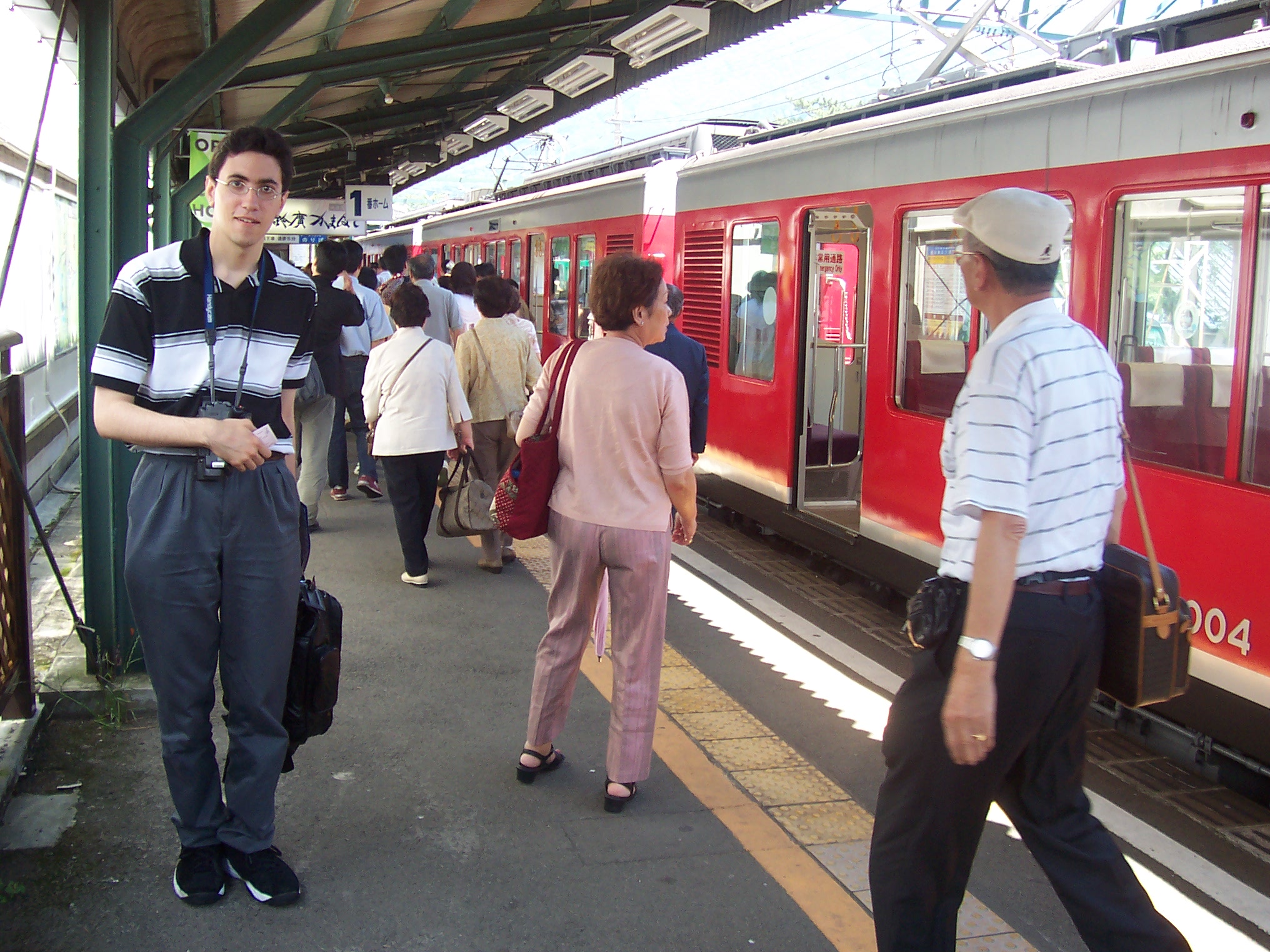
Jose stands next to the Hakone Tozan train in Gora. Photo by Jose Ramos, June 2004

The Hakone Free Pass for adults starting from Odawara costs 3,900 yen for 2 consecutive days, and 4,400 yen for 3 consecutive days. The pass from Shinjuku station costs 5,000 yen for 2 days and 5,500 yen for 3 days. The difference is that the pass that starts from Shinjuku includes ONE round-trip on the Odakyu Railway’s standard commuter services between Shinjuku and Odawara.

A trip from Shinjuku to Hakone-Yumoto on standard Odakyu trains takes about 2 hours or so, and you will need to change trains at Odawara one way or the other. On the other hand, a trip on the premium Romancecar service is 20-30 minutes faster, not to mention it’s easier and more relaxing with reserved seating, wagon cart or vending machine service on most trains, and if you’re lucky – as I mentioned earlier – a wide view of all of the action from the front of the train.  A trip on the Romancecar is NOT INCLUDED in this pass or ANY Odakyu Rail Pass – you will need to pay the surcharge in addition to the pass. For a trip between Shinjuku and Hakone-Yumoto, the surcharge is 870 yen per person each way.

There is also an option to start your trip from Odawara. When to consider this? Simply put, if you have a Japan Rail Pass… with your Japan Rail Pass you can access Odawara – which is also a Japan Railways station – at no charge before proceeding to Hakone-Yumoto. Here’s a thought – Odawara is also a bullet train stop, so you can use a twice-hourly Kodama service from Tokyo or Shinagawa and reach Odawara in no time… only 27 minutes from Shinagawa, normally costing around 3,400 yen or so on its own, and at no charge if you use a Japan Rail Pass. What’s more, if you wanted to you could travel from Tokyo to Odawara by bullet train, do your trip in Hakone with the Free Pass, then when the day is done return to Odawara and continue right on using the bullet train… in the evenings you can leave Odawara on a Kodama, change trains along the way and be in Kyoto in just three hours!

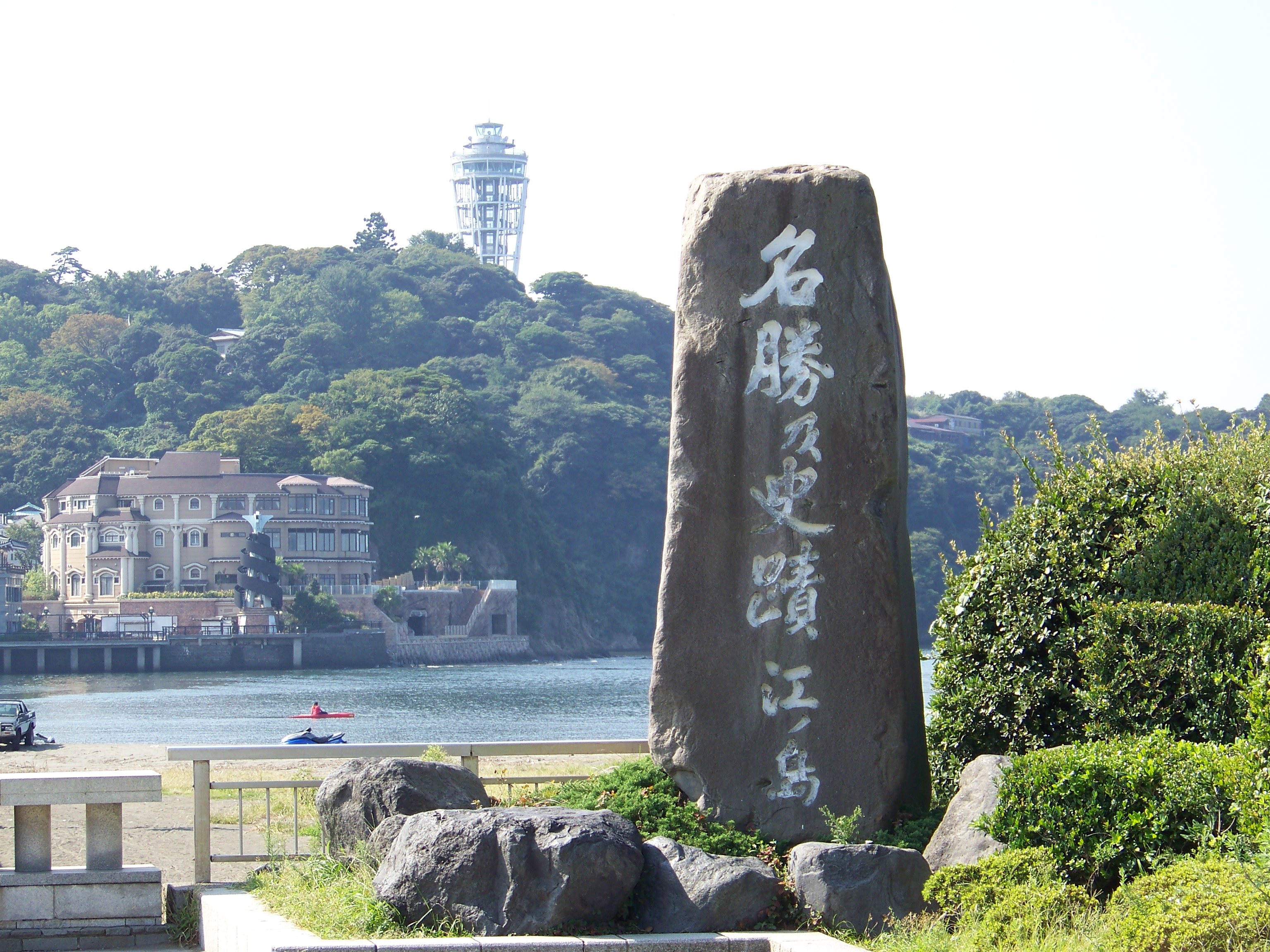
The entrance to Enoshima island is prefaced with this stone marker. Photo by Jose Ramos, October 2008

ENOSHIMA ONE-DAY PASSPORT: For those wanting to explore the island of Enoshima and the seaside, this one day pass is an option. Selling for 1,940 yen per adult from Shinjuku station, it includes ONE round-trip from Shinjuku to Fujisawa, unlimited Odakyu train travel on the short line running from Fujisawa to Katase-Enoshima (the station on Enoshima closest to the seashore), and admission to Enoshima island’s main attractions, including the Enoshima ESCAR (a series of three escalators that help you get up the island without having to tire your legs walking up regular steps), the Enoshima lighthouse and observatory, and the Samuel Cocking Garden (named for a British merchant who used the location in the late 1800’s for his tropical plant collection). It also includes discounted admission to Enoshima Aquarium.

The Romancecar charge is 600 yen per adult each way. Note that on Weekdays the Romancecar trips are very limited – for example, there is only ONE morning Romancecar trip to Enoshima, departing towards the end of rush hour. On weekends however, there’s a train every one or two hours. The Romancecar gets you from Shinjuku to Enoshima in 60-70 minutes, while commuter trains take 80-90 minutes.

A short walk inland from the shore brings you to the Enoshima Tramway, or ENODEN. This tramway connects to another important destination of religious significance, Kamakura, home to one of Japan’s largest Buddhist statues and the country’s largest Shinto shrine. The Enoshima One-Day Passport does not include any of these destinations; for this you will need:

ENOSHIMA-KAMAKURA FREE PASS: This one day pass costs 1,430 yen from Shinjuku Station and includes ONE Odakyu round-trip from Shinjuku to Fujisawa (Romancecar extra), unlimited Odakyu train travel on the short line running from Fujisawa to Katase-Enoshima, and the entirety of the ENODEN from Fujisawa to Enoshima and Kamakura. Unlike the Enoshima One Day Passport, this free pass does not include admission to the attractions on Enoshima described above, but you can get a discount on those same attractions.

Using this Free Pass you can get off from the ENODEN at Hase and visit the great Buddha of Kamakura (10 minute walk), where many Buddhist worshipers come to pray. At the end of the line in Kamakura, walk 10 minutes to Tsurugaoka Hachimangu Shrine, the largest Shinto shrine in Japan.

Odakyu offers other travel passes, some exclusively to foreigners, including: the Fuji Hakone Pass which combines a trip to Hakone with a visit to Lake Kawaguchi and the foot of Mount Fuji, the Ito-Kanko pass and Minami-Izu pass for visiting the Izu peninsula, home to one of Japan’s famous hot spring areas, and a pass that includes travel and admission to some of Hakone’s favorite hot spring spas. More details about these passes can be found on the Odakyu website.

Tokyo Yesterday and Today – a NEW One-day sightseeing tour

Happy New Year everyone!

Today I am revisiting one of my classic Tokyo day tour itineraries – Classic Tokyo, Modern Tokyo – and giving it a new look for 2013. My first itinerary, Classic Tokyo, Modern Tokyo, is based on the events of my first trip in 2004 and it is still available here on this blog for those who would like to use it.

The new itinerary – Tokyo Yesterday and Today – keeps some of the elements of the original itinerary. In the tour you will visit:

Rikugien Garden
Sensoji Temple
Tokyo Sky Tree
Odaiba

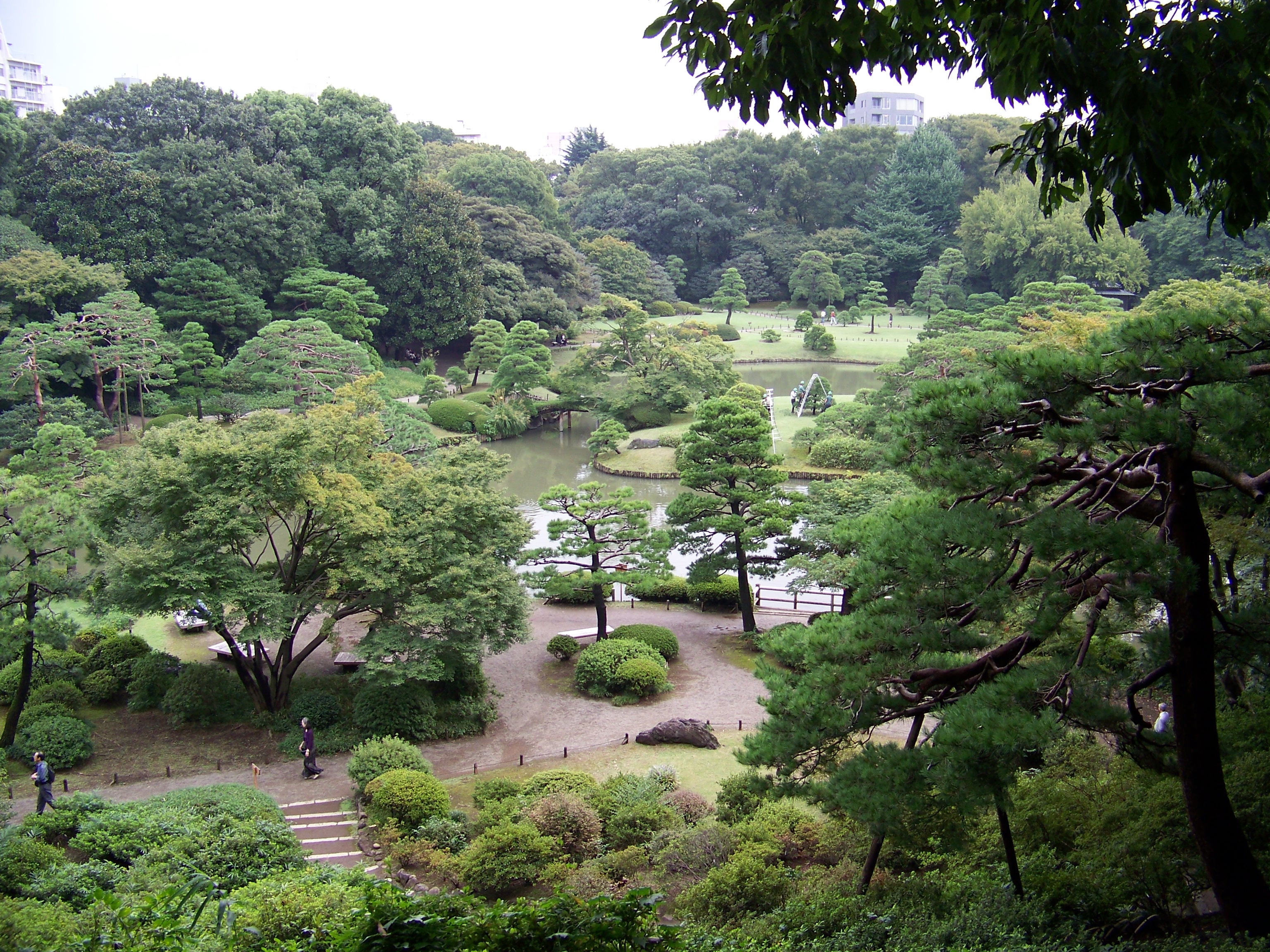
Overview of Rikugien Garden. Photo by Jose Ramos, October 2008.

RIKUGIEN GARDEN: This was one of my first destinations in my 2008 trip. Rikugien is open every day except during the New Year’s holidays (December 29-January 1) for a fee of 300 yen. It opens at 9 AM, and to make full use of the day I suggest arriving here between 9 and 10. Of course, if you fear the rush hour crowds then you can aim for the later arrival.

You will be impressed by its appearance and landscape, as I was during my visit. An example of old Edo-style Japanese gardens, this location – which has been designated by the Japanese government as “A special place of scenic beauty” – is an excellent way to start your day.

Kaminari-mon gate at Sensoji temple. Photo by Wikipedia user 663highland, released under CC-BY-SA.

SENSOJI TEMPLE: Located in Asakusa, Sensoji temple is the oldest buddhist temple in Japan. The recommended method of approaching the temple is via Nakamise-dori, the large shopping arcade lined with various specialty and food shops. The entrance to Nakamise-dori is the large Kaminari-mon gate, marked with a gigantic red lantern. It should be noted that most of the grounds were destroyed in World War II and rebuilt.

If you do not like large crowds, Sensoji should be avoided during Sanja Matsuri, the annual festival held on one of the weekends in May. But if you do like large festivals, then by all means join the 2 million people that visit Sensoji during this time.

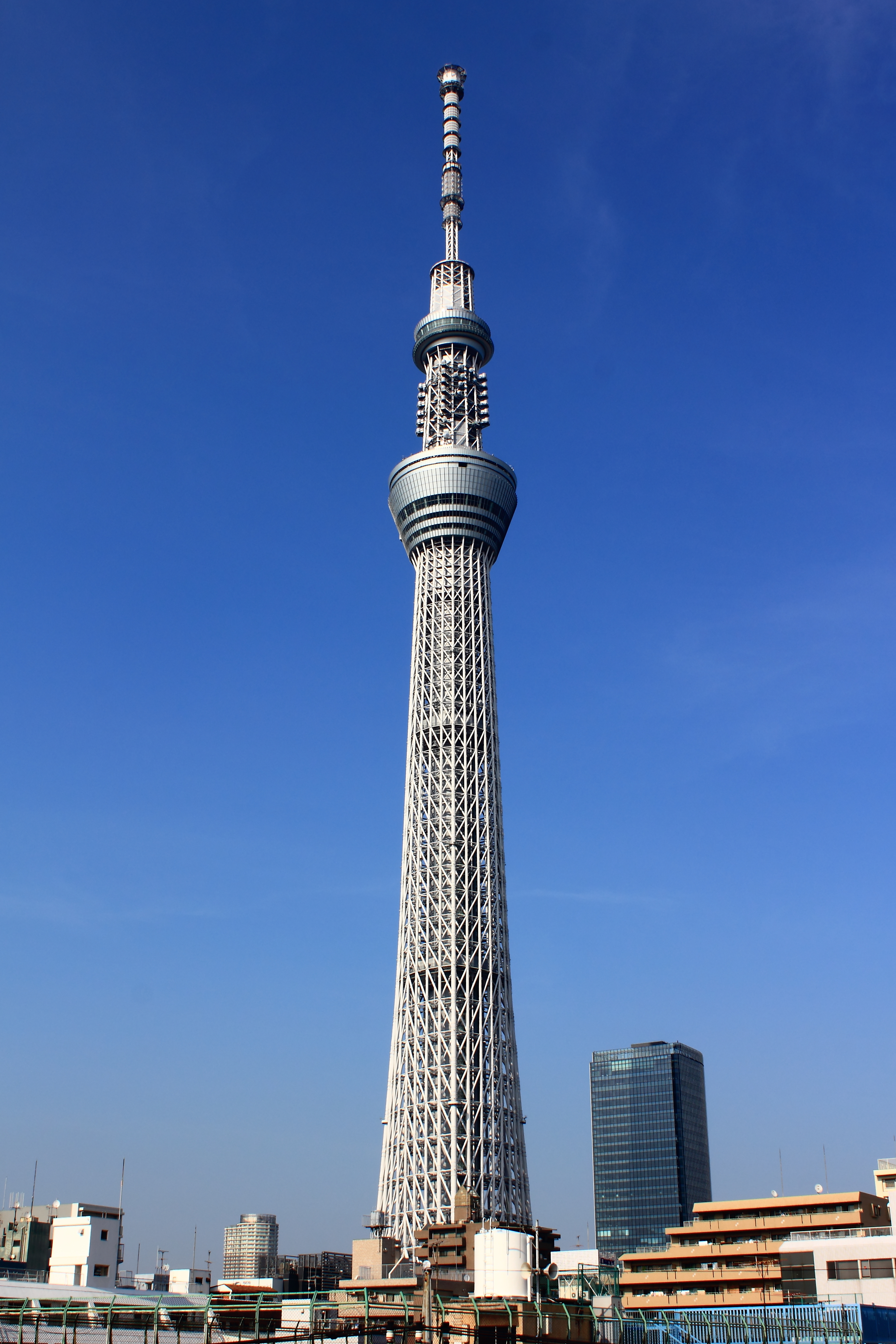
TOKYO SKYTREE: Undoubtedly the newest shining star of Tokyo and of all Japan, the Tokyo Skytree is the world’s tallest communications tower and the second tallest structure in the world, stretching at a height of 2,080 feet.

The new Skytree structure just goes to show how much time has passed since my last visit to Japan. It had barely begun construction in October 2008 – by May 2012 it had opened to the public.

There are two levels of observation decks – it costs 2,000 yen to access the main deck and an additional 1,000 yen to reach the upper deck. There is also a 500 yen charge if you want to access the tower at a specific time.

The Skytree highlights a brand new retail complex, which makes an excellent place for a bite to eat, either before or after your trip up the tower.

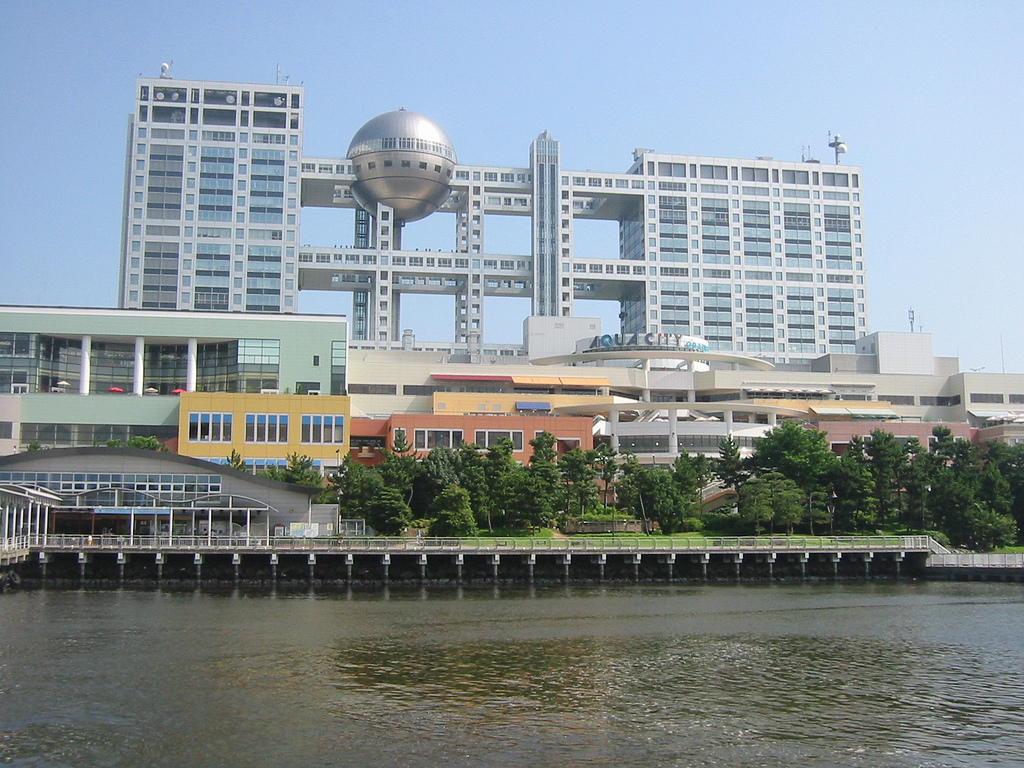
Fuji Television Building and Aqua City in Odaiba. Photo by Wikipedia user Andrew Green, released under CC-BY-2.0

ODAIBA: Spend the remainder of the day in Odaiba, a series of man made islands that went from the defenses of the Tokugawa Shogunate in the mid 1800’s into the leisure and tourist zone that it is today.

The best approach to Odaiba is via the Rainbow Bridge, completed in 1993. The rail connection over the bridge is the Yurikamome (ゆりかもめ) , which makes a dramatic 270-degree right turn on the approach to the bridge from the mainland side.

One of the main attractions here is the Fuji TV Building. But one of the more interesting ones is the Toyota pavilion, which can be reached by getting off the Yurikamome at the first stop, Odaiba Kaihin-Koen (お台場海浜公園), then taking a nice walk on the bridge across the expressway. Eventually you will come upon the complex, a part of Palette Town, which includes Toyota, as well as a Lawson convenience store. Inside the Toyota pavilion you can test-drive new Toyota vehicles if you have an international drivers license, or simply push a button and have automated elevators and conveyors present a vehicle to you. The other end of the Yurikamome is on the other side of the complex; board it here with your Suica or PASMO card and take it a few stops to Daiba (台場) to access the Fuji building.

The Tokyo Teleport station (東京テレポート) of the Tokyo Waterfront Railway, aka Rinkai Line, is located within the vicinity of the Fuji building.

**

Tokyo Sky Tree, the world's tallest communications tower. Photo by Wikipedia user Kakidai, released under CC BY-SA 3.0
Tokyo Sky Tree, the world’s tallest communications tower. Photo by Wikipedia user Kakidai, released under CC BY-SA 3.0

There you have it! Two landscapes of yesterday, and two landscapes of today, combined into a wonderful whirlwind tour that you can enjoy.

Now let’s figure out how to get around:

Rikugien is located near Komagome station, served by the JR Yamanote Line (the green loop that circles Tokyo on the maps) and the Namboku subway line of the Tokyo Metro. From the Yamanote Line’s main stations, here is the approximate travel time and cost:

Tokyo Station – 17 minutes, 160 yen
Ueno Station – 10 minutes, 150 yen
Ikebukuro Station – 6 minutes, 150 yen
Shinjuku Station – 15 minutes, 160 yen
Shinagawa Station – 28 minutes (via Tokyo), 250 yen

From Komagome, Rikugien is a 5 minute walk south from the train station along the main street, Hongo Dori. If exiting from the subway you will want to go out of Exit #2. As you walk south on the main road, there is a narrow street that comes up on the right side once you get to the Sunkus convenience store. The entrance to Rikugien is not far from this corner.

To get from Rikugien to Sensoji, retrace your steps to Komagome station. You will want to board the Yamanote Line towards Ueno station (10 minutes, 150 yen), then transfer to the Ginza Subway Line to the terminal station of Asakusa (5 minutes, 160 yen). Exits 1, 2 or 3 from the subway will point you close to the Kaminari-mon gate.

As you begin walking through the arcade, take note of the first major intersection that you cross on the way to the temple. The path to the right is the most direct route to the train that will bring you to Tokyo Skytree.

Once you are at the Tobu Railway’s Asakusa station, take a local train for the quick ride to Tokyo Skytree station (140 yen).

At the opposite end of the Tokyo Skytree complex from where you entered, you will find the Toei Asakusa subway line’s station at Oshiage-Skytree. Take a subway train to Shimbashi station (16 minutes, 210 yen), then transfer to the Yurikamome for the ride into Odaiba. The first stop on Odaiba, Odaiba-Kaihinkoen, is reached from Shimbashi in 13 minutes (310 yen).

You can return to the Tokyo mainland by retracing your steps on the Yurikamome, or by traveling on the Rinkai Line from Tokyo Teleport station.

If you are traveling to the western part of the Yamanote Loop – to Shinjuku or Ikebukuro – you can get a direct ride on the Rinkai Line, which continues as the JR Saikyo Line. It’s 25 minutes to Shinjuku (480 yen) and about 30 minutes to Ikebukuro (510 yen). Shinagawa station can be reached by using the Rinkai Line to Osaki station (11 minutes, 320 yen) and then traveling one stop on the JR Yamanote Line (130 yen).

If returning to Tokyo or Ueno, I suggest returning to Shimbashi on the Yurikamome, then taking the Yamanote Line to either Tokyo (4 minutes, 13o yen) or Ueno (12 minutes, 150 yen). Note that another train line, the Keihin Tohoku line, runs parallel to the Yamanote Line in this area – you can pick up one of these blue trains to Tokyo or Ueno if it arrives first.

If you have a Japan Rail Pass, I suggest using it for all JR-eligible journeys: the Yamanote Line to Komagome if you’re using that to reach Rikuguen, Komagome to Ueno (traveling from Rikugien to Sensoji), and then if you are returning from Odaiba to Tokyo or Ueno, the JR line from Shimbashi to Tokyo/Ueno. The Rail Pass will not be valid on any of the other lines. Otherwise, point-to-point tickets or a stored fare card (SUICA or PASMO) should be used.

A special note for traveling from Tokyo Teleport (Odaiba) on the Rinkai line: Even though trains on this line continue onto JR tracks, use your Suica or PASMO card for this leg of the trip. Do not use a Rail Pass since it is not accepted for travel over the Rinkai Line. An alternative is to obtain a regular ticket – not using a Suica or PASMO – from Tokyo Teleport to Osaki (320 yen) where the Rinkai Line joins the JR. Once you have continued past Osaki to your destination on the JR line, exit flashing your Japan Rail Pass.

Have fun enjoying Tokyo Yesterday and Today! Don’t forget that all suggestions on this blog are pursuant to the disclaimer.