Kintetsu Railway now accepts online reservations in English

kintetsu_50601_at_hasedera_station-1
The Shimakaze, one of Kintetsu Railway’s flagship trains. Photo by KishujiRapid/Wikimedia Commons (CC BY-SA 4.0)

One of the major… and if I’m not mistaken, the largest… private railway operator in Japan is now accepting online reservations for their premium trains in English.

Kintetsu Railway offers a reliable service connecting three major cities, as well as important cultural and seaside destinations, across FIVE prefectures. Trains primarily run from Kyoto and Nagoya (close to their JR counterparts) as well as from Namba in the southern part of Osaka city, out towards Nara (housing a Buddhist temple in the world’s largest wooden building), Ise (home to one of Japan’s most revered Shinto shrines), and the coastal towns of Toba and Shima. In addition to the seaside cities, you will find frequent premium trains from Kyoto to Nara, and from Osaka to Nagoya (a cheaper alternative compared to the Shinkansen).

All of this information is spelled out in English on Kintetsu’s website. I stumbled across this website after watching a feature on NHK World’s television program Japan Railway Journal, during a segment explaining how Kintetsu Railway aims to help foreign tourists who are visiting the areas that they serve. This episode will still be available on VOD, but only for a few more days.

The new Kintetsu site offers useful information on how to use their trains… and now also includes a new section for E-Tickets, which I believe has been offered for just a few months. That’s right, if you know what premium train you want to use on Kintetsu and when you want to go, you can now make reservations online in advance.

All of the premium Kintetsu trains require a seat reservation. You’ll need to pay for the reservation using a credit card. Then you print out the confirmation or save it on your smartphone, and when you come to Japan you will need to purchase your BASIC ticket that covers the same distance… If you need a refresher, remember that premium train services require a basic ticket (to cover the regular fare from point A to point B if you used a local train) and an express/limited express ticket surcharge (to cover a specific train and seat on the same route). You can use standard tickets, valid day passes or a stored fare (IC) card to cover your basic fare.

While I don’t think you need to make a reservation far ahead of time for Kintetsu, there are a few exceptions to consider in my opinion. First, you may wish to consider a reservation if you are traveling during times of high demand, such as Japan’s big travel holidays in late April-early May, August, and late December-early January. I would imagine that the autumn season also sees high demand because many travelers like to visit these regions to see nature’s fall colors. Also in high demand are Kintetsu’s flagship trains such as the Shimakaze, which generally runs a small number of services… one round trip in either direction between Ise/Shima/Toba and the major cities of Nagoya, Kyoto and Osaka. These trains offer all-deluxe seating, rooms for groups, and even an on-board cafe. Under these circumstances you may wish to consider reserving your ticket ahead of time. If your plans change, Kintetsu will allow you to change your reservation up to three times.

I can highly vouch for Kintetsu’s Limited Express services, which are very efficient. I used the premium train on services between Kyoto and Nara, and also used it for a slightly more expensive yet comfortable trip between Osaka and Kyoto, changing trains just outside of Nara. It was more pleasant to take this little detour – especially during the evening rush hour – so that I did not have to deal with the commuter trains on the more direct route. (And just for kicks, yes, this route CAN be reserved through Kintetsu’s online system!)

Keep in mind that the online reservation system for Kintetsu is not available during overnight hours (Japan Time), and that train reservations open up at 10:30 (Japan Time) one month before departure.

I’m happy to see more and more Japanese companies offer online reservations for foreigners visiting the country. Kintetsu is among the latest additions, and joins other companies like JR East, Odakyu, Tobu, Willer Express and JR Bus.

Have I left any other companies out? Please comment and let me know!
Japan Diary – September 12, 2013 – Nara and Osaka

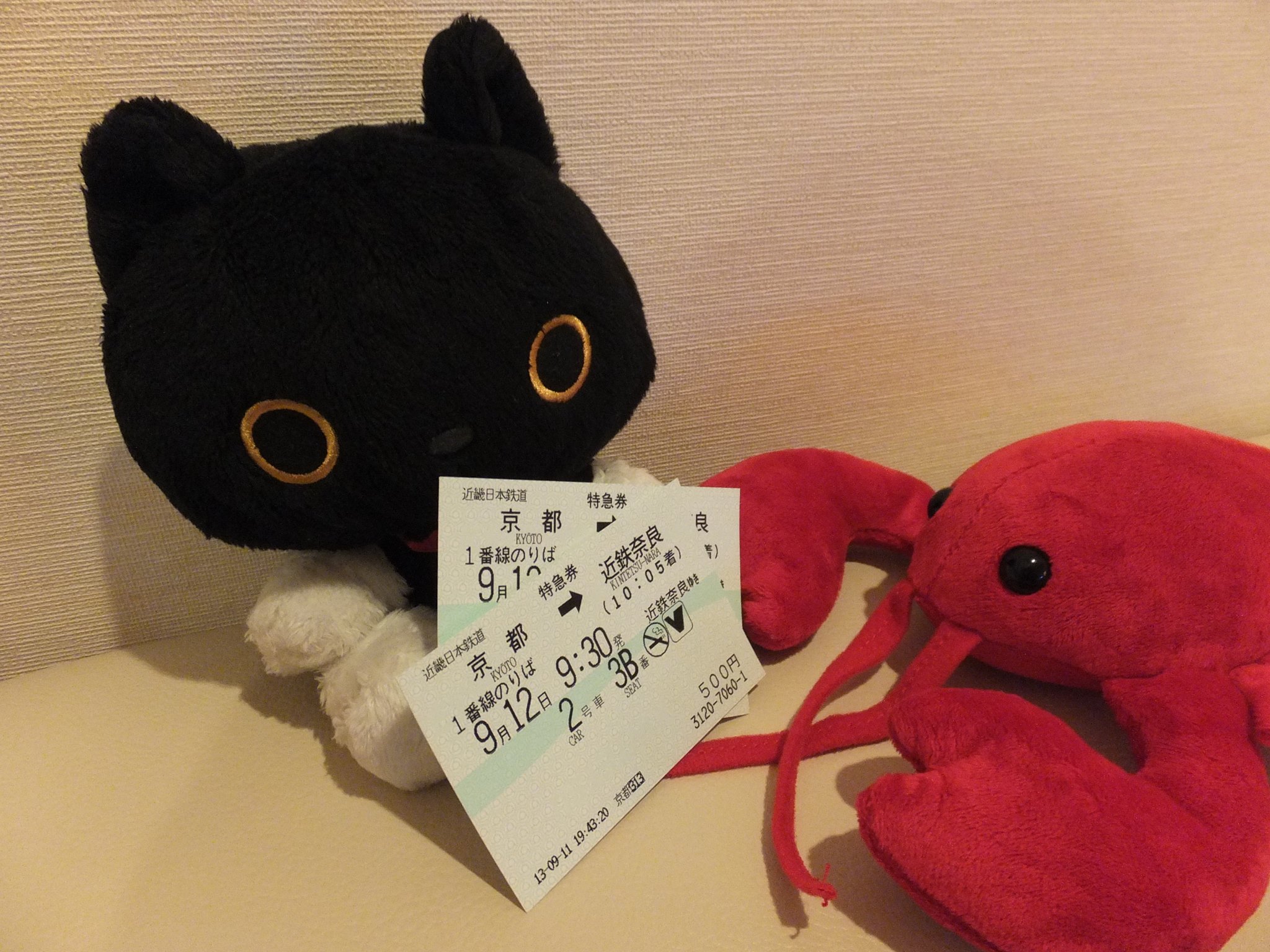
The reserved seat tickets for our trip to Nara. Photo by Jose Ramos, September 11, 2013

I am re-posting my diary from my September 2013 trip to Japan. This is the report from September 12 with my girlfriend (now fiance) Jordan which recounts our day trip to Nara and Osaka.

This morning we boarded the “Vista Train” at Kyoto station for the quick 35 minute hop to Nara, home of Todaiji Temple, and the Great Buddha statue housed in the world’s largest wooden building. It was quite a hike from the station, and again the weather was hot and humid.

We received a brief explanation from an English-speaking assistant at the entrance about the cultural significance of the temple. One of the more interesting facts that we learned is that the hall housing the great buddha statue is the third incarnation… previous builds were about 40% larger than what currently stands. The walk around was nice, and I can recall back to the last time I visited this hall in 2004.

Jordan interacts with deer in the city of Nara. Photo by Jose Ramos, September 12, 2013

On the way back and forth, we ran into a signature trademark of Nara: Deer on the road. Jordan and I bought deer snacks and the animals were happy to partake in the feast

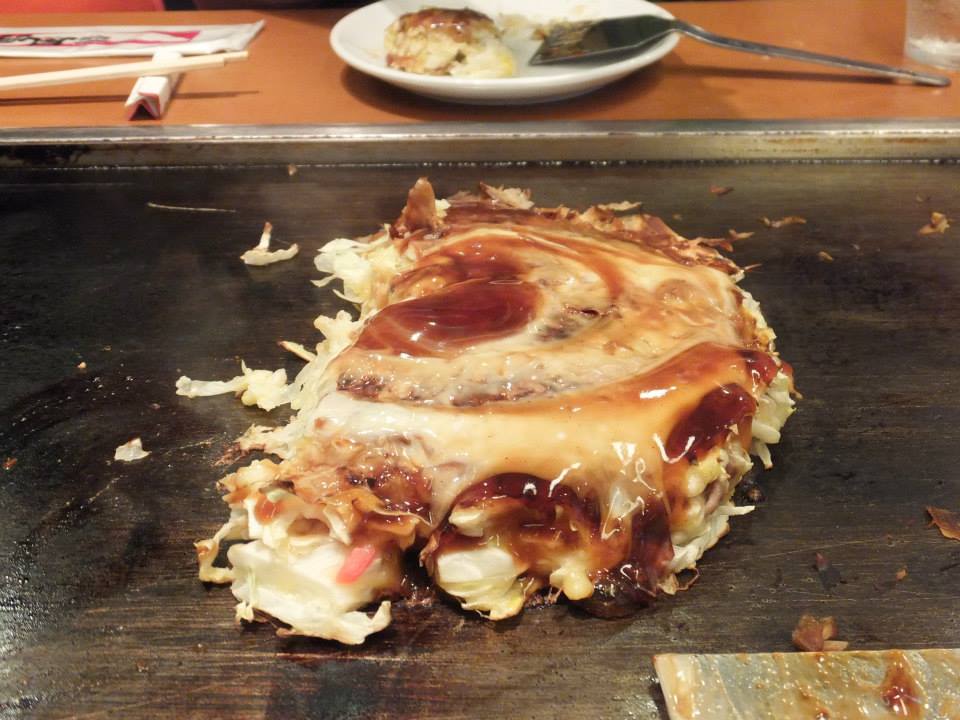
Then it was on to Tempozan near the port of Osaka, home to one of the world’s tallest ferris wheels, one of the world’s largest aquariums, and a small mall to boot. It was here that we had the Osaka staple, Okonomiyaki, for lunch. Basically a cooked cabbage pancake filled with whatever ingredients one chooses… in this case the main ingredient was beef. It was Jordan’s first crack at the meal and both of us really enjoyed it. It was also the time that I reunited with green soda, melon flavored!

After the ferris wheel it was on to Kaiyukan (the aquarium), and we spent a good deal of the afternoon making our way around the tanks. She was happy to point out the large whale sharks that were on display, and other fish that were of particular interest. My favorite moment was the dolphin feeding, which I captured on video. We arrived just in time for it and the handlers were more than happy to feed them and have them do tricks for everyone!

The skies were dark as we left…. my feet were numb from standing in the commuter train as we got back to Kyoto. The day finished with dinner that Jordan was looking forward to partaking since we arrived, when she noticed a store selling large pork buns! Very delicious and professionally made, we might try this one more time before heading to Tokyo on Sunday.

Tomorrow’s plans…. not decided yet. We’ll rest and see what we decide to do.

ADDITIONAL COMMENTS

Okonomiyaki served at the Fugetsu restaurant at Tempozan Marketplace, Osaka. Photo by Jose Ramos, September 12, 2013

I am pretty sure that on my last trip to Japan in 2008, an old friend of mine – Sachiko – introduced me to Okonomiyaki. It’s been a few years… and I never realized how delicious it can be! It was a bit of an interesting experience the first time, with our lackluster (at best) command of the language… though after this visit we’d go back for Okonomiyaki in Kansai and Tokyo a few times before our flight back to New York. Jordan and I have yet to figure out what New York restaurants offer good Okonomiyaki 🙂

I should also mention that the routes we used for a majority of this day’s trip were fully covered by the Kansai Rail Pass. This included the Kintetsu from Kyoto to Nara, and again from Nara to Tempozan/Kaiyukan in Osaka. Many of the urban and suburban transit systems in Japan will often run on to other train lines. Case in point – from Nara we took the Kintetsu to an intermediate station, Ikoma – in the suburbs – where we switched to the Kintetsu Keihanna Line. 10 km and 4 stations west of Ikoma, the same train that we were on continued on to the Chuo Line of the Osaka Subway. This took us directly to Osaka-ko, the station for Tempozan and Kaiyukan, and eliminated the need to change between lines in the middle of Osaka. If you do your research, you can find alternates like this that will make your travel a little easier.

It got pretty late for us this day, so we opted paying for the faster (and as it so happened, crowded) JR line to go back to Kyoto.