JR unveils Tateyama Kurobe Option Ticket

Today Japan Railways (specifically, JR East and JR West) have unveiled a brand new ‘option’ ticket for those who want to take a scenic journey through the Japanese Alps and Mount Tateyama.

This is called the Tateyama Kurobe Option Ticket and will be sold from April 16 to November 9 of this year. The cost is 9,000 yen, and covers a ONE-WAY journey between Nagano and Toyama via the Tateyama Kurobe Alpine Route. You may use the ticket for up to five consecutive days.

Technically the ticket is being marketed towards foreign tourists with some sort of JR Rail Pass (including the Hokuriku Arch Pass, marketed by JR East and JR West), but reading the fine print it appears any foreign tourist with temporary visitor status – i.e., “tourist” – can purchase it.

Note that it takes around 6 – 7 hours to make the one way journey through the area, NOT including transfers, rest stops and congestion delays, so if you’re considering this trip it would probably be wise to make a day out of it. For example, if you are leaving from Tokyo to travel the Tateyama Kurobe route, you’d best spend your evening in Toyama or Kanazawa (nearby on the Hokuriku Shinkansen) before continuing on your next adventure. Or, to make it easier, you can try to find accommodations along the alpine route itself… remember, you can travel one-way on the route for up to five consecutive days.

A variety of trains, buses, trolleys, ropeways and cable cars are used on the entire journey. The highest point of the trip is the bus ride underneath Mount Tateyama; the elevation at Murodo, one of the stops, is 2,450 meters or just over 8,000 feet!

To learn more about the Tateyama Kurobe Option Ticket, visit this website.

To learn more about the alpine route itself, visit this website. One tip if you’d like to plan your journey is to look at the calendar of waiting times, which indicates the days that the journey is likely to be very busy (as of this post, the 2015 dates are shown, but this will give you some sort of idea).

Hokkaido Shinkansen – New train line, new rail pass

H5 series Shinkansen on a test run. By Sukhoi37, CC BY-SA 4.0

Happy New Year, and welcome to the first post on myjapantips.com in 2016!

In a few months, Japan’s iconic bullet train system will be extended to the northern island of Hokkaido for the very first time. The shinkansen has been running there for the past few months on test runs, but it officially opens to the public on March 26.

Plans for a bullet train line in Hokkaido were laid out over four decades ago, with proposals for several routes on Hokkaido itself. The 33 1/2 mile Seikan Tunnel linked Hokkaido to the Japanese mainland in 1988, and with the 17-year construction project came provisions to eventually add the bullet train.

The new bullet train line extends a distance of 92 1/2 miles from the northernmost terminal at Shin-Aomori, through the Seikan Tunnel to a bullet train station outside of Hakodate, called Shin-Hakodate-Hokuto. From here, a shuttle train called the “Hakodate Liner” makes the 11 mile trip south to Hakodate station in the center of the city.

It will also be possible to hook up to the Hokuto limited express service for the journey north to Sapporo. You can enjoy the scenic trip up to Sapporo on the limited express, as the bullet train probably won’t reach Sapporo for another 15 years or so.

Here are some additional details on the new services to Hakodate, which will extend as far south as Tokyo itself.

Up until the start of services on March 26, 2016: Train travelers from Tokyo heading north to Hokkaido have to change in Aomori for conventional express trains that run under the Seikan Tunnel to Hakodate. The fastest journey from Tokyo to Hakodate is 5 hours 22 minutes. From Tokyo to Sapporo (with an additional change of trains) the fastest journey time is just over 9 hours.

When the bullet train opens on March 26, 2016: Travel times from Tokyo to Hakodate will be cut by almost an hour, to 4 1/2 hours on the fastest services. With just one transfer at Shin-Hakodate-Hokuto to an express, Tokyo to Sapporo journey times will be reduced to 7 hours, 44 minutes on the fastest services.

You may ask… if the bullet train is supposed to be fast, why can’t trains reach Hakodate faster? That’s because when the bullet train opens through the Seikan Tunnel, it will be sharing space with freight train traffic. Freight by rail is big in Japan, and more so to and from the island of Hokkaido with around 50 freight train trips through the tunnel every day. For the time being, bullet trains will have to reduce their speed from around 160 mph on the approach to the tunnel all the way down to 87 mph. Any faster than this, and the shock-waves of air generated by the train in the tunnel will cause the freight cars to fly off the tracks. There are some plans being discussed to offer faster trips, such as maintaining a 160 mph speed through the tunnel and then automatically slowing down when passing freight trains, or scheduling one return trip per day when freight trains are not using the tunnel. Such plans, though, are years off.

There will be ten daily round-trips on the Hokkaido Shinkansen from Tokyo to Hokkaido, and one each from the cities of Sendai, Morioka and Aomori. Services will use the E5 and new H5 shinkansen trains. All cars require a seat reservation: there are eight standard class cars, one green car (first class) and one GranClass car (premium first class).

The Japan Rail Pass will be valid on all of the new bullet train extensions. The exception is GranClass, which Rail Pass users will not be able to use unless supplement charges are paid. Green Car Rail Pass holders can still use the regular Green Car on these services, though.

JR East and JR Hokkaido are offering a new rail pass for foreign tourists who plan to only travel between Tokyo and Hokkaido, and it costs slightly less than a 7 day Japan Rail Pass. It’s called the JR East-South Hokkaido Rail Pass, and it costs 26,000 yen if purchased overseas (27,000 yen if purchased inside the country).

To be used on any six days within a 14 day period, the new pass covers all JR lines in Tokyo, and north of Tokyo through the Tohoku region and into Hokkaido, as far as Sapporo. You can use the shinkansen from Tokyo to Hakodate, as well as portions of several other JR East bullet train lines. A large number of conventional JR routes can also be used, and seat reservations on bullet trains and limited express trains can be made for free. You can use the Narita Express, the Tokyo Monorail to Haneda Airport, the Sendai Airport rail link, the JR rail line to Sapporo’s airport, and also access Nikko and the Izu peninsula. It’s a fantastic deal, considering that the pass is flexible, and does not need to be used on consecutive days…. you CAN use it on consecutive days if you wish, but it is not required. The pass is only good for standard class… it cannot be used for the Green Car or for GranClass.

Hakodate city was named Japan’s most attractive city of 2015 in a recent survey. Attractions from the famous morning market and the night view at the top of Mount Hakodate to a ride on one of the city’s old streetcars will be easier to access with the opening of the bullet train into Hokkaido in March. While you’re at it, why not continue your rail journey towards Sapporo, known for its annual snow festival, craft beers, and museums dedicated to the preservation of the Ainu culture.

As usual, your questions and comments are welcome. I am glad to offer advice whenever I am able, subject to the blog disclaimer.

Updated Disclaimer

Today I have updated the disclaimer on my blog. As has been the case since I started the blog around 6 years ago, any information provided on this site, and any advice that I am happy to provide, is to be used at your own risk.

Please note that the disclaimer now addresses immigration questions. Immigration is a very important topic when visiting Japan, or any other country for that matter. Due to the varied nature of this topic, I have decided that going forward I will not answer specific questions regarding immigration in Japan. This includes immigration status, visas, etc. Any specific immigration questions will be best answered by your local Japanese embassy or consulate.

Thanks for your understanding, and thanks for supporting my blog!

A New Rail Pass For Tokyo-Osaka Train Travel

Stefan has pointed out on his excellent japan-guide.com site that a new rail pass will be made available to foreign visitors in Japan beginning in April. The ticket, sold jointly by JR East and JR West, will be called the Osaka-Tokyo Hokuriku Arch Pass.

Before you say anything – no, McDonald’s is not sponsoring the pass because it has the word ARCH in it. Rather, the word ARCH refers to the fact that the train pass is valid on an arching… er, arcing… route between Tokyo and the Kansai region, Kyoto and Osaka included. That route is the Hokuriku region, which includes the newly-extended Hokuriku Shinkansen from Tokyo to Nagano, Toyama and Kanazawa, and then conventional JR tracks from Kanazawa to Kyoto and Osaka, on which you can use the limited-stop express train known as the Thunderbird.

Also included in the pass are:
– Travel on JR Trains in the Tokyo Metropolitan District, consisting of stations on and inside the Yamanote Line loop and a limited number of stations outside the loop
– Travel on the Narita Express from Tokyo to Narita Airport
– Travel on the Tokyo Monorail from Tokyo to Haneda Airport
– Travel on JR trains in what is known as the “Keihanshin” district, including services around Kyoto, Osaka, Kobe and Nara
– Travel on the Haruka Limited Express train from Kyoto/Osaka to Kansai Airport
– Travel on certain private railways in the Hokuriku region that connect to the shinkansen

You can use reserved seats in ordinary class on any shinkansen or limited express service in the areas covered under the pass, except for the Haruka train to/from Kansai Airport where the pass will only cover unreserved seating. Presumably, you would be responsible for additional charges if you wanted reserved seating on the Haruka, or if you wanted to upgrade to the Green Car or Granclass on any service.

The cost for this pass is 24,000 yen if purchased in advance, or 25,000 yen if purchased inside the country. Children 6-11 years of age pay half price. You must have a passport with short-term visitor status (90 days or less) in order to qualify for the pass. The pass can be used on all days, starting on April 1, 2016.

A one-way ticket from Tokyo to Kyoto via Kanazawa is around 18,000 yen. So, there will be considerable savings if you use this pass for a return trip along the entire route. The pass can even be considered for a round-trip between Tokyo and Kanazawa – the arch pass would save you around 4,000 yen compared to regular round-trip reserved tickets.

The trip from Tokyo to Kanazawa takes approximately 2 1/2 – 3 hours by bullet train, and the trip from Kanazawa to Kyoto takes around 2 – 2 1/2 hours by Thunderbird limited express.

By comparison to the 24,000 yen arch pass, a 7-day National Japan Rail Pass costs 29,110 yen and covers just about all JR trains out there, including the Hokuriku Shinkansen and Thunderbird. Using the heavily-traveled Tokaido Shinkansen, you can travel from Tokyo to Kyoto in around 3 hours. The Japan Rail Pass also comes in a Green Car version, whereas the arch pass does not. Conversely, the Japan Rail Pass does not include trips on the Tokyo Monorail or any other private rail lines.

If you want to explore the Hokuriku region, or want a slightly more economical round-trip ticket between Tokyo and Kyoto/Osaka, the Osaka-Tokyo Hokuriku Arch Pass is definitely worth consideration. Though I would prefer you use the money saved on some unique Japanese eats instead of big macs with fries.

The announcement from the JR companies can be found here.

Rail Advisory for trains to Hokkaido – January 1 and March 21-26, 2016

Today JR East and JR Hokkaido announced that Saturday, March 26, 2016, will be the opening date of the country’s newest bullet train line, the Hokkaido Shinkansen. It will extend almost 150 km north of Shin-Aomori, the current northern terminal of the bullet train system, through the Seikan Tunnel to the outskirts of Hakodate in Hokkaido. A total of 26 runs will be made through the tunnel using the bullet train every day (13 in each direction), though speeds through the tunnel will be limited to 140 km/h – much slower than the 320 km/h that will operate on most of the route from Tokyo.

As part of the the preparations to bring full-time bullet train service through the Seikan Tunnel, there will be two periods when conventional train travel between Hokkaido and mainland Japan will be shut down. This affects trains operating from Aomori station to Hakodate station:

  • January 1, 2016: Daily and overnight limited express services through the Seikan Tunnel will be shut down for one day for inspections.
  • March 21, 2016: This will be the final day that conventional trains operate through the Seikan Tunnel.
  • March 22-25, 2016: The Seikan Tunnel will be closed for final track alignment and checks.
  • March 26, 2016: The Hokkaido Shinkansen between Shin-Aomori and Shin-Hakodate-Hokuto stations will begin full operation.

Keep these dates in mind if you will be in Japan, as there will be no rail access from mainland Japan to Hokkaido on the days when the Seikan Tunnel is closed.

A Thank You Note from Australia

This is a few months overdue, so with apologies for the delay I’d like to share a thank you that I received from a traveler in Australia.

I love Japan and the Japanese culture, and that is why one of my hobbies is to operate this blog, post some suggestions and travel updates, and do the best that I can to answer anyone’s questions about Japan travel. (on that note, please read the disclaimer!)

In the spring, Peter from Australia visited Japan and requested that I put together a whirlwind rail tour for him that would take him around the country in the limited amount of time that he had. Or in his words, not heavy on sightseeing.

I was able to do just that, and for the most part Peter used the itinerary to travel around the country.

Here’s Peter’s thank you note, which he allowed me to share:

I can’t thank Jose enough for helping me plan my rail trip around Japan in March 2015. I wanted to use a 14 day Japan Rail Pass to see as much of Japan as possible without too much on the ground sight-seeing. The programme Jose gave me was perfect. I was able to give the programme to the Japan Rail booking office in Tokyo and reserve seats for most of the trip. The trip included travel on bullet trains and on limited express trains. Everything went like clockwork. I joined the Toyoko Club which gave me discount bookings at their chain of business hotels which are generally located within a few minutes walk from each major railway station. Normally I arrived at my destination early afternoon, checked my bags into the hotel and then visited the recommended sites and enjoyed great food at the lower end restaurants. The next day I would catch a train mid morning and so on. I only stayed at one place for two nights to catch up on laundry etc. In 14 days I got an overview of Honshu, Kyushu and Shikoku. I’ve saved Hokkaido for another trip.
Thanks again Jose for making my trip so memorable.
Kind regards
Peter Coghlan
Perth, Western Australia

He also sent me a thank you gift … I’ll share a photo of it soon on my Facebook page, facebook.com/myjapantips … be sure to look out for it!

Japan Itinerary: The *Four* Castles

February 2017 update: Please note that Kumamoto Castle was damaged in the April 2016 earthquakes, and so access to the castle is currently limited. I hope to provide a new itinerary for visiting castles in a future post.

The castle is one of Japan’s most iconic symbols, and one of the most enduring… or, to a certain degree, the least enduring. Built as fortresses to guard important sites while taking the landscape into consideration, many of Japan’s castles fell victim to feuds and wars, whether it be from the time of shogun and samurai, or World War II. While there were as many as 5,000 castles in Japan at one point by some estimates, there are now just over 100 in complete or partial form.

As Japan has lists of three most famous views, gardens, and other locations, there seem to be several different lists out there that rank Japan’s top three castles.

Accordingly, I’ve put together itineraries that take travelers to the four castles in Japan that were ranked at the top of TripAdvisor Japan’s annual survey of castles, based on the public reviews given on that site. Those castles are, in ranked order:

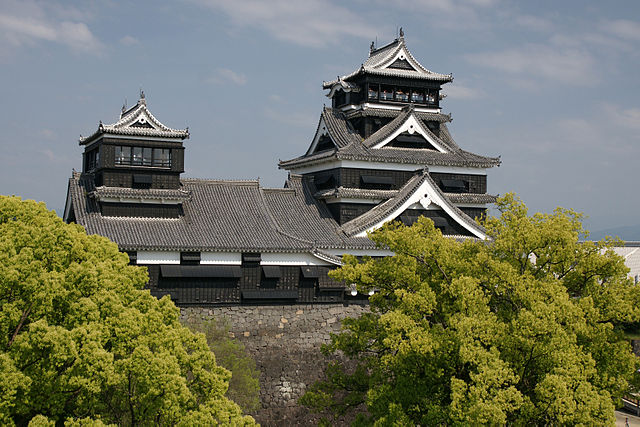
Kumamoto Castle. Photo by 663highland (CC BY 2.5)

1) Kumamoto Castle
Despite it being a reconstruction, this is one of the most beloved castle sites in all of Japan, and in the last few years has been consistently ranked as the best among Travelocity reviewers. The original fortifications were laid down almost 450 years ago, but the castle was burned down during the Satsuma Rebellion of 1877. A few of the other buildings that are part of the castle keep are original, and the area has been designated as an important cultural property.
Admission to the castle costs 500 yen and it’s open daily from 8:30 AM to 6 PM (until 5 PM during the winter months). Kumamoto Tram’s A Line stops right in front of it – it’s a 15 minute trip from JR Kumamoto Station. The flat fare for the tram is 150 yen, payable when you exit. A one day tram pass is 500 yen, and a two day pass is 800 yen.

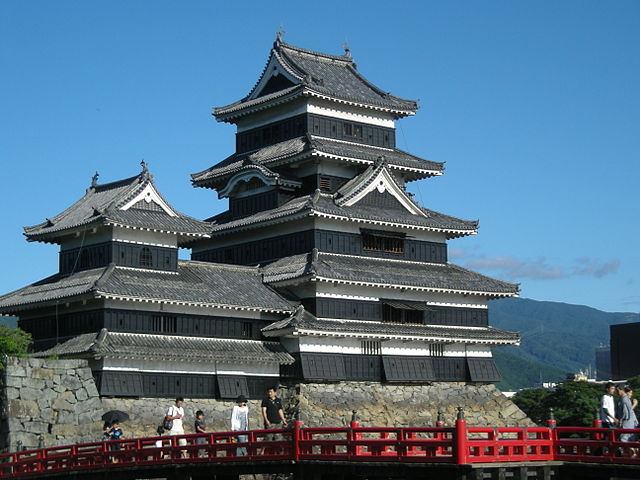
Matsumoto Castle. Photo by MOILIP (CC BY-SA 3.0)

2) Matsumoto Castle
This castle is one of Japan’s originals, dating back to 1504. The keep’s exterior is all black, giving the castle the nickname “karasujo” or crow castle. It has survived since then, being saved from demolition during the start of the Meiji period, and has undergone several restorations, most recently in the 1950’s. At one point, the castle resembled the leaning tower of Pisa when part of the keep slouched to one side. Matsumoto Castle is in Nagano prefecture, with the Japanese Alps as the backdrop, and is an easy train or bus trip from Tokyo or Nagano.
Admission to the castle is 610 yen and it’s open daily except during the new year’s holiday from 8:30 AM to 5 PM. During the Golden Week and Obon holidays, it’s open longer. City buses run from Matsumoto’s train station to the castle, including the tourist bus known as the “flying sneaker” (200 yen per trip or 500 yen for a day pass). The North bus will take you to the castle, and note that the day pass includes discounted admission to the castle. One other option is Matsumoto City’s free bicycle rentals, available at various spots around town including the train station and castle.

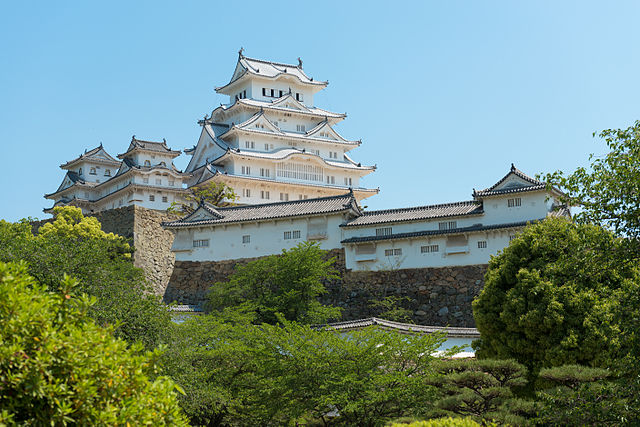
Himeji Castle after restoration. Photo by Niko Kitsakis (CC BY-SA 4.0)

3) Himeji Castle
Instantly recognizable as the most visited castle complex in Japan, Himeji has fallen in the Travelocity rankings over the last several years as the complex underwent a multi-year restoration project. Just recently completed, Himeji looks as beautiful as it did when it was first built, and is seeking to claw its way up to the top of the rankings. With origins dating back to the 1300’s, Himeji’s main castles were built in the late 1500’s and early 1600’s, and have survived everything from rebellions to World War II to devastating earthquakes. It was one of the first in the country to be on UNESCO’s list of World Heritage sites. I visited Himeji during my first trip in 2004, a few years before the renovations began.
Admission to the castle costs 1,000 yen and it’s open daily except December 29 and 30 from 9 AM to 5 PM (in the summer months, until 6 PM). Entry ends one hour before closing.
From Himeji’s main train stations (JR and Sanyo Railway) Himeji Castle is a 5 minute bus ride (100 yen) or taxi ride (~700 yen), or a 25 minute walk (which is what yours truly ended up doing).

Matsuyama Castle. Photo by Jyo81 (CC BY 3.0)

4) Matsuyama Castle
Located on the island of Shikoku in an area known for its hot springs, Matsuyama Castle is another of Japan’s original castles. It was built on a small mountain – Mount Katsuyama – and the location affords a great view of the city and the Seto Sea. It has largely survived intact; the castle tower was originally destroyed by lightning and rebuilt in the 1800’s, while certain sections were rebuilt as a result of World War II bombing damage.
Due to its high location, the castle is easily accessed by chairlift or ropeway. The castle is open almost every day of the year from 9 AM to around 5 PM and the admission fee is 510 yen. If you want to save yourself the steep climb on foot, the chairlift/ropeway is 510 yen for the round trip.
The nearest tram stop to the bottom of the mountain is Okaido, which houses a shopping arcade. It’s 10 minutes from JR Matsuyama station, and 11 minutes from Dogo Onsen hot spring. One trip costs 190 yen, and a day pass costs 400 yen.

Matsuyama Castle is not to be confused with another castle of the same name located near Okayama.

As with itineraries that I have shared in the past:
– There are two itineraries given for each mode of transit. One starts and ends in Tokyo for those coming into the country at Narita or Haneda Airport. The other starts and ends in Osaka for those utilizing Kansai Airport instead.
– All itineraries are offered subject to the Jose’s Japan Tips DISCLAIMER.

In the case of these journeys, I have opted to just provide rail itinerary suggestions.

From Tokyo By Rail

Day 1:
In the morning, depart from Tokyo’s Shinjuku Station on the Azusa Limited Express to Matsumoto (2 1/2-3 hours, 6,900 yen, no charge with Japan Rail Pass)
Alternatively, depart from Tokyo or Ueno station on the Hokuriku Shinkansen and change in Nagano to the “Shinano” Limited Express service (2 1/2-3 hours, 10,130 yen, no charge with the Japan Rail Pass)
VISIT MATSUMOTO CASTLE
Once your visit is complete, depart for Kyoto using two trains: The “Shinano” limited express from Matsumoto to Nagoya, and the Tokaido Shinkansen from Nagoya to Kyoto. Connecting to the “Nozomi” in Nagoya, the entire trip takes 3 hours and costs 10,170 yen. With a Japan Rail Pass, you will have to take the “Hikari”, increasing the trip time by 30-45 minutes.
Spend the night in Kyoto. Alternatively, continue 15 minutes along the line to Shin-Osaka to stay in that area.
*NOTE: There are no on-board food or drink sales on the “Shinano”

Day 2:
In the morning, depart for Himeji on the Shinkansen. From Kyoto the trip takes 45 minutes by direct Nozomi (5,590 yen) and up to 60 minutes using other services. For Japan Rail Pass holders, there are three Hikari services from Kyoto to Himeji departing between 7 AM and 8:30 AM, after which there is one direct service per hour. Otherwise you’ll need to change trains in Shin-Osaka.
VISIT HIMEJI CASTLE
In the afternoon, depart for Matsuyama using the bullet train and limited express across the Seto Sea to Shikoku. You’ll need to take the bullet train a short distance from Himeji to Okayama, then board the “Shiokaze” limited express from Okayama to Matsuyama. The trip takes approximately 3 1/2 hours (9,570 yen). You can use the “Nozomi” or the “Sakura” depending on whether or not you have a rail pass, or your preference – both trains will offer ample connections to the Shiokaze.

Day 3:
Get up early to enjoy the historic hot springs and VISIT MATSUYAMA CASTLE.
In the afternoon, return to Okayama at your leisure using any of the “Shiokaze” services (2 3/4 hours, 6,830 yen) and spend the night in Okayama.

Day 4:
Depart for Hakata station in Fukuoka at your leisure and spend two nights in Fukuoka. Use the “Nozomi” or “Mizuho” unless you have a Rail Pass, in which case you’d use the “Hikari” or “Sakura” (1 3/4-2 hours). Before leaving Okayama, you could visit Okayama Korakuen Garden, one of the top three Japanese gardens.

Day 5:
Take a day trip from Fukuoka to Kumamoto by Shinkansen, using the “Sakura” or “Tsubame” (40-50 minutes, 5,130 yen each way).
VISIT KUMAMOTO CASTLE

Day 6:
Take the Shinkansen and return all the way to Tokyo at your leisure. By Nozomi it takes 5 hours and costs 22,950 yen with no change in trains necessary. With a Japan Rail Pass, the “Sakura” and “Hikari” will bring you to Tokyo in six hours, and you will need to change trains once.

For this itinerary, a 7 day Japan Rail Pass (29,110 yen) will save you a considerable amount of money compared to regular tickets. If you have an extra day left, why not stop at one or two other Japanese cities on the way back to Tokyo? Perhaps an overnight stopover?

From Osaka by Rail

Day 1:
In the morning, depart for Himeji on the Shinkansen. From Shin-Osaka the trip takes 30 minutes (3,740 yen). Remember if you have a Japan Rail Pass, you can’t use the “Nozomi”.
VISIT HIMEJI CASTLE
In the afternoon, depart for Matsuyama using the bullet train and limited express across the Seto Sea to Shikoku. You’ll need to take the bullet train a short distance from Himeji to Okayama, then board the “Shiokaze” limited express from Okayama to Matsuyama. The trip takes approximately 3 1/2 hours (9,570 yen). You can use the “Nozomi” or the “Sakura” depending on whether or not you have a rail pass, or your preference – both trains will offer ample connections to the Shiokaze.

Day 2:
Get up early to enjoy the historic hot springs and VISIT MATSUYAMA CASTLE.
In the afternoon, return to Okayama at your leisure using any of the “Shiokaze” services (2 3/4 hours, 6,830 yen) and spend the night in Okayama.

Day 3:
Depart for Hakata station in Fukuoka at your leisure and spend two nights in Fukuoka. Use the “Nozomi” or “Mizuho” unless you have a Rail Pass, in which case you’d use the “Hikari” or “Sakura” (1 3/4-2 hours). Before leaving Okayama, you could visit Okayama Korakuen Garden, one of the top three Japanese gardens.

Day 4:
Take a day trip from Fukuoka to Kumamoto by Shinkansen, using the “Sakura” or “Tsubame” (40-50 minutes, 5,130 yen each way).
VISIT KUMAMOTO CASTLE

Day 5:
In the morning, make your way from Fukuoka all the way to Matsumoto, taking the Shinkansen to Nagoya then the “Shinano” limited express to Matsumoto. Using the Nozomi, the trip takes 5 1/2 hours (21,400 yen). With a Japan Rail Pass you’ll need to take the “Sakura” and “Hikari” to Nagoya, changing trains once along the way. This increases the journey time to around 6 1/2 hours.
If you don’t want to spend time on trains for that long, you can optionally leave from Fukuoka on the evening of Day 4 and spend your evening in an intermediate city such as Kyoto or Nagoya. See my post on sample stopovers.
Spend the evening in Matsumoto.
*NOTE: There are no on-board food or drink sales on the “Shinano”

Day 6:
VISIT MATSUMOTO CASTLE in the morning. In the afternoon, return to Osaka by “Shinano” and the Shinkansen (190 minutes and 10,810 yen by “Nozomi”, slightly longer if switching to the “Hikari” for Japan Rail Pass holders).
*NOTE: There are no on-board food or drink sales on the “Shinano”

For this itinerary, once again a 7 day Japan Rail Pass (29,110 yen) is the way to go.

Itinerary Update – The Three Gardens

I have recently updated an itinerary posted three years ago on how to go about visiting Japan’s top three gardens. If you have only a few days and want to visit all three of these popular locations, please check out my suggested travel plan on its original post.

Prices are now reflecting the higher consumption tax and new travel options, such as the Hokuriku Shinkansen which now offers a more direct trip between Tokyo and Kanazawa.

Time permitting I’ll try to update others and work on a few more to share with you!

Long-distance Stopovers with the Japan Rail Pass

For travelers who want to explore a lot of Japan during their visit, the Japan Rail Pass is indispensable, offering tremendous value for using Japan Railways services all around the country. If you only plan on traveling in between the major cities of Tokyo and Kyoto or Osaka, or traveling shorter distances, the pass might not be for you. On the other hand, if traveling to many of Japan’s cities on a single trip, the Japan Rail Pass should seriously be considered.

You’ll need to know some of the basic rules for the Japan Rail Pass, which are outlined on the Japan Rail Pass web site and are also discussed on other pages on this blog.

One way to maximize your sightseeing time is to travel overnight. This has become harder to do by train in recent years. Once, Japan was full of overnight trains crisscrossing the country. These days, though, this mode of travel is becoming scarce as rail equipment ages and fierce competition between domestic trains, buses and airlines increase. This article will discuss a few concepts on how you could potentially use the Japan Rail Pass for overnight train travel while saving money in the process.

Only a few overnight train services remain in Japan. Others only run during peak travel periods like Golden Week, New Year’s and the summer months. Regardless, overnight trains in Japan are extremely popular and tend to get booked quickly. Since you cannot reserve train tickets in Japan until you are in the country – with few exceptions (like JR East’s English online reservation system) -your best bet is to try and book the tickets the moment you land in Japan.

Two of the overnight trains that run on a daily basis are the Sunrise Seto and Sunrise Izumo. These trains run coupled together from Tokyo to Okayama in western Japan, where they separate: The Seto runs south to the island of Shikoku, ending in the port city of Takamatsu, while the Izumo runs to the city of Izumo on the northern coast. These trains have compartments and rooms – if you want to secure one of these, you will have to pay the room accommodation and limited express surcharges. While the limited express surcharge varies based on your starting and ending point, the room accommodation is a fixed charge. The Japan Rail Pass will only cover the basic train fare between the two cities. A “solo” compartment will run 9,720 yen, while the high-end “single deluxe” runs for 16,970 yen – and these fares are just for one person. These trains do offer an option for carpeted floor spaces, on the other hand, which are treated as reserved seats – there are no extra surcharges for these spaces with a Japan Rail Pass…. but you have to sleep on the carpeted floor.

If you can secure room on one of these trains, not only is it a great option for travel to the northern coast or to Shikoku, but by changing in Okayama to the bullet train it is a great way to continue westward towards Hiroshima, Fukuoka and Kyushu.

The other service is called the Cassiopeia, which runs a few times a week between Tokyo and Sapporo, in Hokkaido. The prices are comparable or higher than the Sunrise Izumo/Seto, with a diner and no carpeted floor seats. The future of this service, though, is in doubt, with the pending opening of the Hokkaido Shinkansen in March 2016. A third overnight service only connects northern Honshu island with Hokkaido – the Hamanasu. The Hamanasu does offer comfortable reserved seats, which makes it a free option for Rail Pass holders, but again, the train’s future is uncertain.

With few options for overnight trains, the alternative is to simply split up your night journey into two legs, stopping somewhere along the way to sleep. As long as your Rail Pass covers both days of travel, there are so many benefits to splitting up your journey:

– You can get your own hotel room with a bed, bathroom and shower
– A hotel room located far from major cities could be less expensive
– You can experience a slice of life in a new part of Japan, and might be able to enjoy attractions or cuisines unique to that area
– There are no extra transportation costs, since your transportation is already covered under the Japan Rail Pass

By keeping these in mind, a whole new set of options can open up to you by simply doing some research.

A popular option to look out for is the business hotel – small hotels with minimal space, but all the amenities you’d need for a night’s stay. These business hotels tend to be inexpensive no matter where you book. Even in big cities such as Tokyo, they can be among the most economical options.

I will now offer a few suggestions for some long distance journeys. If you would like to explore such options for your next trip to Japan, I hope this information will be a starting point!

Tokyo to Kyoto/Osaka

This is one of the most heavily-trafficked travel routes in Japan, without question. There are so many things skipped in between, though, and with some research you can discover some new areas.

Nagoya: This is a major city, but so often skipped by many travelers on their way from Tokyo to Kyoto (including, I must admit, myself!) and the next time I visit for a while I will make Nagoya one of my priorities. Nagoya has Japan’s largest international trade port (thanks in part to Toyota’s headquarters nearby), the world’s largest train station by floor area, a reconstructed castle, a zoo, and a plethora of unique eats like miso katsu – pork or chicken cutlet served in a red miso sauce. (yum!)

Nagoya is centrally located on the Tokaido Shinkansen, the main train artery linking Tokyo with Kyoto, Osaka, and points beyond. It has been an ideal stop, and will continue to be for a while. But earlier this year, another city with its own history took center stage:

Kanazawa: This coastal city, known for having one of the top three gardens in all of Japan, was connected to Tokyo’s shinkansen network in March 2015. The city has done a lot to cater to visitors, including a rebuild of its main train station – complete with its own shinto-like Torii gate at its entrance. You can spend the night in town and go bright and early the next morning to the Kenrokuen garden before the tour groups arrive, then continue on your way.

The Hokuriku Shinkansen links Tokyo to Kanazawa in as little as 2 1/2 hours. Then from Kanazawa, you can travel by the Thunderbird Limited Express service directly to Kyoto (~2 1/4 hours) and Osaka (~2 3/4 hours). From Shin-Osaka you can connect to the bullet train for destinations to the west.

Matsumoto: A third possible option is to cut through the center of the country along the Chuo Line and visit the city of Matsumoto, known as the home of one of Japan’s original castles. Matsumoto is 2 1/2-3 hours from Tokyo’s Shinjuku Station by the Azusa limited express service. After staying in Matsumoto and potentially visiting the castle, take the Shinano limited express to Nagoya (~2 1/4 hours); you can either pick up the bullet train for destinations to the west, OR, just go around Nagoya for a while!

If you don’t want to worry about major sights and just focus on a place to stay the night, here are some cities to look at:

From Tokyo to Kyoto/Osaka via Nagoya along the Tokaido Shinkansen: Odawara, Atami, Shizuoka, Hamamatsu, Toyohashi, Maibara. A few of the other stations are left out, but it’s important to note that along this important travel artery you’ve got a good chance to find accommodations at every station.

From Tokyo to Kyoto/Osaka via Kanazawa along the Hokuriku Shinkansen and Thunderbird route: Nagano, Itoigawa, Toyama.

Tokyo to Western Japan (including Shikoku and Kyushu)

If you can’t get on board the Sunrise Izumo or Sunrise Seto, travel more comfortably (and perhaps cheaply) with a stopover.

Okayama: The name may not stand out to the regular tourist, but Okayama is a major city and transportation hub in Japan. If traveling from Tokyo and laying over in this city, you can continue on in the morning to Shikoku, Izumo, or continue on towards the west using the bullet train. Not to mention, another one of Japan’s most famous gardens – Korakuen – is located here.

Himeji: located between Osaka and Okayama, Himeji is home to Japan’s most important castle. In existence since original construction began in the 1300s, it has survived the test of time. It is now especially worth a visit, as a five-year project has restored the castle’s exterior to its original splendor.

Once again, every station on the shinkansen (now the Sanyo Shinkansen) gives you a good chance of lodging options.

Tokyo to Northern Japan/Hokkaido

The Tohoku Shinkansen is the main train artery running north from Tokyo towards Hokkaido. By March of 2016, the Shinkansen will actually extend into Hokkaido’s southern city of Hakodate for the very first time. In the meantime, trains terminate in the northernmost city of Aomori. This city makes a good stopping point, as does Hakodate itself if you were looking at a long-distance journey to Sapporo – but again, look at all stations.

Now for some SAMPLE ITINERARIES: For these samples, I have researched the price of lodging on different, random weekdays in September 2015 that are not holidays. This falls within the approximate 3 month range where many hotels have already opened up their reservations. I have also researched the train timetables for that period from sites such as HyperDia and Ekikara. Your results may vary. Hotels listed are for sample purposes only, and prices are listed in US dollars. No endorsements are implied!

#1: Tokyo to Kyoto/Osaka, stop in Nagoya: Board the evening Hikari service leaving Tokyo at 7:03 PM, arriving in Nagoya at 9:09 PM. Spend the evening at the Nagoya Ekimae Montblanc Hotel for $49 single, $37 per person double occupancy. Board a morning Hikari train at 8:21 AM. Arrive in Kyoto at 9:14 AM and Shin-Osaka at 9:30 AM.

#2: Tokyo to Kyoto/Osaka, stop in Hamamatsu: Board the evening Hikari service leaving Tokyo at 7:03 PM, arriving in Hamamatsu at 8:32 PM. Spend the evening at the four star Okura Act City Hotel Hamamatsu for $55 per person single or double occupancy (30 day advance booking rate). Board a morning Kodama train at 7:49 AM. Arrive in Kyoto at 9:34 AM and Shin-Osaka at 9:50 AM.

#3: Tokyo to Kyoto/Osaka, stop in Kanazawa: Board the evening Kagayaki service leaving Tokyo at 6:24 PM, arriving in Kanazawa at 8:58 PM. Spend the evening at the APA Hotel Kanzawa-Ekimae (part of a chain of national business hotels) for $65 single, $42 per person double occupancy. Board a morning Thunderbird train at 8:05 AM. Arrive in Kyoto at 10:11 AM and Shin-Osaka at 10:35 AM. Or, visit Kanazawa’s Kenrokuen Garden in the morning and take a later Thunderbird towards Kyoto/Osaka.

#4: Tokyo to western Japan/Shikoku/Kyushu, stop in Okayama: Board the evening Hikari service leaving Tokyo at 5:03 PM, arriving in Okayama at 9:11 PM. Spend the evening at one of a few Toyoko Inn hotels (another large chain) located around Okayama station for $52 single, $30 per person double occupancy. In the morning, you can depart in multiple directions:
– The bullet train westbound can take you to Hiroshima, Fukuoka, Kumamoto and Kagoshima.
– The Marine Liner rapid train services, leaving twice per hour, will take you to Takamatsu in Shikoku. I highly recommend paying the small surcharge for a reserved seat (320-980 yen per person depending on the seat and the season).
– The Shiokaze and Nanpu limited express trains run to the hot spring town of Matsuyama and the coast city of Kochi, respectively.
– The Yakumo limited express train runs north to Izumo in 3 hours.

#5: Tokyo to Hakodate (southern Hokkaido), stop in Aomori: Board the afternoon Hayabusa service leaving Tokyo at 5:20 PM, arriving at Shin-Aomori at 8:40 PM. Change to the local shuttle train to Aomori, arriving at 8:55 PM. Spend the evening at the Toyoko Inn Aomori-eki Shomen-guchi for $46 single or $32 per person double occupancy. Leave in the morning on the first Hakucho service of the morning, departing Aomori at 8:25 AM and arriving in Hakodate at 10:26 AM.

#6: Tokyo to Sapporo, stop in Hakodate: Board the afternoon Hayabusa service leaving Tokyo at 3:20 PM, arriving at Shin-Aomori at 6:43 PM. Change to the Hakucho departing Shin-Aomori at 6:53 PM, arriving in Hakodate at 8:56 PM. Spend the evening at the Comfort Hotel Hakodate (as in the Comfort Inn brand) for $46 single or $37 per person double occupancy. Leave in the morning on the Hoktuto service from Hakodate to Sapporo – the first two trains leave at 6:22 AM and 8:13 AM, arriving in Sapporo at 9:58 AM and 11:47 AM, respectively.

#7: Osaka to Sapporo: There used to be an overnight train service called the Twilight Express, which ran a few times a week and was comparable to the Cassiopeia. If I ever wanted to ride an overnight train in Japan, this was the one I was aiming for. Sadly those plans never materialized, and the Twilight Express has already been discontinued. Here’s one way to make the Osaka-Sapporo trip now. Leave Shin-Osaka at 11:40 AM on the Hikari service to Tokyo, arriving at 2:40 PM. At Tokyo Station you will have 40 minutes to mill about and do some quick shopping until leaving on the 3:20 PM Hayabusa service to Shin-Aomori. Then, the instructions are exactly as above, laying over in Hakodate en route to Sapporo.

By now I hope you are inspired to create your own overnight itineraries to maximize your Rail Pass, and your sightseeing and enjoyment of Japan. If you have any questions or comments, please ask!