
Here’s a Youtube video that I posted from my 2013 trip to Japan explaining how to purchase Shinkansen tickets from a vending machine. I hope to share more video from my trip in the weeks/months to come 🙂
Tag: Kyoto
So You’ve Landed In Japan – Airport to Hotel
Last week I wrote about what you can expect during customs and immigration procedures when landing in Japan. Today I’ll write about the best ways to get to your hotel, or wherever you may be staying the first night. Consider this an update to what I wrote several years ago.
Many of Japan’s major airports are a good distance away from city centers. This is true for Narita Airport serving Tokyo, Kansai Airport serving Osaka, and Chubu (Centrair) Airport serving Nagoya – the latter two of which were built in the middle of the sea on man-made islands.
When traveling from the airport to the place of your first stay, you must carefully consider the options that are available, and determine what will be best for your budget.
Cash
First, naturally, you will want to make sure that you have some cash on hand, especially in a country where cash is still king (but contact-less cards are still trying to change that). As soon as you finish the arrival formalities, the first thing you will want to look for is a place to obtain cash – either an ATM machine or currency exchange.
Preferably, you will want to look for an ATM machine as they tend to offer better exchange and conversion rates than the staffed currency exchange counters. Many of the major banks in Japan will have ATMs in the arrivals area of the international airports. The ones that you will want to look for are: JP Bank (Japan Post), Seven Bank (7 Eleven) and Citibank. These ATMs will accept International banking cards, not just at the airport but at all of their locations. They also offer an option to conduct your transaction in English. When you continue around the country, you can access JP Bank ATMs at many Japan Post Office branches, and Seven Bank at a nearby 7 Eleven convenience store. Citibank can be found in major cities in Japan – though bear in mind that Citibank is looking to sell its personal banking services and therefore their ATMs will probably not be along for much longer.
If you need to go to a currency exchange counter, then my recommendation is to take only what you need for a short period of time (including transit out of the airport, meals for the first day or two, etc). Once you have arrived at where you are staying, locate an ATM so that you can get a better exchange rate.
Luggage Delivery Service
If you have any large pieces of luggage, it could be cumbersome to haul them around. That’s when the Luggage Delivery Service, sometimes called Takkyubin or Takuhaibin, can come in handy.
True story – I knew nothing about luggage delivery service when I visited Japan for the first time, and so proceeded from Narita Airport into Tokyo by train. Upon arrival, it was a mistake for me to go up the escalator with my two pieces of large luggage. When I got to the top, a wheel from one of my luggage pieces got caught and I tumbled over to the ground. Japanese people behind me were quick to hop over me as if they were in a hurdle race, with cries of “Daijoubu desu ka?” (Are you all right?)
I vowed never to make the mistake of hauling all of my luggage on my own again! So on successive journeys I would pack whatever I didn’t need for the short term in my large suitcase, and any items I absolutely need in a smaller suitcase. Then I pay to have the larger piece of luggage forwarded to my hotel, which typically occurs the very next day (in occasional instances, two days).
What I would also do is print out, in English and Japanese, the address of where I would like my luggage to be forwarded – in my case, the hotel. The address of your hotel should be on the confirmation e-mail that you receive for your stay. To find the address in Japanese, look up the hotel on the Internet. In some instances, a Google search will turn up the hotel address in Japanese. Otherwise you can go to the hotel’s Japanese web page. You’ll want to look for a mark that looks like this: 〒 This is the postal mark for addresses in Japan. It will be followed by a series of numbers (the postal code) and the address of the hotel.
Here’s an example: For the hotel I stayed at in Kyoto last time, Citadines Karasuma Hotel Kyoto… If you were to search this on Google: Well what do you know, they have the Japanese address right there:
下京区五条通烏丸東入松屋町432, 京都市, Kyoto 600-8105, Japan
You can easily copy and paste this into a printout that you can show to the person at the luggage delivery service desk, in case they cannot understand English.
The Luggage Delivery Service charges by piece, with different pricing brackets based on the size of your item and its weight. Whatever falls into the larger of these two is the price that is charged.
For a piece of luggage that falls into the bracket where the maximum weight is 20 kg (44 lbs), you can currently expect to pay around 1,600 yen to send your luggage short range, from the airport to the major city closest to the airport. This drops to as low as around 800 yen for light or small-sized luggage and/or parcels. You can also use luggage delivery service when traveling across Japan, and for return service to the airport – your hotel’s front desk will arrange the service and process payment for you, or you can bring your luggage to a convenience store and they will probably be able to offer the service as well. Note that if you use the service back to the airport, you will normally have to send your luggage two days in advance of your travel date, and a small surcharge will be added to the regular rate.
With your bulkier luggage safely on its own, take your smaller luggage with you as you proceed to your final destination.
There might be one time where you do NOT need to use a luggage delivery service…
Airport Limousine Bus
The Limousine Bus is the name given to many of the public bus services operating between the airports and cities, either stopping at major hotels or transit hubs. Not only are the buses comfortable and convenient to use, they will naturally take your luggage as well. Each passenger is allowed two free bags to be “checked” into the belly of the bus.
If you are going to a hotel that happens to be served by a limousine bus, then it’s not necessary to use luggage delivery. On the other hand, if you are going to a major transit hub, such as a train station, and you have to continue from there to your final destination, luggage delivery might still want to be considered.
Many bus operators are offering competitive discounts for travel out of the airport, from discounted coupons to the actual fares. For example, one airport bus service runs from Narita to Tokyo Station every hour for as little as 900-1000 yen. These buses, however, usually allow just one piece of checked baggage per person.
Trains
Another way to travel out of the airport – and my personal preference – is by train. Each of the major airports will have at least one, sometimes two, train companies that run services into the main city and beyond. Japan Railways offers services out of Narita and Kansai airports. Other private companies compete for passengers too: Keisei Railway from Narita and Nankai Railway from Kansai. Only one train company – Meitetsu – runs trains out of Nagoya.
Services offered range from cheaper, regular commuter trains to premium limited-stop services. From Narita it’s the JR Narita Express or the Keisei Skyliner. From Kansai it’s the JR Haruka or Nankai Rapi:t. From Meitetsu Airport it’s myu-sky trains (symbolized μ-SKY). Like the limousine buses, many of the train operators are competing for passengers – something that has become very aggressive in recent years.
Taxis
Taxis from the airport to your hotel are only good in one of two situations – you either have a lot of money, or you have enough passengers to reasonably split the cost. Taxis, while offering a personalized service, are very expensive to use from the airport to a major city, simply because of the large distance in between. As an example, a cab hailed directly by yourself from Narita Airport to a random Tokyo hotel – let’s say the Hotel Mystays Asakusabashi, the last hotel I stayed in – costs approximately 20,000 yen for the distance traveled, PLUS highway toll fees of another 2,000-2,500 yen depending on the road used. This can change based on traffic congestion. For that price you could comfortably stay in a Tokyo business hotel for several nights.
The best bet, if you have to use a taxi from the airport, is to use a flat rate or fixed fare taxi. Taxi cabs from these lines offer a set price for your journey, and will generally be a little cheaper than a direct taxi hail – though highway tolls are usually NOT included in the price.
You can also book taxis in advance – which are sometimes referred to as hired taxis. Most of the fares from hires DO include highway tolls. Some travel agencies also sell airport transfers by taxi.
Remember to not accept taxi rides from strangers. Licensed taxis in Japan will have a GREEN license plate, as opposed to the white and yellow license plates of regular vehicles.
Shared Shuttle Van
A small number of companies also offer shared shuttles, much like SuperShuttle in the US, where you ride from the airport to your place of accommodation with other passengers. Example: at last check, there is a service from Narita Airport into Tokyo which runs the shared shuttle for 4,800 yen per person each way, while a service between Kansai Airport and Kyoto runs for 3,600 yen per person each way.
My recommendations
Obviously, you’ll want to do your research to figure out the best way to get from the airport to Tokyo, with your budget as a primary factor. Here’s a checklist for you to consider, assuming you have not made any advance booking of transportation.
– After leaving customs and immigration, do you need cash? If so, you can go to an ATM at the airport (or less recommended, currency exchange) to withdraw Japanese yen.
– Does a direct bus serve the hotel that you are staying at? If so, go to the bus counter and purchase tickets for the bus.
– Do you have a lot of luggage? If you do, go to the luggage delivery counter and make arrangements to have some of your luggage sent to your place of lodging, paying the appropriate fee.
– My suggestion for your next step is to take public transportation – bus or train – from the airport into the city.
– After you are in the city, then take either local trains or a short-range taxi to your final destination.
Here’s how I would apply my checklist if I were traveling from Narita Airport to Hotel Mystays Asakusabashi:
– When I land, I could probably use some cash to cover any expenses during my first few days, so I will want to go to an ATM.
– Learning from my mistake on trip #1, I would go to the luggage delivery counter to forward my large piece(s) of luggage.
– After that, there are a few things that I can consider, noting that the hotel is near two train stations: a JR station that is one stop away from Tokyo’s Akihabara, the electronics district, as well as a subway line that offers direct and connecting service to Narita and Haneda Airports.
Note: Number 1 will change from March 2015 when the special one-way price is discontinued.
1) If I wanted to take something comfortable, I could take the Japan Railways Narita Express. Right now, they are offering a special one-way price of 1,500 yen per person for foreign tourists, traveling from Narita Airport to ANY JR station in Tokyo. You take the Narita Express into the city, then change to a regular commuter train to go to a station near your destination. So, I could take three trains – Narita Express to Tokyo Station, Yamanote Line to Akihabara, and Sobu Line to Asakusabashi – and pay just 1,500 yen for the entire trip. If I feel like taking three trains is too much, I could get off at Tokyo Station and change to a taxi, which would cost an extra 1,600 yen (800 yen per passenger for 2 people).
2) I could take the Keisei Skyliner, which is on the other train line that runs out of Narita Airport. It’s the fastest, traveling between the airport and Tokyo’s Ueno in as little as 41 minutes. Keisei sells discounted vouchers for foreign tourists at a cost of 2,200 yen (a 270 yen discount) on their website, which are then turned in for tickets on the next available Skyliner. With this I could go to Keisei Ueno station and take a taxi from there to the hotel at a cost of around 1,100 yen (550 yen per passenger for 2 people). If I felt like continuing on by train, I could get off at Nippori, which is directly connected by the JR, and take two trains to Asakusabashi for only 160 yen.
3) If I arrived early enough in the day, I could just take a commuter train from Narita Airport directly to Asakusabashi station on the Toei Asakusa Subway Line – only a few blocks from the hotel – for 1,290 yen if I didn’t mind the other commuters. If arriving later in the day I’d have to change trains once but the fare would still be the same.
4) If I wanted to, I could still use the limousine bus…. Right now, the limousine bus service is offering an anniversary campaign fare of 1,900 yen (a discount of 1,100 yen) from Narita Airport to the company’s Tokyo City Air Terminal (TCAT) in Hakozaki, good until the end of 2014. From TCAT I could go to the connected subway station and take two subway trains to Asakusabashi (280 yen) or take a taxi to the hotel (1,600 yen for the ride).
5) I could also take the budget 1,000 yen bus into Tokyo. I could get off at Tokyo Station and take two JR trains to Asakusabashi (160 yen) or take a taxi to the hotel (1,600 yen).
Once I’ve finally decided how to get in to the city and I finally arrive, my luggage that was sent from the airport can be expected to arrive the next day.
So as you can see, there are so many things to consider. With a little bit of planning, you can find the best option for your needs at the price that you want to pay.
One more thing – if you plan to do a lot of travel in Japan then you might want to consider some form of rail pass. If you use the rail pass from the day that you arrive, and it’s valid for a journey that you want to use, then that journey should be your primary option. For example, if I was on a Japan Rail Pass going from Narita Airport to Asakusabashi, I would stick with the Narita Express and JR trains to my destination. My travel is included in the Japan Rail Pass completely. Or I could just pay for a taxi to go from Tokyo Station to the hotel, as described above.
Any questions? I’ll be happy to answer them. Thanks!
Tokyo to Kyoto for $21… and other cheap ways to transit Japan
Thanks to everyone for reading this hobby blog of mine for the last few years. For some reason or another, everyone keeps reading and commenting on my post about traveling from Tokyo to Kyoto for 2,300 yen (under September 2014 exchange rates, about $21)… So because so many people are interested, here is a list of some ways that you can travel around Japan on the cheap!
– Bring a few friends to Japan and travel with the Seishun 18 Ticket
If you bring a few friends, or know a few friends willing to travel around with you, the Seishun 18 Ticket – a travel ticket offered at certain times of the year – could be your best friend. Literally translated “Youth 18” and initially targeted to those traveling on school breaks, the Seishun 18 is actually offered to everyone. The ticket has gone up in price slightly this year because of the national tax rate hike, but it’s still a value at 11,850 yen per ticket. The ticket is valid for unlimited travel on LOCAL trains all around the Japan Railways network – this means, you cannot use the bullet trains, you cannot use premium “limited express” services that run on conventional railways (with one exception), and you cannot use most overnight trains. You can also use the ticket for the JR Ferry that runs to the island of Miyajima (typically a 180 yen trip).
It’s important to note that the ticket can only be purchased and used during school holidays. There are three periods of the year when the ticket is offered:
Spring: Purchase between February 20 and March 31 for use between March 1 and April 10
Summer: Purchase between July 1 and August 31 for use between July 20 and September 10
Winter: Purchase between December 1 and December 31 for use between December 10 and January 10
There are five “spaces” that are stamped by manned station staff every time the pass is used, with one space representing one person traveling in a single day (midnight to midnight). By maximizing the spaces used, you can save a considerable amount of money. If you are a solo traveler and chose to make five long trips in five days (which don’t have to be consecutive), each trip would cost only 2,370 yen! If you have four friends and make a long trip over the course of a day – such as Tokyo to Kyoto – each person pays only 2,370 yen! There are many combinations possible as far as usage – a group of four, for example, can travel a long distance in one day on the pass for 2,960 yen.
It’s important to do some research to see if the Seishun 18 is best for you. Long-distance journeys such as Tokyo to Kyoto or Osaka will pay off, but if you’re only doing a short trip from, say, Tokyo to Yokohama, it’s not worth it.
A few other notes: You are permitted unlimited stopovers on each day, and the price of the Seishun 18 is the same for children and adults – there are no discounts for kids.
– Buy a local ticket that allows stopovers
On any day of the year, buying a long-distance local ticket can save on per-day travel costs because under Japan Railways rules, the longer you travel from point-to-point, the longer you have to make the journey.
The rules are: Within a major Japanese city or for all journeys 100km or less, you have one day to make the trip, and in many cases stopovers are not allowed. From 101 to 200km, you have two days. From 201 to 400km, you have 3 days. For each additional 200km traveled you get one additional day.
To find out the distance of your trip, look it up on timetable search engines such as Hyperdia, being sure to clear the checkmarks on everything except “local train” and “Japan Railways” otherwise you will see a few bullet trains and airplanes!
A few examples:
Tokyo to Nagoya is 366km over the Tokaido Line at a cost of 6,260 yen. You can take the trip over a course of 3 days, so if you decide to stop and spend a night at two cities along the way you will be paying about 2,086 yen per day, and if you spend one night along the way it’s 3,130 yen per day.
Tokyo to Kyoto is 513km over the Tokaido Line at a cost of 8,210 yen. You can take the trip over 4 days! So, traveling over the course of 2 days splits the cost to 4,105 yen…. 3 days is 2,736 yen…. 4 days is 2,052 yen per day!
With this plan, you can direct the money saved on travel into reasonably-priced hotel accommodations along the way – many of which will be considerably cheaper compared to staying in larger cities. This will also allow you to enjoy more of Japan, including some areas that many foreign tourists will pass over.
You are allowed unlimited stopovers along the route that you are taking – it’s important not to stray from the route that you paid and are ticketed for, otherwise there may be a difference in fare. You’ll also want to know that since these are regular fares, there are discounts for children!
Also, major cities in Japan are designated into certain “zones”, and travel in between two major cities is sometimes designated as traveling from one zone to the other. For example, a trip from Tokyo to Osaka would be defined as the Tokyo ZONE to the Osaka ZONE. Stopovers are NOT allowed in zones of your origin or destination, but are permitted anywhere in between. Kyoto is close to Osaka, but since Kyoto has it’s own ZONE you could technically stop over in Kyoto on the trip from Tokyo to Osaka without any extra charge, as long as it’s within the days permitted to travel and, as mentioned earlier, you don’t stray away from the path ticketed. Once you stop anywhere in Osaka and get out of the system, the ticket is considered USED.
Please visit Takeshi’s JP Rail page which gives a lot of great information about this.
– Use the Japan Bus Pass for cheap trips on highway buses
The Willer Express Japan Bus Pass was introduced for foreign tourists in Japan a few years ago. At a cost of 10,000 yen for 3 days of bus travel and 15,000 yen for 5 days, you can make considerable savings over regular bus costs. There are many other bus operators in Japan, including those operated by branches of Japan railways, but the Willer web site allows reservations and bookings in English. Rather than go through a lot of the details, simply read my recent post about the Japan Bus Pass.
– Fly to Japan on a Star Alliance or oneworld airline and take advantage of domestic air passes for tourists
If you travel to Japan on a certain airline, you may qualify for an air pass for tourists. The Star Alliance Japan Airpass is valid for travel on All Nippon Airways (ANA) and can be used if you travel on Star Alliance airlines (including ANA, United, Air Canada, Air New Zealand, Lufthansa). The Oneworld Yokoso Japan pass is valid for travel on Japan Airlines (JAL) and can be used if you travel on oneworld airlines (including JAL, American, British Airways, Qantas).
For each pass, you can take between one and five trips by plane, with each trip costing just 10,000 yen plus tax. It’s a great and quick way to travel around several regions of Japan. You will always find flights from Tokyo’s Haneda Airport to Osaka’s Itami Airport as they continue to compete with the bullet train – but longer distance flights can pay off if you don’t have much time to spare – Tokyo to Fukuoka or Tokyo to Sapporo are great examples. Note though, that there ARE a number of blackout dates where these passes cannot be used.
If you do not qualify for these fares, i.e. by traveling on a different airline, both ANA and JAL offer regular tourist passes – up to 5 trips at a cost of 13-14,000 yen per trip. A minimum of two trips is required.
– Fly domestically on low cost airlines
Over the last few years, the low cost airline concept has boomed in Japan. A number of carriers are springing up offering tremendous fare discounts. Some of the top airlines that you can make reservations with in English include Skymark, Peach Aviation, Jetstar and Vanilla Air.
As these are low cost carriers, services and amenities are reduced compared to carriers JAL and ANA, and the airlines sometimes serve airports that are not close to the center of the city… but the airfares are sometimes hard to beat.
A random fare search for a weekday in November yielded these one-day fares:
Skymark: Tokyo Haneda to Sapporo for 8,500 yen
Peach Aviation: Tokyo Narita to Osaka Kansai for 3,390 yen … ?!?!
Jetstar Japan: Nagoya Centrair to Sapporo for 6,590 yen
Vanilla Air: Tokyo Narita to Okinawa for 8,200 yen
– Use a Japan Rail Pass
If you’ve got a limited amount of time and intend to visit a lot of places around the country, a Japan Rail Pass is still a great way to go around. You get unlimited travel on Japan Railways, and unlimited seat reservations on nearly ALL bullet trains and limited express services for 7, 14 or 21 consecutive days. Prices start at 29,110 yen for seven consecutive days of travel, or about 4,160 yen per day. The 14-day pass starts at around 3,300 yen per day, and if you do the 21-day pass it’s about 2,800 yen per day. Green class (first class) passes are higher.
– Use a Japan Rail Pass and stay on the cheap
Utilizing a Japan Rail Pass when traveling between major cities, you can make an intermediate stop at a small city along the way and potentially save with hotel rates that are cheaper than in major cities. For example, if you travel from Tokyo to Osaka by bullet train, you could opt to begin your travel in the evening and stop at one of the intermediate bullet train stations such as Hamamatsu. In Hamamatsu there are hotels where you could spend as little as 4,800 single occupancy or 6,800 yen double occupancy, complete with your own bed, bathroom and shower – then just move on the following morning to Kyoto and Osaka. (The quote is from the Toyoko Inn, a national chain of business hotels)
– RESEARCH!
The best way to save on your trip is with research. I’ve presented you with a few options, but these just scratch the surface. There are so many deals out there that one can take advantage of in Japan. The key is to price what you want to do (transit, food, lodging), and do price comparisons to see what is best for you.
Of course, if you ever need advice about your next trip to Japan, leave a message and I’ll be happy to reply when I can.

Deciphering the Japan Bus Pass (Updated)
Today I will be updating my original post from four years ago (to this date, believe it or not!) about Willer Express’ Japan Bus Pass that is offered to foreign tourists. Depending on where you go in Japan it can save you a good deal of money on travel, not to mention you can also cut down on your lodging expenses by taking an overnight bus journey.
Willer Express, one of Japan’s major highway bus operators, is distinguishable by their pink and white buses. They offer varying bus routes across Japan with fares depending on the day and the class of seating offered – by my count there are 17 different seating combinations, including options with and without toilets!
The Willer Express bus pass has gone up in price since its introduction a few years ago, from 8,000 and 10,000 yen for 3 and 5 day bus passes, respectively, to 10,000 yen for the 3 day version and 15,000 yen for the 5 day version.
There are a list of travel conditions to use the pass, the important ones being:
– You must be a foreigner visiting Japan with the “Temporary Visitor” stamp… every time you board a bus you will need to show your bus reservation, bus pass and passport.
– Once issued, you can take trips on Willer Express buses on any 3 or 5 days in a two month period. They do not need to be consecutive days.
– You are permitted to take a maximum of two daytime buses and one overnight bus every day. Overnight buses that leave after midnight count for the previous day.
– If making connections for same day travel you must allow at least one hour’s connection time.
– Passes are not valid for the more expensive seating options.
– You cannot use the bus pass for travel during the New Year’s holiday (December 26 – January 4)
It’s a good deal if you plan to hit a few major cities. The more trips you take on the pass on one travel day, the more cost-effective it will be. Technically speaking you can take a maximum of 9 trips on the 3 day pass, and 15 trips on the 5 day pass (3 trips per day in both instances) which could lower your per-trip cost to between 1,000 and 1,100 yen. Even if you end up taking two trips per day, you still stand to pay only 1,700 yen per trip with a 3 day pass or 1,500 yen per trip with a 5 day pass – what a bargain! If you take one trip per day, it’s 3,300 yen per trip on a 3 day pass or 3,000 yen per trip with a 5 day pass.
Willer’s web site has a page that lists off model itineraries. But you know me, I love experimenting the possibilities. Let’s see what we can do!
JOSE’S MODEL 3-DAY BUS PASS ITINERARY
We’ll start in Tokyo on Day 1 and depart from Willer’s own bus terminal located west of Shinjuku station. First stop: Niigata, on the northern coast of Japan, known for its rice and sake production. Savor the sights and taste some local flavor. When you’re finished, travel to Osaka or Kyoto using either the direct overnight bus, or by changing in Tokyo (which will count as your second daytime bus and your overnight bus).
After you’ve spent some time in the Kansai region, use Day 2 to take an early-morning bus from Kyoto or Osaka to Hiroshima. Spend the afternoon and evening in the city that unfortunately is known for its fate in the second World War. Return by overnight bus back to Tokyo.
On the final day of your pass travel, head for the city of Sendai, a major city located within close vicinity of the Pacific Ocean and a city of rejuvenation following the 2011 natural disaster. Spend the afternoon in Sendai, perhaps wandering over to tour Matsushima, one of Japan’s most important sites (which also largely survived). Return to Tokyo by overnight bus on your final journey, arriving early in the morning.
10,000 yen / 6 trips: just under 1,700 yen for each trip. If you end up taking three buses on Day 1 as in the example, the cost becomes slightly over 1,400 yen per trip.
If you are on a tight budget, and don’t mind spending lots of time on the bus, the Japan Bus Pass is for you. On the other hand, if you’re not in Japan for long, then you might want to spend more time sightseeing than traveling, in which case you’ll want to shoot for faster travel options such as the Japan Rail Pass, or perhaps one of the airplane passes offered by JAL or ANA (which I might write up about soon).
Buy your bus pass at willerexpress.com
Japan Diary – September 14, 2013 – Hanshin Racecourse and Namba
I am re-posting my diary from my September 2013 trip to Japan. This is the report from September 14 with my girlfriend (now fiance) Jordan which recounts our visit to Hanshin Racecourse and Namba in Osaka.

It was an early start this morning as Jordan and I took a visit to the Hanshin Racecourse, one of Japan’s horse tracks. I was invited to the facility by representatives of the Japan Racing Association (JRA) through connections at work.
On the way to the track I noticed a lot of younger Japanese greeting older people with ‘Ohayou Gozaimasu” (Good morning) … this weekend is a holiday known as “Respect for the Aged”, so that’s probably one way it ties in.
I was surprised at the amount of people who exited the train at the stop next to the racecourse! The crowd that exited the train for the ordinary Saturday races would be typical in the US if a big race were being run… think the Belmont Stakes.
As promised, Mr. Tanaka, representative from the JRA, was waiting at the entrance and escorted us through the paddock area to the front of the grandstand.

The entire place was enormous, and the popularity of the sport in Japan justifies the very long grandstand. Mr. Tanaka pointed out the “Turf Vision” HD screen in the infield, then escorted us to our seats on the fourth floor, right in front of the CCTV operation.
After a few minutes, he brought us in for a tour of CCTV… there are about 20 control room operators and 20 camera operators at the track, and broadcast control was very spacious. Towards the end of our visit, Keisuke Morimoto, the CCTV producer that I met during his visit to Aqueduct earlier in the year, stopped by to say hello.
We stayed for 8 races, including the featured Hanshin Jump Stakes which we enjoyed very much.
Of course, Jordan left very happy as she had a 3,000yen ($30) winner in one of the races! And of course I was broke….
Much thanks to the JRA for accommodating us, and for leaving us with some presents prior to our departure.
After the races Jordan looked to try some Okonomiyaki again, as today was our last full day in the Kansai region. We took a detour to the southern part of Osaka city, to Namba, home of a large shopping arcade and what Jordan would refer to as “The Times Square of Japan, only much larger”
We did some shopping and one of the shopkeepers recommended we go to Fugetsu Okonomiyaki… the same chain that we visited a couple of days ago in Tempozan.
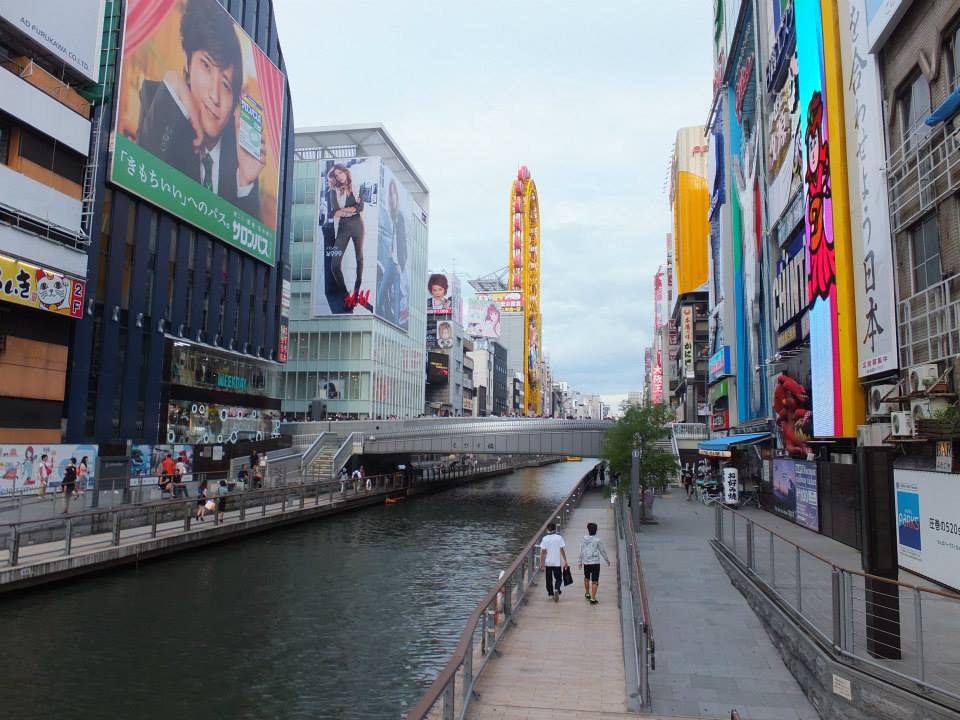
After that it was a quick trip over to see Dotonbori canal and the “Glico Man”, one of the trademarks of Osaka – it is a neon advertisement of a running man that has been standing in Osaka since the 1930’s.
After some more shopping, we returned to Kyoto and called it an evening.
Tomorrow we go to Tokyo! I am starting to get a little worried since there is a hurricane heading straight for Tokyo… there will be rain tomorrow, and it looks like the heavy stuff will start hitting around Sunday night/Monday… hopefully we’ll make it in before the hard stuff hits…
ADDITIONAL COMMENTS
As you read, my first visit to a racetrack outside of the United States was phenominal. Jordan and I were both stunned, struggling to see how we could compare Hanshin to other tracks in the United States. We just could not. The atmosphere was great, and the fans were friendly and passionate.
Much as we would have loved to stay for all 12 races – which is typical of a JRA card – we had to press on with our plans.
It was nice to visit Namba and Dotonbori for the second time – Dotonbori is the area around the canal near Namba. We picked up a bag from a store in the shopping complex at Namba station for Jordan’s sister. It was the sales clerk that eventually redirected us to what winded up being another Fugetsu for another dose of okonomiyaki!
The Kansai Thru Pass ended up being a tremendous benefit for us today, as we had to do a lot of traveling to get around. Our route:
– Kyoto Subway to Karasuma
– Hankyu Kyoto Line to Juso (outside of Osaka)
– Hankyu Kobe Line to Nishinomiya-Kitaguchi
– Hankyu Imazu line to Nigawa – the station for Hanshin Racecourse
Then to Namba:
– Hankyu Imazu line to Nishinomiya-Kitaguchi, connecting to Imazu
– Hanshin Main Line to Osaka-Namba via Namba Line
When we were finished, we opted to take Kintetsu back to Kyoto
– Kintetsu Nara Line to Yamato-Saidaiji, outside of Nara
and finally
– Kintetsu Kyoto Line to get us back to Kyoto Station
Needless to say, we saved a lot of money today by using the Thru Pass for foreigners!
Since we had a little bit of extra money we opted to pay a surcharge to take Kintetsu’s premium train services back to Kyoto. A little circuitous, but it was very fast, very comfortable, and we were able to avoid the commuter train crowds during the evening hours. Oh yes, we could eat too. 🙂 I believe the surcharge was 870 yen per person to go back this way.
As you may know, the storm I was worried about at the end of the post ended up being the powerful typhoon that lashed across Japan. Let’s see how we ended up…. 🙂
Japan Diary – September 13, 2013 – Hikone and Kyoto Tower
I am re-posting my diary from my September 2013 trip to Japan. This is the report from September 13 with my girlfriend (now fiance) Jordan which recounts our visit to Hikone and Kyoto Tower.

Today we rested somewhat after spending the last two days bouncing around at a breakneck pace. This morning I walked the very short distance to (a very small) McDonalds to bring back some breakfast… a sausage McMuffin for Jordan and a sausage, egg and cheese mcgriddle for me. The noticeable difference from the US is that most McDonalds breakfast sandwiches in Japan have the same egg white/yolk one would normally find on a McMuffin.
We went to Kyoto station and departed for our trip to one of Japan’s national treasures, Hikone Castle. It was a surprise for me as the visit was wonderful. Hikone Castle is one of only 12 castles in Japan whose original keep has been undamaged and preserved through the centuries, and one of 4 castles designated as a national treasure. Jordan made a great call on visiting Hikone… the other alternative is the more famous Himeji, although Himeji is currently housed under large scaffolding for reconstruction works.
We opted to take the short ride on the bullet train from Kyoto to Maibara in both directions in order to relax… it was only a 20 minute ride between the two stations; Maibara is connected to Hikone by a 3 minute ride.
After returning to Kyoto station and partaking of some pork buns (again!), it was off to Kyoto Tower, the observation deck that is adjacent to Kyoto station. Apparently it was refurbished AGAIN, so I can now say that I have been to Kyoto Tower three times with three different scenarios: Before renovations (2004), after the first renovation (2008) and this year after the second renovation.
We then decided to go back to hotel and call it a day, but not before making seat reservations for our bullet train trip to Tokyo on Sunday.
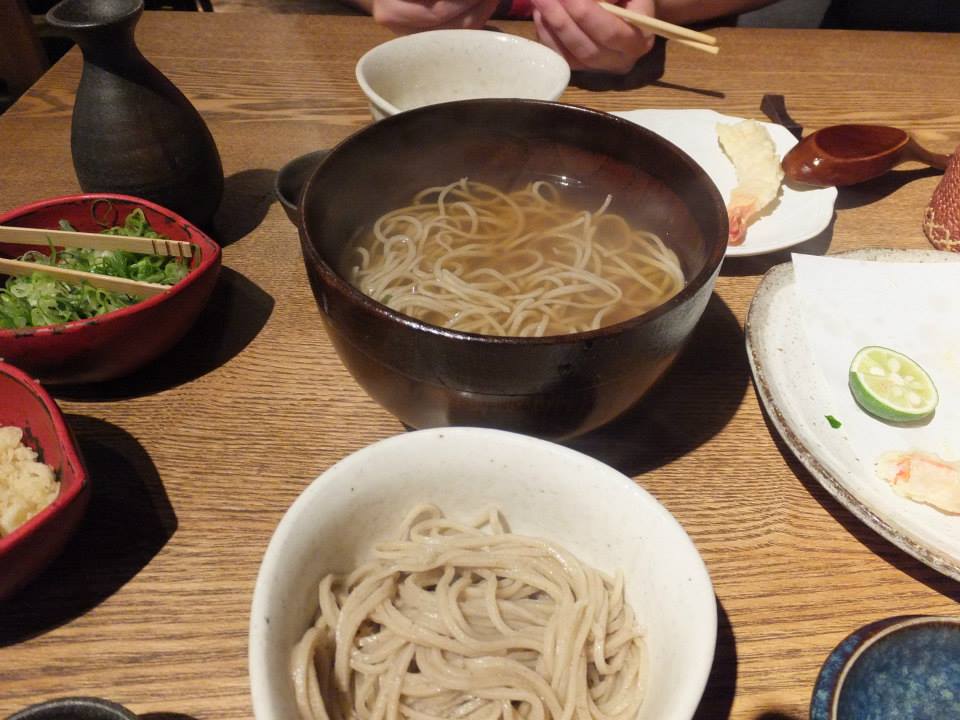
Jordan and I just came back from a noodle restaurant called Yoshimura, which is between the McDonald’s and our hotel. It is a small place but very charming. It’s a two story restaurant.. chefs prepare the noodles from scratch in an open viewing room on the first floor, and then the chefs cook them upstairs where we sat. The set meal included hot or cold soba (we went for hot), prawn and vegetable tempura, a sashimi appetizer and a drink – we went for the specialty drink known in the country as “Nihonshu”… which us Americans call SAKE. We were a bit nervous at first when ordering, but one of the waitresses had a fairly good command of English which was a big plus.
Tomorrow we forward part of our luggage to our Tokyo hotel for Sunday arrival, and then spend a good part of the day visiting the Hanshin Racecourse near Osaka.
ADDITIONAL COMMENTS
What a treat it was to seem to be away from the bustle of Kyoto and discover the charm of Hikone. Of course, Himeji is a must on the typical itinerary of a visitor to Japan. Since 2010, though, Himeji’s castle has been covered by large scaffolding for a big renovation project. Many parts of the Himeji keep were closed to visitors at the time of our visit to Japan, and it is estimated that the entire renovation will not be completed until March, 2015.
It is a bit of a hike to get from the Hikone train station to Hikone castle… but it really is a pleasant walk to get there. Hopefully videos documenting this, and many other aspects of our trip, will be shared soon 😦
If going from Kyoto to Hikone, the easier option is to just take a JR commuter train (50 minutes, 1110 yen) that will take you the entire way. We opted for an alternative: we took the bullet train a short hop to Maibara, which actually goes past Hikone station a bit, then retraced and took a JR commuter train the opposite direction and went just one stop to Hikone station.
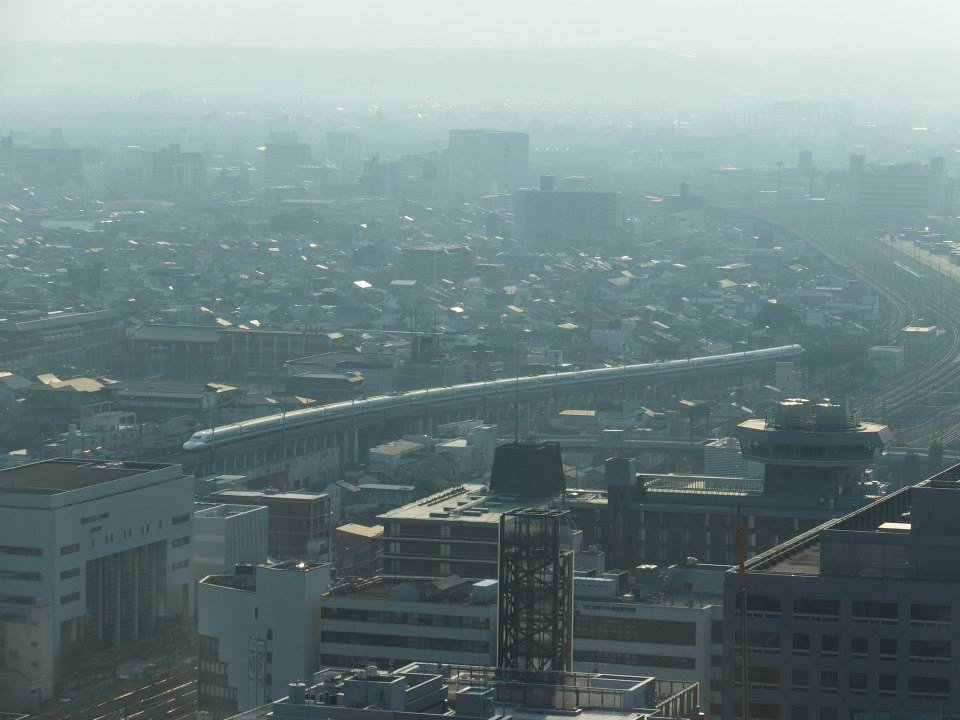
The bullet train selected for Kyoto-Maibara was the Kodama, which is the all stations bullet train service. A good majority of the seats on the Kodama are un-reserved – and cheaper – so the un-reserved tickets let us sit in any un-reserved seat on the train. This surcharge on top of the regular 1,110 yen fare is only 950 yen – so we paid 2,060 yen each for these tickets to Maibara. Then we purchased separate tickets (180 yen each) to go from Maibara to Hikone on the regular train. This was repeated for the journey back to Kyoto.
We opted for this alternative not just for the faster speed, but for the comfortable seating – not to mention the tray tables that allowed us a quick snack while on the 20 minute bullet train trip. These were things that we would not have gotten if just sticking on a commuter train for the entire trip.
Japan Diary – September 12, 2013 – Nara and Osaka
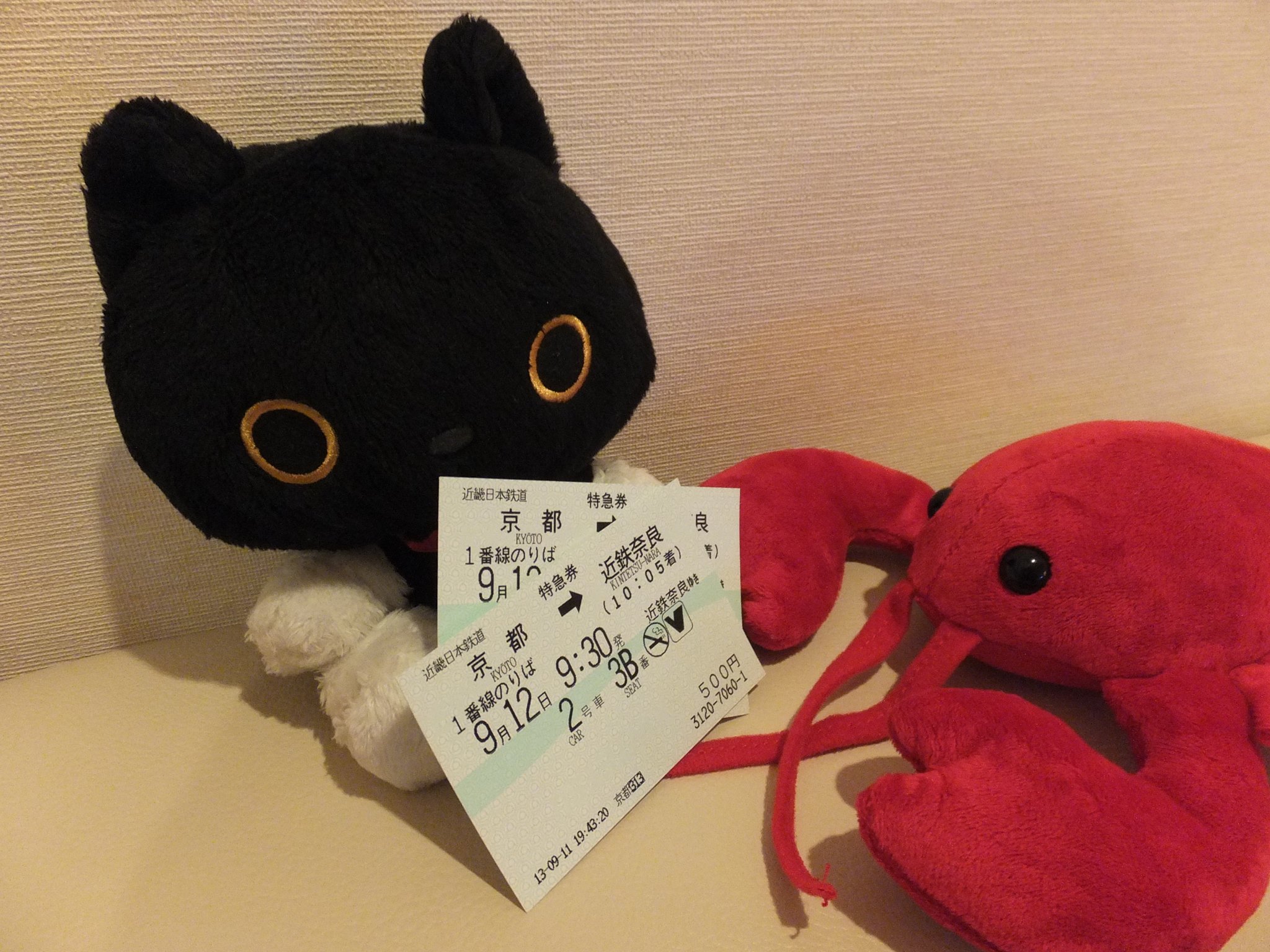
I am re-posting my diary from my September 2013 trip to Japan. This is the report from September 12 with my girlfriend (now fiance) Jordan which recounts our day trip to Nara and Osaka.
This morning we boarded the “Vista Train” at Kyoto station for the quick 35 minute hop to Nara, home of Todaiji Temple, and the Great Buddha statue housed in the world’s largest wooden building. It was quite a hike from the station, and again the weather was hot and humid.
We received a brief explanation from an English-speaking assistant at the entrance about the cultural significance of the temple. One of the more interesting facts that we learned is that the hall housing the great buddha statue is the third incarnation… previous builds were about 40% larger than what currently stands. The walk around was nice, and I can recall back to the last time I visited this hall in 2004.

On the way back and forth, we ran into a signature trademark of Nara: Deer on the road. Jordan and I bought deer snacks and the animals were happy to partake in the feast
Then it was on to Tempozan near the port of Osaka, home to one of the world’s tallest ferris wheels, one of the world’s largest aquariums, and a small mall to boot. It was here that we had the Osaka staple, Okonomiyaki, for lunch. Basically a cooked cabbage pancake filled with whatever ingredients one chooses… in this case the main ingredient was beef. It was Jordan’s first crack at the meal and both of us really enjoyed it. It was also the time that I reunited with green soda, melon flavored!
After the ferris wheel it was on to Kaiyukan (the aquarium), and we spent a good deal of the afternoon making our way around the tanks. She was happy to point out the large whale sharks that were on display, and other fish that were of particular interest. My favorite moment was the dolphin feeding, which I captured on video. We arrived just in time for it and the handlers were more than happy to feed them and have them do tricks for everyone!
The skies were dark as we left…. my feet were numb from standing in the commuter train as we got back to Kyoto. The day finished with dinner that Jordan was looking forward to partaking since we arrived, when she noticed a store selling large pork buns! Very delicious and professionally made, we might try this one more time before heading to Tokyo on Sunday.
Tomorrow’s plans…. not decided yet. We’ll rest and see what we decide to do.
ADDITIONAL COMMENTS
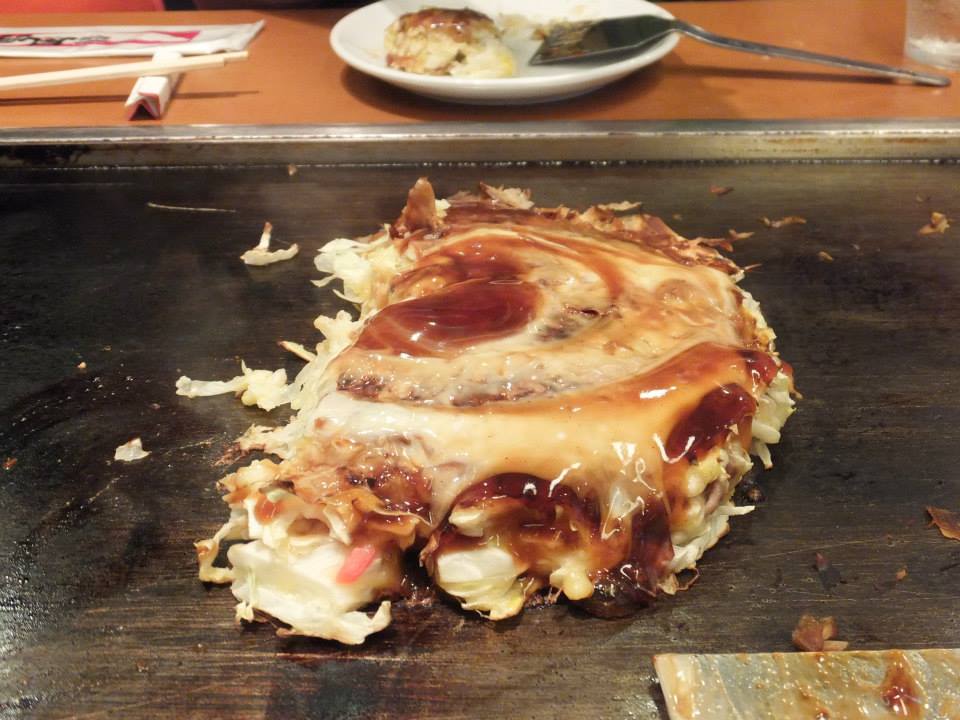
I am pretty sure that on my last trip to Japan in 2008, an old friend of mine – Sachiko – introduced me to Okonomiyaki. It’s been a few years… and I never realized how delicious it can be! It was a bit of an interesting experience the first time, with our lackluster (at best) command of the language… though after this visit we’d go back for Okonomiyaki in Kansai and Tokyo a few times before our flight back to New York. Jordan and I have yet to figure out what New York restaurants offer good Okonomiyaki 🙂
I should also mention that the routes we used for a majority of this day’s trip were fully covered by the Kansai Rail Pass. This included the Kintetsu from Kyoto to Nara, and again from Nara to Tempozan/Kaiyukan in Osaka. Many of the urban and suburban transit systems in Japan will often run on to other train lines. Case in point – from Nara we took the Kintetsu to an intermediate station, Ikoma – in the suburbs – where we switched to the Kintetsu Keihanna Line. 10 km and 4 stations west of Ikoma, the same train that we were on continued on to the Chuo Line of the Osaka Subway. This took us directly to Osaka-ko, the station for Tempozan and Kaiyukan, and eliminated the need to change between lines in the middle of Osaka. If you do your research, you can find alternates like this that will make your travel a little easier.
It got pretty late for us this day, so we opted paying for the faster (and as it so happened, crowded) JR line to go back to Kyoto.
Japan Diary – September 11, 2013 – Kyoto

I am re-posting my diary from my September 2013 trip to Japan. This is the report from September 11 while staying in Kyoto with my girlfriend (now fiance) Jordan.
Today was a whirlwind day of sightseeing that left us tired at the hotel when everything was all said and done.
First order of business was to go to Kyoto Station to purchase the three-day Kansai Thru Pass. This is an economical pass that allows unlimited travel on private railways in the Kansai region for 2 or 3 days, and it is only available to foreign tourists. With that done, we were on our way to the first destination, Kinkakuji Temple. We could have joined the long lines for the city bus at Kyoto Station, but instead we opted to take the subway, then take the bus. I can see why this method of travel is recommended… Hassle-free and room to sit (on a weekday morning, granted) and the trip was actually quicker.
Kinkakuji was a wonderful place – a first for me as I’ve never been there. The gold leaf plating was a sight to behold… of course, so impressive that we were not allowed within a good 20 feet of it…
Next stop was Ryoanji, which was a pretty quick trip on the then crowded bus. Ryoanji was our first stop in which our shoes had to be removed before entering.
The rock garden was beautiful… there are a total of 15 stones in the garden and it’s said that when viewing the garden from the angles provided, one rock is always hidden from view. Ryoanji was actually quite a small place otherwise. One thing I did notice was that there was a row of about 15 red water buckets lined up along the side of the main temple…. fire buckets in case the worst should happen.
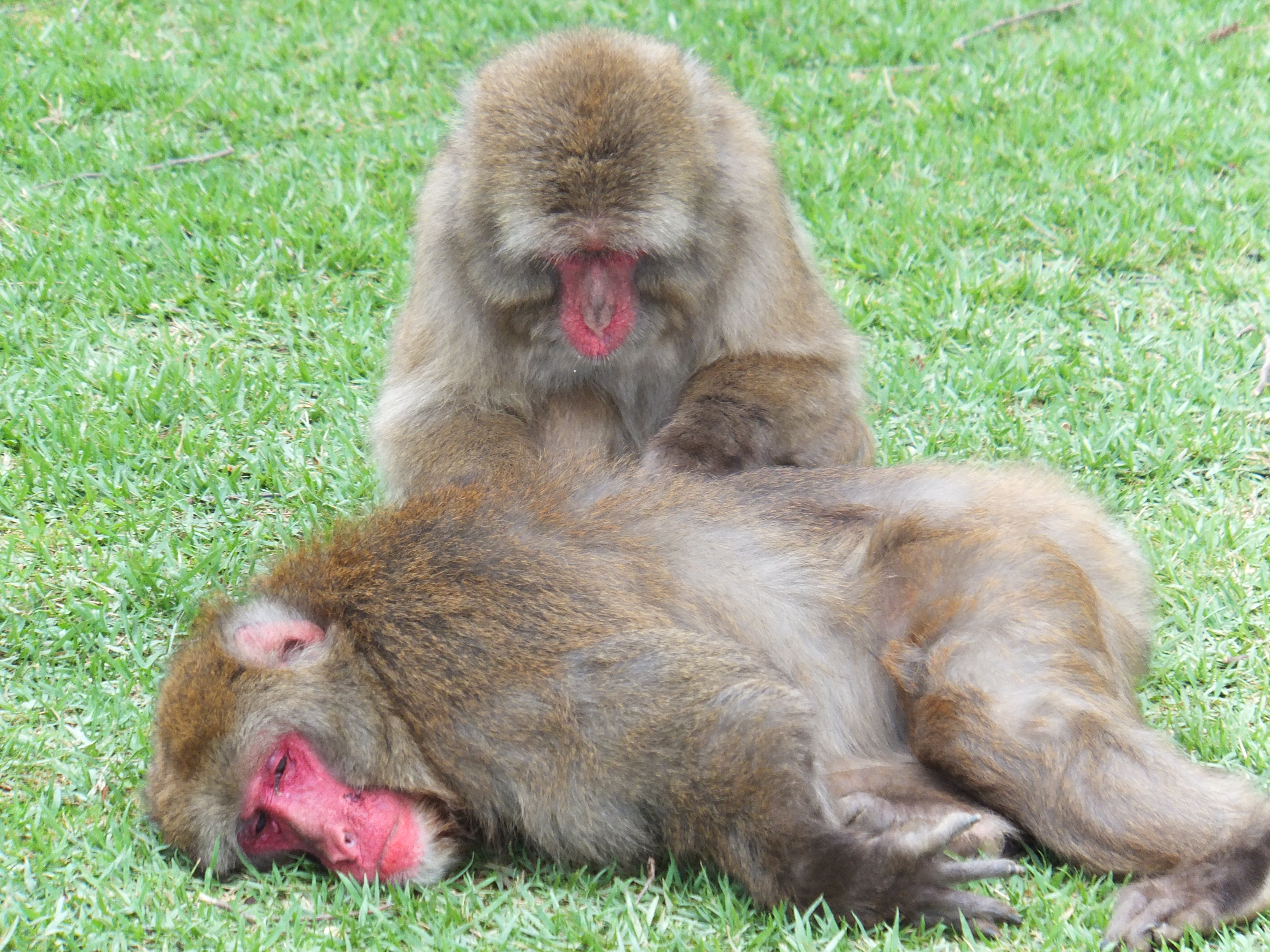
Photo by Jordan Martin
From there we walked to the tram for the trip to Arashiyama. After having a delicious curry lunch next to the station, we went to the Monkey Park. A long, looong uphill climb (for me at least… Jordan was fine) – but we were rewarded with monkeys and an impressive view of Kyoto City and the surrounding mountains from a height of approx. 520 feet above sea level.
We returned on the Hankyu Railway which zipped us back to the subway for the ride to the hotel.
This evening we went to Kyoto Station again for dinner at a rotating sushi restaurant, which was fun for the both of us – this is a place that I’ve been to now in each of the three trips I’ve made here, but the first time I’ve seen all of their menu items translated to English.
After the sushi we went to the Kintetsu Railway station to purchase our “Vista Car” limited express tickets for tomorrow’s journey to Nara, and called it a day.
Japan Diary – September 11, 2013 Morning
Over the next few days I am hoping to re-post my diary from my September 2013 trip to Japan. Here’s the first post, written the morning after my arrival in Kyoto.
My travel companion is my girlfriend (now fiancé), Jordan, along with the unofficial ‘trip mascots’, a plush lobster and cat. We are joined by our friend Daniel from Canada later in the trip.
Ok everyone! Here’s a summary of our Japan trip so far….
Check-in at LaGuardia went well and we got to Detroit with no issues.
When we got onto the plane in Detroit, it was discovered that in the business class cabin a few rows ahead of us, one of the overhead baggage bins was missing a federally-mandated weight limit sticker.
That’s right, we were delayed a little more than an hour just because there was a small sticker missing on the plane.
Soon after I saw an airport worker use packing tape to put the new label on the plane, we were on our way.
The flight was a little rough… we tried to sleep but it was difficult. Especially because there was a (insert bad word here) directly across from us on the opposite side of the plane that would open his window fully every 20 or 30 minutes. Didn’t seem like he needed to sleep at all, cause this happened from start to finish. NO consideration whatsoever!
We landed in Nagoya in the evening (only 20 minutes late), and were bowed to by the airport workers as we stepped off of the plane, which was a nice treat.
Immigration and customs went smoothly, we got our big bag sent through to the luggage delivery service, and only 70 minutes or so after we landed we were on our way to Nagoya station by way of the Meitetsu “Myu-sky”.
We connected to the shinkansen in Nagoya city (Nozomi 253)… we were at Kyoto station by 9 PM and in our hotel by 9:30.
The good thing is that we both slept well, though I had to check on the air conditioning every few hours or so. Turns out the AC was in “HEAT” mode instead of “COOL” mode!
Off to breakfast, then to our plans for the day which will hopefully include Kinkakuji (Golden temple) and a monkey park.
We did not take photos or videos last night as it was pretty dark anyway, and we were both worn out. But we’ll be on the task today.
Say a prayer for us as we start the first full day in Kyoto!
ADDITIONAL COMMENTS (Feb. 2014)
Nagoya Airport – technically Chubu Centrair International Airport – was a real pleasure to fly into. The arrival formalities were very straightforward for an airport that is now Japan’s third major gateway for International flights behind Tokyo and Osaka… the airport had only opened in 2005.
Seeing the bowing airport workers was a surprise to be sure… What I liked especially about the airport was that all of the arrival procedures were on a single level – a very short walk from the airport to Quarantine, then Immigration, then Baggage Claims, then Customs, then the exit.
Luggage delivery service is a tremendous benefit for passengers with large suitcases. You can have your luggage delivered to any destination in Japan for a reasonable cost. This allows you to carry light luggage onto whatever mode of public transport being used – many of which don’t have spaces for large suitcases. If I remember correctly, it only cost us about 2,000 yen to transport our large suitcase from Nagoya to our hotel in Kyoto.
Our starting city was Kyoto. There is an airport much closer to Kyoto – Kansai Airport. But for some reason it would cost both of us several hundred dollars extra to fly there. Working out the expenses, it turned out to be a cheaper journey if we flew into Nagoya Airport, took the airport train to the center of the city, and then took the Shinkansen for the quick trip into Kyoto.
Our itinerary for the trip was ‘open-jaw’. By starting in Nagoya and ending in Tokyo, instead of doing a round-trip in and out of Tokyo, we were able to maximize our sightseeing time, not to mention the difference in airfare was only a few dollars.
In the airport’s access plaza is the entrance to Meitetsu and their airport train, as well as a Family Mart, one of the top convenience store chains in Japan with over 10,000 outlets. That’s where Jordan fell in love with the Family Mart-brand soy sauce crackers. None could be found in Kyoto, but there’d be plenty of these to snack on once we got to Tokyo later in the trip.
Tokyo to Kyoto for only 2,300 Yen!?
For more up-to-date information, please read the September 2014 post Tokyo to Kyoto for $21… and other cheap ways to transit Japan
I’d like to take an opportunity to thank those of you who are reading my blog. I’m happy to share my thoughts about Japan travel and assist people in any way that I can!
My most popular post on this blog is how to travel from Tokyo to Kyoto for just 2,300 yen. That post was written back in 2009, so I think it’s time for me to update this information to reflect current events.
Without question, Tokyo and Kyoto are THE two destinations that should be included if you are intent on visiting Japan for the very first time. Of course, Tokyo and Kyoto are separated by some 231 miles (372 km) if you were to draw a straight line.
Between Tokyo and Kyoto, the two major methods of public transportation are the train and the highway bus. (You might also add air, if continuing to Osaka, but this article will focus on the first two methods of transit.)
So how much will you pay for a ride between Tokyo and Kyoto? This article breaks down the various bus and train options by price.
Obviously if you have a Japan Rail Pass then this question is moot; simply use your rail pass (Hikari or Kodama only) to make the journey.
But if you do not have a Japan Rail Pass, then you’ll want to examine the prices carefully to see what fits your budget. Note that the prices listed here are rounded to the nearest 100 yen, and are subject to change, including a variance of a few hundred yen either way depending on the time of the year.
18,200 yen: For this price you will get a reserved first-class seat (called the “Green Car”) in the premium Nozomi service. You may expect to be personally greeted by a Green Car attendant as you enter the train, and the attendant will check your ticket. Hot towel service is provided and you can order food and drinks on board. The seats are wide and comfortable, and the lighting is noticeably softer than in the other seating areas.
13,300 yen: For this price you will get a reserved standard-class seat in the premium Nozomi service. You sit in the standard bullet train seats, and food and drinks are sold on board. In these first two instances the travel time from Tokyo to Kyoto is 2 hours, 20 minutes.
Running about 500 or 600 yen cheaper than the above prices are the respective surcharges for travel on the Hikari and Kodama services, which are slower than the premium Nozomi because they make more stops. In the Hikari service, hot towel service is provided in the Green Car, but you are not “greeted” as you board. There is no “greeting” or hot towel service in Kodama trains, and as of 2013, there is no food or drink service on board Kodamas either. Hikari trains make the run to Kyoto in 2 hours, 45 minutes; Kodamas, which stop at EVERY station, take 3 hours, 45 minutes.
My recommendation if you’re purchasing tickets “a la carte” is to spend the extra 500-600 yen and take the Nozomi. There are more Nozomi trains than the others and it is the fastest way to get from Tokyo to Kyoto. Fall back only to the Hikari (and worst case, Kodama) if the Nozomi sells out.
9,800 yen: You can make a cheap trip aboard the bullet train at this price, but it is strange why it’s only marketed to Japanese travelers. I haven’t tried this, but I have read reports of other foreign travelers that have used this method successfully. For 9,800 yen you can purchase a “Puratto Kodama Ticket”, which is a discounted one-way ticket on the Kodama (the slowest bullet train service). You must make a reservation at least one day in advance at a JR Tours office located at a station served by the Shinkansen, i.e. Tokyo or Shinagawa in Tokyo, or at Kyoto station. The JR Tours office is operated by JR Central, and is recognizable by their orange colors. As a bonus, when you purchase this ticket you are entitled to one free drink – since food and drinks are no longer sold on board Kodama services, you pick one up at the train station before getting on. The “Puratto Kodama Ticket” is also available in the Green Car for 11,300 yen. The prices go up during times of high demand. If you get stumped, you can visit the website for the Puratto Kodama Ticket (http://www.jrtours.co.jp/kodama/), print the page and show it when you want to purchase your ticket.
8,000 yen: At this price you can make a journey on local JR trains from Tokyo to Kyoto, via the Tokaido Main Line. You will be sitting in regular commuter trains and will have to change trains frequently along the way. On the other hand you’ll be passing through the rural and urban Japanese landscape, getting a better and closer look at areas that the bullet train will just whiz through. Connection times can range anywhere from 2 to 20 minutes for each train that you take. The travel time is approximately nine hours – but that doesn’t figure in the time that you might need for pit stops or a meal.
Extra Tip (Added 6/9/13): As pointed out on the Rocketnews blog, regular tickets allow you to hop on and off as many times as you like within a certain time period, as long as your ticketed journey is at least 200 kilometers. If your journey is between 200 and 400 kilometers you can complete your trip in a two-day period. You gain an extra day of travel for every additional 200 kilometers. Since the route from Tokyo to Kyoto via the Tokaido Line is 513.6 kilometers, you have up to three days to make the journey… you’ll have to stop along the way once or twice to rest (Nagoya makes a nice destination for a few nights) but if you factor only the trains this will make the travel cost 2,660 yen per day.
7,000 yen: For this price you can travel overnight between Tokyo and Kyoto by bus. There are many bus operators between Tokyo and Kyoto, and JR is one of them – bus tickets can be reserved at several channels, including green ticket windows at major JR train stations. On their “Dream” service, which is their standard overnight bus service, you are entitled to a comfortable reclining seat with head and foot rests on a double-decker bus that is configured in a 1 x 1 x 1 configuration; in other words you will have no other passengers directly next to you – you’ll either have an aisle or window. There are also blankets and slippers at your seat, and a toilet is on the first floor of the bus. The price is valid for weekday travel; add about 1,000 yen or so for weekend or holiday travel. An advance purchase of 5 days lobs 1,000 yen OFF of the price. Travel time is 7 1/2 hours from Tokyo Station; buses also run from Shinjuku Station on a different route, taking eight hours. A bus also operates from Tokyo Station restricted to female travelers.
6,000 yen: At this price you can use the same buses described above for a DAYTIME journey between Tokyo and Kyoto. The trip takes eight hours and the bus makes several stops along the way, including a few stops at service areas. There is a discount of 1,000 yen for a 5-day advance purchase. The price does not change depending on the day of the week or whether or not it’s a holiday.
5,000 yen: This is the price for a bus trip from Tokyo to Kyoto on the “Seishun Dream”, translated as “Youth Dream”. It is discounted because it offers less amenities than the regular bus service. Seats are configured 2×2, just like you’d find on a North American Greyhound bus. Seats offer recline, and there is a toilet on board. Regardless of time of day or holiday, the price is 5,000 yen with a 500 yen discount for a 5-day advance purchase. Travel times are similar to the other bus services.
2,300 yen: At last, the price tag of 2,300 yen. Is it possible to travel from Tokyo to Kyoto at such a low price?? Indeed, it IS possible, but as the old saying goes, “Certain restrictions apply.”
The rules are as follows: First, you must travel to and within Japan during one of the country’s three designated school holiday periods: March 1 – April 10, July 20 – September 10, and December 10 – January 20.
Secondly, you must travel with four other people… either four of your friends who want to go to Japan, or four Japanese friends, etc… finding the four people to go with you is your choice, and of course, your responsibility.
Finally, one person must purchase a ticket sold DURING the school holiday periods, called the “Seishun 18 Ticket”. This ticket sells for 11,500 yen and allows for unlimited travel on JR’s LOCAL TRAINS only: NO BULLET TRAINS!
The Seishun 18 Ticket essentially has five “SPACES” that can be used. Each space is good for one person on one day. So one person could use it for five separate days within the validity of the ticket. Or two people could use it together for two days, etc.
Indeed, FIVE people can use the seishun 18 ticket on a single day, as long as travel is completed by 12 midnight. What a cheap way to travel! Simply purchase the ticket, and make sure everyone stays together. As you go into the system, your ticket is stamped five times. So all five of you are set for the journey.
As mentioned above, you will travel on local trains only – no bullet trains. The travel time is about 9 hours, not accounting for pit stops or meal stops. But here’s a good thing: with the Seishun 18 ticket, if you all stay together, you can exit the system at any station and return to the system on the same day – just show your stamped ticket. With this in mind, perhaps you can exit the system at a major train station – say for example, Odawara, Shizuoka, Hamamatsu, Toyohashi or Nagoya – and head into a restaurant within the station, or enjoy some treats within the floors of a Japanese department store.
This 2,300 yen plan also works for other long-haul trips such as Tokyo to Nagoya or Tokyo to Osaka. The ticket price of 11,500 yen, divided by five, equals 2,300 yen. Even if four or three were to take the trip, the trip breaks down to 2,875 yen or 3,830 yen per person respectively – which can very well be a TREMENDOUS savings compared to standard train prices, or even bus prices.
My motto when it comes to Japan travel: always research as much as possible about your trip. This way it will make your trip much more enjoyable when it happens – not to mention it MAY just be a little lighter on the wallet!
With that, here is an idea that someone could use to travel from Tokyo to Kyoto by local JR trains. This itinerary assumes a regular weekday in May of 2013, leaving at 6:30 in the morning – just as the morning rush begins to ramp up.
Train 1: Tokyo-Numazu
Leave Tokyo at 6:34 (Platform 8)
Leave Shinagawa at 6:43
Leave Yokohama at 7:00
Arrive Odawara at 7:57
Arrive Atami at 8:20
Arrive Numazu at 8:39
From other parts of Tokyo, you can take the JR Yamanote Line to Shinagawa and change to the above train. These Yamanote Line departures will give you about 10 minutes to transfer at Shinagawa:
Ikebukuro: 6:05
Shinjuku: 6:13
Shibuya: 6:20
Ueno: 6:12 (Keihin-Tohoku Line)
Train 2: Numazu-Shizuoka
Leave Numazu at 8:42
Arrive Fuji at 9:01
Arrive Shizuoka at 9:36
Stay in Shizuoka one hour for a bathroom and meal break.
Train 3: Shizuoka-Hamamatsu
Leave Shizuoka at 10:42
Arrive Hamamatsu at 11:51
Train 4: Hamamatsu-Toyohashi
Leave Hamamatsu at 12:02
Arrive Toyohashi at 12:36
Train 5: Toyohashi-Nagoya (Special Rapid Train)
Leave Toyohashi at 12:51
Arrive Nagoya at 13:41
Stay in Nagoya one hour for a bathroom and meal break.
Train 6: Nagoya-Ogaki (Special Rapid Train)
Leave Nagoya at 14:45
Arrive Ogaki at 15:16
Train 7: Ogaki-Maibara
Leave Ogaki at 15:37
Arrive Maibara at 16:12
Train 8: Maibara-Kyoto (Special Rapid Train)
Leave Maibara at 16:18
Arrive Kyoto at 17:12
(Train continues to Osaka at 17:43, Sannomiya/Kobe at 18:06, Himeji at 18:47)
The total travel time from Tokyo, including breaks, is approximately 10 1/2 hours. Of course, you can tailor the breaks/rests to suit your needs.
 Jose's Japan Tips