Overnight by Train in Japan: The Options – March 2016 Update

With the opening of the Hokkaido Shinkansen this week, it’s time to once again update my blog concerning overnight train travel in Japan and share ideas when it comes to using the Japan Rail Pass for such journeys.

Overnight trains were once a staple of the country. Many stories have been told – real and fiction – about traveling life on these trains. Regular services peaked in the 1970′s, but then came the bullet trains – then cheap overnight highway buses – then aging train equipment – that sapped most life out of these so-called “Blue Trains” (nicknamed for their color).

When I wrote my first overnight by train article six years ago, there were still several overnight train options available, including the Cassiopeia and Hokutosei (Tokyo-Sapporo), Twilight Express and Nihonkai (Osaka-Kyoto-Sapporo). Those trains are now all discontinued from regular service with the opening of the Hokkaido Shinkansen to Hokkaido over the tracks formerly used by the sleeper trains.

There is now just one set of sleeper trains in regular service: The Sunrise Seto and Sunrise Izumo. These trains run every night, coupled together between Tokyo and Okayama, stopping at Himeji early in the morning. At Okayama the trains split, with the Sunrise Seto heading across the Seto Inland Sea to Takamatsu on the island of Shikoku, and the Sunrise Izumo heading north to the resort city of Izumo – home of a famous shrine of the same name.

These two trains have a carpeted floor space called a “Nobinobi Seat” where you sleep on the floor. These are a popular travel option… and with a Japan Rail Pass, you can use these carpeted spaces for free. The reason for that is because the carpeted space is technically classified as a “Reserved Seat” for booking purposes.

There are private bunks and rooms as well, if you want your own space, but if you want to use these spaces with a Japan Rail Pass you will have to pay for the room. These can be expensive, approximately 10,000-20,000 yen per room/compartment once additional surcharges are calculated. Each will fit one or two passengers.

For more details about these trains, I highly recommend the YouTube video created by John Daub describing life on the Sunrise Izumo. More of his videos from Japan can be found on his website, onlyinjapan.tv.

If you are worried about costs and just want to travel point-to-point overnight not worrying about sightseeing, you can use the Japan Rail Pass to your advantage by finding a stop along the route of travel where there are cheap accommodations, such as a business hotel, and then continue on to your destination in the morning. The advantage, besides the inexpensive cost, is that you have your own bed, shower and toilet. You can also enjoy just a little slice of what life is like in another part of Japan… Who knows, you might even get to try something – food for example – that’s unique to that particular region or city. And remember, as long as your rail pass covers the day of travel AND the following day, your rail fare will be fully covered.

We will now revisit all of the options for travel between major cities, as listed in the previous blog articles. We’ve used the reputable Toyoko Inn chain as an example to look at when it comes to inexpensive hotel accommodations, but now that web searches for hotels are pretty sophisticated, I’ll be using several resources including the booking site Agoda and look for accommodations for a random weekday evening in the spring.

TOKYO to KYOTO or OSAKA via Tokaido Shinkansen

Tokyo to Kansai is an essential trip for the tourist. The Tokaido Shinkansen easily connects these two areas in three hours or less… but if you want to cut back on lodging costs, you could stay at a lesser-known city along the way. Some stops along the route that you can consider include Hamamatsu, Toyohashi and Nagoya. In Hamamatsu, Agoda indicates solo accommodations starting at 3,500 yen, and double occupancy at 2,000 yen per person. Toyohashi has accommodations from 5,000 yen single and 3,750 yen p/p double, and the hotels at the bullet train station in Nagoya start from 4,000 yen single (there’s a guesthouse nearby at 2,500 yen) and 3,600 yen p/p double.

Hikari bullet trains, the fastest that can be used with the Japan Rail Pass, can easily get you to any of these cities with 1 or 2 departures every hour. The final trains leave from Tokyo station at 21:30 and 22:00, both terminating at Nagoya with stops at Hamamatsu and Toyohashi along the way.

In the morning, bullet trains from Hamamatsu and Toyohashi towards Kyoto and Osaka leave from 6:32 and 6:45 respectively. These are Kodama trains which stop at every single bullet train stop, and arrive in Kyoto and Osaka at 7:56 and 8:10 respectively. The Kodama trains do not have food or drink sales on board, so keep that in mind before boarding. You could also stop quickly at Nagoya for some food before continuing on the next Hikari or Kodama service.

From Nagoya, the first departure is a Hikari leaving at 6:35, followed by a Kodama leaving at 6:51. These trains reach Kyoto in around 45 minutes and one hour respectively.

TOKYO to KYOTO or OSAKA via Kanazawa

A second overnight option that has existed takes you through Kanazawa, home to one of Japan’s top Japanese gardens. Travel between Tokyo and Kanazawa has been easy since 2015, when the bullet train opened between these cities.

From Tokyo, Kagayaki and Hakutaka trains run the route to Kanazawa. The last Kagayaki trains from Tokyo leave at 19:56 and 21:04, arriving in Kanazawa at 22:30 and 23:35 respectively. Accommodations in Kanazawa sampled at 5,800 yen single and 3,900 yen p/p double.

Regular limited express trains called Thunderbird run from Kanazawa to Kyoto and Osaka via the northern side of Lake Biwa. In the morning, the first train leaves at 5:35 if you are eager enough. Kanazawa also has trains running to Maibara, from which you can transfer to the Tokaido Shinkansen. While you’re in Kanazawa, though, why not spend the early hours in Kenroku-en, the aforementioned Japanese garden? Visit early before the tourist crowds arrive, then continue on your way.

TOKYO to TAKAMATSU and the rest of Shikoku

The port city of Takamatsu is one of the major cities on the Japanese island of Shikoku. Previously only accessible by ferry, Shikoku was connected to the Japanese mainland in 1988 with a series of bridges known collectively as the Great Seto Bridge. Two more bridges connecting Honshu and Shikoku would open in the late 1990’s, but the Seto Ohashi bridge is the only one able to accomodate both vehicular and railroad traffic.

The previously-mentioned Sunrise Seto overnight train provides a one-seat ride between the cities. But if this is not an option for you, for one reason or another?

Let’s look at one of the major stops on the Shinkansen, Okayama. All of the major bullet trains that run this far stop in Okayama. It is also the connection point for trains to Shikoku.

There is one direct Hikari service every hour from Tokyo to Okayama, taking four hours. The last of these services departs at 17:03, arriving Okayama at 21:11. There are a few more options after that, but you’ll need to change trains in Osaka. The last departure is the Hikari leaving at 19:33 – when you reach Shin-Osaka, change to the Kodama which will get you to Okayama at 23:47.

Accommodations around Okayama were found for 6,000 yen single and 4,000 yen p/p double.

The next morning, take the “Marine Liner” rapid train service to reach Takamatsu, or if you are heading to another destination on Shikoku then take one of the Limited Express trains in that direction. The first two Marine Liner trains for Takamatsu at 5:27 and 6:01, arriving Takamatsu at 6:31 and 6:56 respectively. Marine Liner trains depart on a regular basis to Takamatsu so you can take your time in Okayama if you wish… perhaps visit another renowned Japanese garden, Koraku-en.

TOKYO to HIROSHIMA and FUKUOKA (and Kyushu)

If you wanted to travel from Tokyo directly to Fukuoka by train, it’s a six hour trip with a change in bullet trains required along the way. If you want to travel by night, Okayama is an excellent transfer point, as described above.

Another stop you can consider is Himeji, known for its iconic castle. The options described above to go from Tokyo to Okayama are also valid to reach Himeji.

Himeji’s rates were checked from 5,000 yen single and 3,000 yen p/p double… In my particular search a rate of 7,000 yen single at a 4-star luxury hotel was discovered – what a steal!

The first train from Himeji is a Hikari service, which leaves at 6:38 for Fukuoka (called Hakata station)… but another service right behind it, a Sakura service, leaves at 6:55 and will actually beat the Hikari service to Fukuoka by around a half-hour. This Sakura service is what you should consider using for trips to Hiroshima, Fukuoka, and other destinations in Kyushu such as Kumamoto (Arrive 9:47) and the end of the line at Kagoshima (Arrive 10:44).

Since trains leave Himeji 1 or 2 times per hour, you could consider sneaking out for an early trip to Himeji Castle before continuing on your way.

TOKYO to HAKODATE and SAPPORO (and Hokkaido)

This is where things have changed dramatically with the recent opening of the Hokkaido Shinkansen from the northern Tohoku region into Hokkaido.

Trips from Tokyo to Hakodate in southern Hokkaido now take an average of 4 1/2 hours. If you want to make this short journey into an overnight excursion, you can stop in Aomori, where hotels are 5,500 yen single or 4,000 yen p/p double. To reach Aomori, you’ll need to get off the shinkansen at Shin-Aomori then continue to Aomori on a shuttle train. In the morning, return to Shin-Aomori to pick up the shinkansen towards Hokkaido. In the morning, the first train to Hokkaido leaves Shin-Aomori at 6:32, but the shuttle train from Aomori leaves at 5:45, so you have a lot of time sitting in Shin-Aomori prior to the departure. The Aomori departure at 7:35, connecting to the Shinkansen departure at 7:57, is a little more reasonable.

Remember, when you get to the terminal stop in Hakodate, called Shin-Hakodate-Hokuto, you have to take another shuttle train which will get you to Hakodate city.

Tokyo to Sapporo, end to end, takes as little as 7 hours 45 minutes on the fastest train services. Here, you could make the argument of spending the night in Hakodate before continuing on your way to Sapporo… why not make a day of it in Hakodate? In Hakodate city, prices were seen for around 4,500 yen single or 3,600 yen p/p double.

If you’re pinched for time, the last two services from Tokyo to Hakodate leave at 17:20 and 19:20. Arrival times in Hakodate are at 22:29 and 24:05 respectively. From Hakodate to Sapporo, the first trains depart at 6:10 and 7:28, arriving Sapporo at 9:48 and 11:27 respectively.

OSAKA and KYOTO to HAKODATE and SAPPORO

This route used to be covered by several popular overnight trains, including the Twilight Express. All of the overnight train options have been discontinued, leaving us to make use of the existing shinkansen and limited express services. I’d recommend a stopover for an overnight trip in Hakodate, with Aomori coming a close second.

You can easily take the Hikari shinkansen from Osaka and Kyoto to Tokyo and continue northbound on the Hayabusa towards Hakodate. Leaving on the 13:40 Hikari from Osaka (13:56 from Kyoto) will get you to Tokyo at 16:40, giving you 40 minutes before the Hayabusa departure to Hakodate as described above.

Via northern coast

Another option, if you want to consider it, is a longer journey that routes you along the northern Japanese coast, following the sea of Japan. This is the route formerly covered by the Twilight Express service. If you’re a true train lover like I am and really want to contribute to green commutes, this is the trip for you. Part of this journey is now operated by the Hokuriku Shinkansen.

Thunderbird 7 – Depart Osaka 8:10, Shin-Osaka 8:14, Kyoto 8:41, Arrive Kanazawa 11:02

In Kanazawa you have a layover of almost one hour, perfect for grabbing a quick bite to eat or two. The next several trains require quick connections.

Hakutaka 562 – Depart Kanazawa 11:56, Arrive Joetsu-Myoko 12:58
Shirayuki 5 – Depart Joetsu-Myoko 13:07, Arrive Nagaoka 14:14
Max Toki 321 – Depart Nagaoka 14:27, Arrive Niigata 14:50
Inaho 7 – Depart Niigata 15:01, Arrive Akita 18:41

There is a layover of 50 minutes in Akita.

Tsugaru 5 – Depart Akita 19:32, Arrive Aomori 22:16

Overnight in Aomori as described earlier, then depart on the 7:35 train from Aomori to catch the 7:57 Hayate train to Hakodate. You can reach Hakodate by 9:30, or connect to the train to Sapporo with an arrival time of 12:41. You can also elect to take the 5:45 departure and wait it out at Shin-Aomori until the 6:32 departure, which will get you to Hokkaido sooner.

An alternative route after Akita is to take the Komachi shinkansen service from Akita (Departing 19:11) to Morioka (Arriving 20:49) and spend the night in Morioka. In the morning, take the 6:54 Hayate service to Hakodate. As with the first option, you can reach Hakodate by 9:30, or connect to the train to Sapporo with an arrival time of 12:41.


There are many other routes that you can choose from… including a scenic trip through the central Japanese alps! Many of the routes can be sorted out using English planning sites like HyperDia (www.hyperdia.com). I also like using the Japanese site ekikara.jp to look up the timetables, though some understanding of Japanese is needed.

Whatever you decide – however you decide to do it – enjoy traveling around Japan and enjoy the new slice of life experience that comes with a stay in a non-touristy city.

As always, all advice on my blog is offered pursuant to my Disclaimer.


Hokkaido Shinkansen – New train line, new rail pass

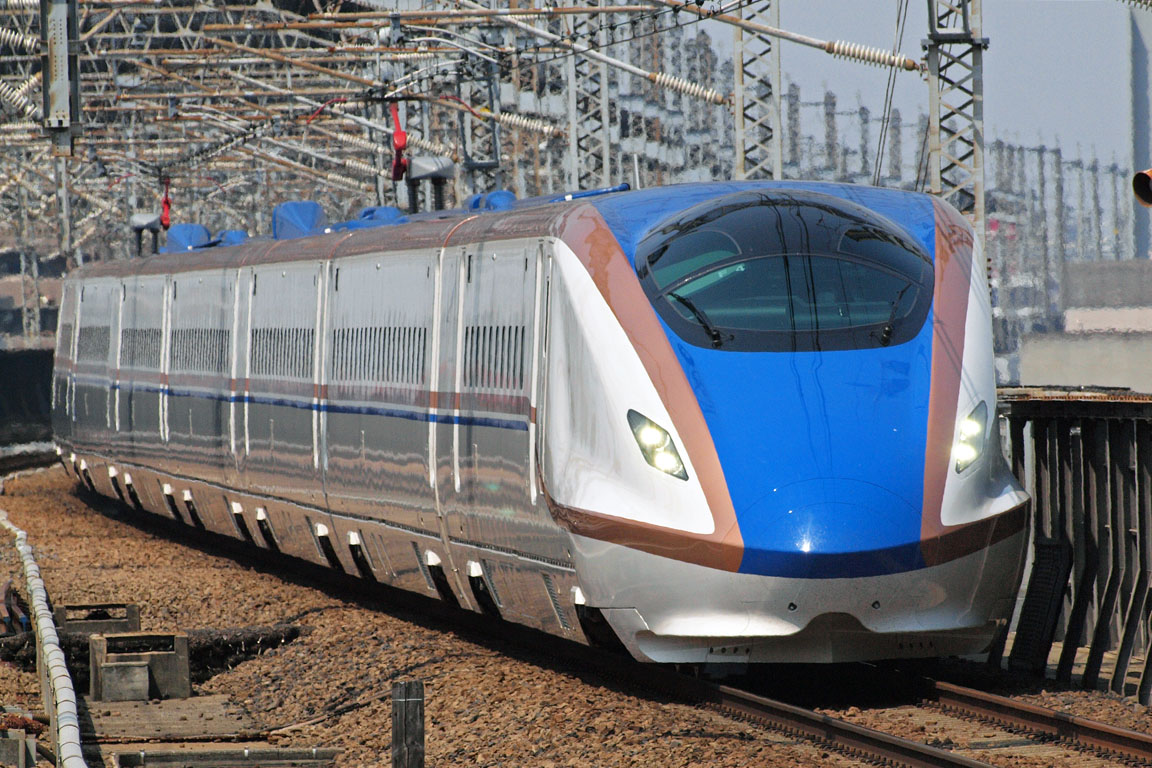
H5 series Shinkansen on a test run. By Sukhoi37, CC BY-SA 4.0

Happy New Year, and welcome to the first post on myjapantips.com in 2016!

In a few months, Japan’s iconic bullet train system will be extended to the northern island of Hokkaido for the very first time. The shinkansen has been running there for the past few months on test runs, but it officially opens to the public on March 26.

Plans for a bullet train line in Hokkaido were laid out over four decades ago, with proposals for several routes on Hokkaido itself. The 33 1/2 mile Seikan Tunnel linked Hokkaido to the Japanese mainland in 1988, and with the 17-year construction project came provisions to eventually add the bullet train.

The new bullet train line extends a distance of 92 1/2 miles from the northernmost terminal at Shin-Aomori, through the Seikan Tunnel to a bullet train station outside of Hakodate, called Shin-Hakodate-Hokuto. From here, a shuttle train called the “Hakodate Liner” makes the 11 mile trip south to Hakodate station in the center of the city.

It will also be possible to hook up to the Hokuto limited express service for the journey north to Sapporo. You can enjoy the scenic trip up to Sapporo on the limited express, as the bullet train probably won’t reach Sapporo for another 15 years or so.

Here are some additional details on the new services to Hakodate, which will extend as far south as Tokyo itself.

Up until the start of services on March 26, 2016: Train travelers from Tokyo heading north to Hokkaido have to change in Aomori for conventional express trains that run under the Seikan Tunnel to Hakodate. The fastest journey from Tokyo to Hakodate is 5 hours 22 minutes. From Tokyo to Sapporo (with an additional change of trains) the fastest journey time is just over 9 hours.

When the bullet train opens on March 26, 2016: Travel times from Tokyo to Hakodate will be cut by almost an hour, to 4 1/2 hours on the fastest services. With just one transfer at Shin-Hakodate-Hokuto to an express, Tokyo to Sapporo journey times will be reduced to 7 hours, 44 minutes on the fastest services.

You may ask… if the bullet train is supposed to be fast, why can’t trains reach Hakodate faster? That’s because when the bullet train opens through the Seikan Tunnel, it will be sharing space with freight train traffic. Freight by rail is big in Japan, and more so to and from the island of Hokkaido with around 50 freight train trips through the tunnel every day. For the time being, bullet trains will have to reduce their speed from around 160 mph on the approach to the tunnel all the way down to 87 mph. Any faster than this, and the shock-waves of air generated by the train in the tunnel will cause the freight cars to fly off the tracks. There are some plans being discussed to offer faster trips, such as maintaining a 160 mph speed through the tunnel and then automatically slowing down when passing freight trains, or scheduling one return trip per day when freight trains are not using the tunnel. Such plans, though, are years off.

There will be ten daily round-trips on the Hokkaido Shinkansen from Tokyo to Hokkaido, and one each from the cities of Sendai, Morioka and Aomori. Services will use the E5 and new H5 shinkansen trains. All cars require a seat reservation: there are eight standard class cars, one green car (first class) and one GranClass car (premium first class).

The Japan Rail Pass will be valid on all of the new bullet train extensions. The exception is GranClass, which Rail Pass users will not be able to use unless supplement charges are paid. Green Car Rail Pass holders can still use the regular Green Car on these services, though.

JR East and JR Hokkaido are offering a new rail pass for foreign tourists who plan to only travel between Tokyo and Hokkaido, and it costs slightly less than a 7 day Japan Rail Pass. It’s called the JR East-South Hokkaido Rail Pass, and it costs 26,000 yen if purchased overseas (27,000 yen if purchased inside the country).

To be used on any six days within a 14 day period, the new pass covers all JR lines in Tokyo, and north of Tokyo through the Tohoku region and into Hokkaido, as far as Sapporo. You can use the shinkansen from Tokyo to Hakodate, as well as portions of several other JR East bullet train lines. A large number of conventional JR routes can also be used, and seat reservations on bullet trains and limited express trains can be made for free. You can use the Narita Express, the Tokyo Monorail to Haneda Airport, the Sendai Airport rail link, the JR rail line to Sapporo’s airport, and also access Nikko and the Izu peninsula. It’s a fantastic deal, considering that the pass is flexible, and does not need to be used on consecutive days…. you CAN use it on consecutive days if you wish, but it is not required. The pass is only good for standard class… it cannot be used for the Green Car or for GranClass.

Hakodate city was named Japan’s most attractive city of 2015 in a recent survey. Attractions from the famous morning market and the night view at the top of Mount Hakodate to a ride on one of the city’s old streetcars will be easier to access with the opening of the bullet train into Hokkaido in March. While you’re at it, why not continue your rail journey towards Sapporo, known for its annual snow festival, craft beers, and museums dedicated to the preservation of the Ainu culture.

As usual, your questions and comments are welcome. I am glad to offer advice whenever I am able, subject to the blog disclaimer.

A Thank You Note from Australia

This is a few months overdue, so with apologies for the delay I’d like to share a thank you that I received from a traveler in Australia.

I love Japan and the Japanese culture, and that is why one of my hobbies is to operate this blog, post some suggestions and travel updates, and do the best that I can to answer anyone’s questions about Japan travel. (on that note, please read the disclaimer!)

In the spring, Peter from Australia visited Japan and requested that I put together a whirlwind rail tour for him that would take him around the country in the limited amount of time that he had. Or in his words, not heavy on sightseeing.

I was able to do just that, and for the most part Peter used the itinerary to travel around the country.

Here’s Peter’s thank you note, which he allowed me to share:

I can’t thank Jose enough for helping me plan my rail trip around Japan in March 2015. I wanted to use a 14 day Japan Rail Pass to see as much of Japan as possible without too much on the ground sight-seeing. The programme Jose gave me was perfect. I was able to give the programme to the Japan Rail booking office in Tokyo and reserve seats for most of the trip. The trip included travel on bullet trains and on limited express trains. Everything went like clockwork. I joined the Toyoko Club which gave me discount bookings at their chain of business hotels which are generally located within a few minutes walk from each major railway station. Normally I arrived at my destination early afternoon, checked my bags into the hotel and then visited the recommended sites and enjoyed great food at the lower end restaurants. The next day I would catch a train mid morning and so on. I only stayed at one place for two nights to catch up on laundry etc. In 14 days I got an overview of Honshu, Kyushu and Shikoku. I’ve saved Hokkaido for another trip.
Thanks again Jose for making my trip so memorable.
Kind regards
Peter Coghlan
Perth, Western Australia

He also sent me a thank you gift … I’ll share a photo of it soon on my Facebook page, facebook.com/myjapantips … be sure to look out for it!

Japan Itinerary: The *Four* Castles

February 2017 update: Please note that Kumamoto Castle was damaged in the April 2016 earthquakes, and so access to the castle is currently limited. I hope to provide a new itinerary for visiting castles in a future post.

The castle is one of Japan’s most iconic symbols, and one of the most enduring… or, to a certain degree, the least enduring. Built as fortresses to guard important sites while taking the landscape into consideration, many of Japan’s castles fell victim to feuds and wars, whether it be from the time of shogun and samurai, or World War II. While there were as many as 5,000 castles in Japan at one point by some estimates, there are now just over 100 in complete or partial form.

As Japan has lists of three most famous views, gardens, and other locations, there seem to be several different lists out there that rank Japan’s top three castles.

Accordingly, I’ve put together itineraries that take travelers to the four castles in Japan that were ranked at the top of TripAdvisor Japan’s annual survey of castles, based on the public reviews given on that site. Those castles are, in ranked order:

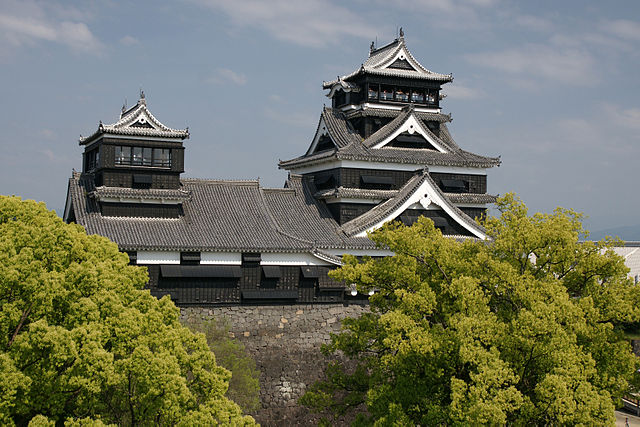
Kumamoto Castle. Photo by 663highland (CC BY 2.5)

1) Kumamoto Castle
Despite it being a reconstruction, this is one of the most beloved castle sites in all of Japan, and in the last few years has been consistently ranked as the best among Travelocity reviewers. The original fortifications were laid down almost 450 years ago, but the castle was burned down during the Satsuma Rebellion of 1877. A few of the other buildings that are part of the castle keep are original, and the area has been designated as an important cultural property.
Admission to the castle costs 500 yen and it’s open daily from 8:30 AM to 6 PM (until 5 PM during the winter months). Kumamoto Tram’s A Line stops right in front of it – it’s a 15 minute trip from JR Kumamoto Station. The flat fare for the tram is 150 yen, payable when you exit. A one day tram pass is 500 yen, and a two day pass is 800 yen.

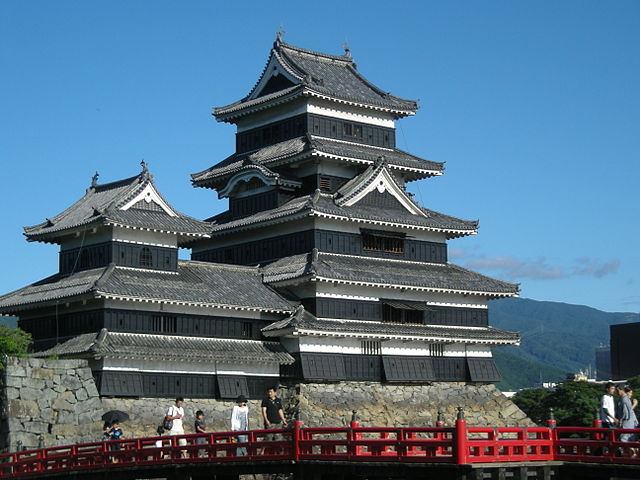
Matsumoto Castle. Photo by MOILIP (CC BY-SA 3.0)

2) Matsumoto Castle
This castle is one of Japan’s originals, dating back to 1504. The keep’s exterior is all black, giving the castle the nickname “karasujo” or crow castle. It has survived since then, being saved from demolition during the start of the Meiji period, and has undergone several restorations, most recently in the 1950’s. At one point, the castle resembled the leaning tower of Pisa when part of the keep slouched to one side. Matsumoto Castle is in Nagano prefecture, with the Japanese Alps as the backdrop, and is an easy train or bus trip from Tokyo or Nagano.
Admission to the castle is 610 yen and it’s open daily except during the new year’s holiday from 8:30 AM to 5 PM. During the Golden Week and Obon holidays, it’s open longer. City buses run from Matsumoto’s train station to the castle, including the tourist bus known as the “flying sneaker” (200 yen per trip or 500 yen for a day pass). The North bus will take you to the castle, and note that the day pass includes discounted admission to the castle. One other option is Matsumoto City’s free bicycle rentals, available at various spots around town including the train station and castle.

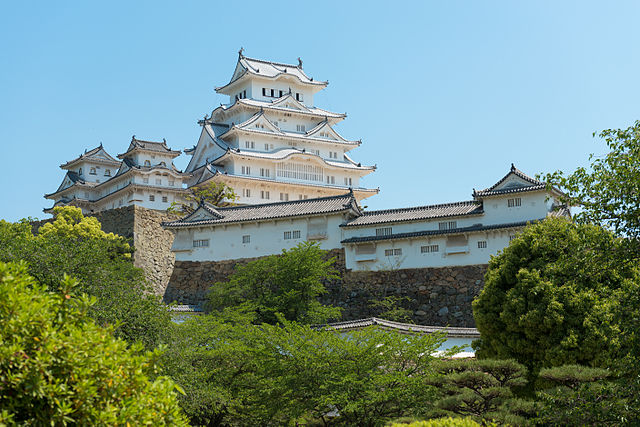
Himeji Castle after restoration. Photo by Niko Kitsakis (CC BY-SA 4.0)

3) Himeji Castle
Instantly recognizable as the most visited castle complex in Japan, Himeji has fallen in the Travelocity rankings over the last several years as the complex underwent a multi-year restoration project. Just recently completed, Himeji looks as beautiful as it did when it was first built, and is seeking to claw its way up to the top of the rankings. With origins dating back to the 1300’s, Himeji’s main castles were built in the late 1500’s and early 1600’s, and have survived everything from rebellions to World War II to devastating earthquakes. It was one of the first in the country to be on UNESCO’s list of World Heritage sites. I visited Himeji during my first trip in 2004, a few years before the renovations began.
Admission to the castle costs 1,000 yen and it’s open daily except December 29 and 30 from 9 AM to 5 PM (in the summer months, until 6 PM). Entry ends one hour before closing.
From Himeji’s main train stations (JR and Sanyo Railway) Himeji Castle is a 5 minute bus ride (100 yen) or taxi ride (~700 yen), or a 25 minute walk (which is what yours truly ended up doing).

Matsuyama Castle. Photo by Jyo81 (CC BY 3.0)

4) Matsuyama Castle
Located on the island of Shikoku in an area known for its hot springs, Matsuyama Castle is another of Japan’s original castles. It was built on a small mountain – Mount Katsuyama – and the location affords a great view of the city and the Seto Sea. It has largely survived intact; the castle tower was originally destroyed by lightning and rebuilt in the 1800’s, while certain sections were rebuilt as a result of World War II bombing damage.
Due to its high location, the castle is easily accessed by chairlift or ropeway. The castle is open almost every day of the year from 9 AM to around 5 PM and the admission fee is 510 yen. If you want to save yourself the steep climb on foot, the chairlift/ropeway is 510 yen for the round trip.
The nearest tram stop to the bottom of the mountain is Okaido, which houses a shopping arcade. It’s 10 minutes from JR Matsuyama station, and 11 minutes from Dogo Onsen hot spring. One trip costs 190 yen, and a day pass costs 400 yen.

Matsuyama Castle is not to be confused with another castle of the same name located near Okayama.

As with itineraries that I have shared in the past:
– There are two itineraries given for each mode of transit. One starts and ends in Tokyo for those coming into the country at Narita or Haneda Airport. The other starts and ends in Osaka for those utilizing Kansai Airport instead.
– All itineraries are offered subject to the Jose’s Japan Tips DISCLAIMER.

In the case of these journeys, I have opted to just provide rail itinerary suggestions.

From Tokyo By Rail

Day 1:
In the morning, depart from Tokyo’s Shinjuku Station on the Azusa Limited Express to Matsumoto (2 1/2-3 hours, 6,900 yen, no charge with Japan Rail Pass)
Alternatively, depart from Tokyo or Ueno station on the Hokuriku Shinkansen and change in Nagano to the “Shinano” Limited Express service (2 1/2-3 hours, 10,130 yen, no charge with the Japan Rail Pass)
VISIT MATSUMOTO CASTLE
Once your visit is complete, depart for Kyoto using two trains: The “Shinano” limited express from Matsumoto to Nagoya, and the Tokaido Shinkansen from Nagoya to Kyoto. Connecting to the “Nozomi” in Nagoya, the entire trip takes 3 hours and costs 10,170 yen. With a Japan Rail Pass, you will have to take the “Hikari”, increasing the trip time by 30-45 minutes.
Spend the night in Kyoto. Alternatively, continue 15 minutes along the line to Shin-Osaka to stay in that area.
*NOTE: There are no on-board food or drink sales on the “Shinano”

Day 2:
In the morning, depart for Himeji on the Shinkansen. From Kyoto the trip takes 45 minutes by direct Nozomi (5,590 yen) and up to 60 minutes using other services. For Japan Rail Pass holders, there are three Hikari services from Kyoto to Himeji departing between 7 AM and 8:30 AM, after which there is one direct service per hour. Otherwise you’ll need to change trains in Shin-Osaka.
VISIT HIMEJI CASTLE
In the afternoon, depart for Matsuyama using the bullet train and limited express across the Seto Sea to Shikoku. You’ll need to take the bullet train a short distance from Himeji to Okayama, then board the “Shiokaze” limited express from Okayama to Matsuyama. The trip takes approximately 3 1/2 hours (9,570 yen). You can use the “Nozomi” or the “Sakura” depending on whether or not you have a rail pass, or your preference – both trains will offer ample connections to the Shiokaze.

Day 3:
Get up early to enjoy the historic hot springs and VISIT MATSUYAMA CASTLE.
In the afternoon, return to Okayama at your leisure using any of the “Shiokaze” services (2 3/4 hours, 6,830 yen) and spend the night in Okayama.

Day 4:
Depart for Hakata station in Fukuoka at your leisure and spend two nights in Fukuoka. Use the “Nozomi” or “Mizuho” unless you have a Rail Pass, in which case you’d use the “Hikari” or “Sakura” (1 3/4-2 hours). Before leaving Okayama, you could visit Okayama Korakuen Garden, one of the top three Japanese gardens.

Day 5:
Take a day trip from Fukuoka to Kumamoto by Shinkansen, using the “Sakura” or “Tsubame” (40-50 minutes, 5,130 yen each way).
VISIT KUMAMOTO CASTLE

Day 6:
Take the Shinkansen and return all the way to Tokyo at your leisure. By Nozomi it takes 5 hours and costs 22,950 yen with no change in trains necessary. With a Japan Rail Pass, the “Sakura” and “Hikari” will bring you to Tokyo in six hours, and you will need to change trains once.

For this itinerary, a 7 day Japan Rail Pass (29,110 yen) will save you a considerable amount of money compared to regular tickets. If you have an extra day left, why not stop at one or two other Japanese cities on the way back to Tokyo? Perhaps an overnight stopover?

From Osaka by Rail

Day 1:
In the morning, depart for Himeji on the Shinkansen. From Shin-Osaka the trip takes 30 minutes (3,740 yen). Remember if you have a Japan Rail Pass, you can’t use the “Nozomi”.
VISIT HIMEJI CASTLE
In the afternoon, depart for Matsuyama using the bullet train and limited express across the Seto Sea to Shikoku. You’ll need to take the bullet train a short distance from Himeji to Okayama, then board the “Shiokaze” limited express from Okayama to Matsuyama. The trip takes approximately 3 1/2 hours (9,570 yen). You can use the “Nozomi” or the “Sakura” depending on whether or not you have a rail pass, or your preference – both trains will offer ample connections to the Shiokaze.

Day 2:
Get up early to enjoy the historic hot springs and VISIT MATSUYAMA CASTLE.
In the afternoon, return to Okayama at your leisure using any of the “Shiokaze” services (2 3/4 hours, 6,830 yen) and spend the night in Okayama.

Day 3:
Depart for Hakata station in Fukuoka at your leisure and spend two nights in Fukuoka. Use the “Nozomi” or “Mizuho” unless you have a Rail Pass, in which case you’d use the “Hikari” or “Sakura” (1 3/4-2 hours). Before leaving Okayama, you could visit Okayama Korakuen Garden, one of the top three Japanese gardens.

Day 4:
Take a day trip from Fukuoka to Kumamoto by Shinkansen, using the “Sakura” or “Tsubame” (40-50 minutes, 5,130 yen each way).
VISIT KUMAMOTO CASTLE

Day 5:
In the morning, make your way from Fukuoka all the way to Matsumoto, taking the Shinkansen to Nagoya then the “Shinano” limited express to Matsumoto. Using the Nozomi, the trip takes 5 1/2 hours (21,400 yen). With a Japan Rail Pass you’ll need to take the “Sakura” and “Hikari” to Nagoya, changing trains once along the way. This increases the journey time to around 6 1/2 hours.
If you don’t want to spend time on trains for that long, you can optionally leave from Fukuoka on the evening of Day 4 and spend your evening in an intermediate city such as Kyoto or Nagoya. See my post on sample stopovers.
Spend the evening in Matsumoto.
*NOTE: There are no on-board food or drink sales on the “Shinano”

Day 6:
VISIT MATSUMOTO CASTLE in the morning. In the afternoon, return to Osaka by “Shinano” and the Shinkansen (190 minutes and 10,810 yen by “Nozomi”, slightly longer if switching to the “Hikari” for Japan Rail Pass holders).
*NOTE: There are no on-board food or drink sales on the “Shinano”

For this itinerary, once again a 7 day Japan Rail Pass (29,110 yen) is the way to go.

Long-distance Stopovers with the Japan Rail Pass

For travelers who want to explore a lot of Japan during their visit, the Japan Rail Pass is indispensable, offering tremendous value for using Japan Railways services all around the country. If you only plan on traveling in between the major cities of Tokyo and Kyoto or Osaka, or traveling shorter distances, the pass might not be for you. On the other hand, if traveling to many of Japan’s cities on a single trip, the Japan Rail Pass should seriously be considered.

You’ll need to know some of the basic rules for the Japan Rail Pass, which are outlined on the Japan Rail Pass web site and are also discussed on other pages on this blog.

One way to maximize your sightseeing time is to travel overnight. This has become harder to do by train in recent years. Once, Japan was full of overnight trains crisscrossing the country. These days, though, this mode of travel is becoming scarce as rail equipment ages and fierce competition between domestic trains, buses and airlines increase. This article will discuss a few concepts on how you could potentially use the Japan Rail Pass for overnight train travel while saving money in the process.

Only a few overnight train services remain in Japan. Others only run during peak travel periods like Golden Week, New Year’s and the summer months. Regardless, overnight trains in Japan are extremely popular and tend to get booked quickly. Since you cannot reserve train tickets in Japan until you are in the country – with few exceptions (like JR East’s English online reservation system) -your best bet is to try and book the tickets the moment you land in Japan.

Two of the overnight trains that run on a daily basis are the Sunrise Seto and Sunrise Izumo. These trains run coupled together from Tokyo to Okayama in western Japan, where they separate: The Seto runs south to the island of Shikoku, ending in the port city of Takamatsu, while the Izumo runs to the city of Izumo on the northern coast. These trains have compartments and rooms – if you want to secure one of these, you will have to pay the room accommodation and limited express surcharges. While the limited express surcharge varies based on your starting and ending point, the room accommodation is a fixed charge. The Japan Rail Pass will only cover the basic train fare between the two cities. A “solo” compartment will run 9,720 yen, while the high-end “single deluxe” runs for 16,970 yen – and these fares are just for one person. These trains do offer an option for carpeted floor spaces, on the other hand, which are treated as reserved seats – there are no extra surcharges for these spaces with a Japan Rail Pass…. but you have to sleep on the carpeted floor.

If you can secure room on one of these trains, not only is it a great option for travel to the northern coast or to Shikoku, but by changing in Okayama to the bullet train it is a great way to continue westward towards Hiroshima, Fukuoka and Kyushu.

The other service is called the Cassiopeia, which runs a few times a week between Tokyo and Sapporo, in Hokkaido. The prices are comparable or higher than the Sunrise Izumo/Seto, with a diner and no carpeted floor seats. The future of this service, though, is in doubt, with the pending opening of the Hokkaido Shinkansen in March 2016. A third overnight service only connects northern Honshu island with Hokkaido – the Hamanasu. The Hamanasu does offer comfortable reserved seats, which makes it a free option for Rail Pass holders, but again, the train’s future is uncertain.

With few options for overnight trains, the alternative is to simply split up your night journey into two legs, stopping somewhere along the way to sleep. As long as your Rail Pass covers both days of travel, there are so many benefits to splitting up your journey:

– You can get your own hotel room with a bed, bathroom and shower
– A hotel room located far from major cities could be less expensive
– You can experience a slice of life in a new part of Japan, and might be able to enjoy attractions or cuisines unique to that area
– There are no extra transportation costs, since your transportation is already covered under the Japan Rail Pass

By keeping these in mind, a whole new set of options can open up to you by simply doing some research.

A popular option to look out for is the business hotel – small hotels with minimal space, but all the amenities you’d need for a night’s stay. These business hotels tend to be inexpensive no matter where you book. Even in big cities such as Tokyo, they can be among the most economical options.

I will now offer a few suggestions for some long distance journeys. If you would like to explore such options for your next trip to Japan, I hope this information will be a starting point!

Tokyo to Kyoto/Osaka

This is one of the most heavily-trafficked travel routes in Japan, without question. There are so many things skipped in between, though, and with some research you can discover some new areas.

Nagoya: This is a major city, but so often skipped by many travelers on their way from Tokyo to Kyoto (including, I must admit, myself!) and the next time I visit for a while I will make Nagoya one of my priorities. Nagoya has Japan’s largest international trade port (thanks in part to Toyota’s headquarters nearby), the world’s largest train station by floor area, a reconstructed castle, a zoo, and a plethora of unique eats like miso katsu – pork or chicken cutlet served in a red miso sauce. (yum!)

Nagoya is centrally located on the Tokaido Shinkansen, the main train artery linking Tokyo with Kyoto, Osaka, and points beyond. It has been an ideal stop, and will continue to be for a while. But earlier this year, another city with its own history took center stage:

Kanazawa: This coastal city, known for having one of the top three gardens in all of Japan, was connected to Tokyo’s shinkansen network in March 2015. The city has done a lot to cater to visitors, including a rebuild of its main train station – complete with its own shinto-like Torii gate at its entrance. You can spend the night in town and go bright and early the next morning to the Kenrokuen garden before the tour groups arrive, then continue on your way.

The Hokuriku Shinkansen links Tokyo to Kanazawa in as little as 2 1/2 hours. Then from Kanazawa, you can travel by the Thunderbird Limited Express service directly to Kyoto (~2 1/4 hours) and Osaka (~2 3/4 hours). From Shin-Osaka you can connect to the bullet train for destinations to the west.

Matsumoto: A third possible option is to cut through the center of the country along the Chuo Line and visit the city of Matsumoto, known as the home of one of Japan’s original castles. Matsumoto is 2 1/2-3 hours from Tokyo’s Shinjuku Station by the Azusa limited express service. After staying in Matsumoto and potentially visiting the castle, take the Shinano limited express to Nagoya (~2 1/4 hours); you can either pick up the bullet train for destinations to the west, OR, just go around Nagoya for a while!

If you don’t want to worry about major sights and just focus on a place to stay the night, here are some cities to look at:

From Tokyo to Kyoto/Osaka via Nagoya along the Tokaido Shinkansen: Odawara, Atami, Shizuoka, Hamamatsu, Toyohashi, Maibara. A few of the other stations are left out, but it’s important to note that along this important travel artery you’ve got a good chance to find accommodations at every station.

From Tokyo to Kyoto/Osaka via Kanazawa along the Hokuriku Shinkansen and Thunderbird route: Nagano, Itoigawa, Toyama.

Tokyo to Western Japan (including Shikoku and Kyushu)

If you can’t get on board the Sunrise Izumo or Sunrise Seto, travel more comfortably (and perhaps cheaply) with a stopover.

Okayama: The name may not stand out to the regular tourist, but Okayama is a major city and transportation hub in Japan. If traveling from Tokyo and laying over in this city, you can continue on in the morning to Shikoku, Izumo, or continue on towards the west using the bullet train. Not to mention, another one of Japan’s most famous gardens – Korakuen – is located here.

Himeji: located between Osaka and Okayama, Himeji is home to Japan’s most important castle. In existence since original construction began in the 1300s, it has survived the test of time. It is now especially worth a visit, as a five-year project has restored the castle’s exterior to its original splendor.

Once again, every station on the shinkansen (now the Sanyo Shinkansen) gives you a good chance of lodging options.

Tokyo to Northern Japan/Hokkaido

The Tohoku Shinkansen is the main train artery running north from Tokyo towards Hokkaido. By March of 2016, the Shinkansen will actually extend into Hokkaido’s southern city of Hakodate for the very first time. In the meantime, trains terminate in the northernmost city of Aomori. This city makes a good stopping point, as does Hakodate itself if you were looking at a long-distance journey to Sapporo – but again, look at all stations.

Now for some SAMPLE ITINERARIES: For these samples, I have researched the price of lodging on different, random weekdays in September 2015 that are not holidays. This falls within the approximate 3 month range where many hotels have already opened up their reservations. I have also researched the train timetables for that period from sites such as HyperDia and Ekikara. Your results may vary. Hotels listed are for sample purposes only, and prices are listed in US dollars. No endorsements are implied!

#1: Tokyo to Kyoto/Osaka, stop in Nagoya: Board the evening Hikari service leaving Tokyo at 7:03 PM, arriving in Nagoya at 9:09 PM. Spend the evening at the Nagoya Ekimae Montblanc Hotel for $49 single, $37 per person double occupancy. Board a morning Hikari train at 8:21 AM. Arrive in Kyoto at 9:14 AM and Shin-Osaka at 9:30 AM.

#2: Tokyo to Kyoto/Osaka, stop in Hamamatsu: Board the evening Hikari service leaving Tokyo at 7:03 PM, arriving in Hamamatsu at 8:32 PM. Spend the evening at the four star Okura Act City Hotel Hamamatsu for $55 per person single or double occupancy (30 day advance booking rate). Board a morning Kodama train at 7:49 AM. Arrive in Kyoto at 9:34 AM and Shin-Osaka at 9:50 AM.

#3: Tokyo to Kyoto/Osaka, stop in Kanazawa: Board the evening Kagayaki service leaving Tokyo at 6:24 PM, arriving in Kanazawa at 8:58 PM. Spend the evening at the APA Hotel Kanzawa-Ekimae (part of a chain of national business hotels) for $65 single, $42 per person double occupancy. Board a morning Thunderbird train at 8:05 AM. Arrive in Kyoto at 10:11 AM and Shin-Osaka at 10:35 AM. Or, visit Kanazawa’s Kenrokuen Garden in the morning and take a later Thunderbird towards Kyoto/Osaka.

#4: Tokyo to western Japan/Shikoku/Kyushu, stop in Okayama: Board the evening Hikari service leaving Tokyo at 5:03 PM, arriving in Okayama at 9:11 PM. Spend the evening at one of a few Toyoko Inn hotels (another large chain) located around Okayama station for $52 single, $30 per person double occupancy. In the morning, you can depart in multiple directions:
– The bullet train westbound can take you to Hiroshima, Fukuoka, Kumamoto and Kagoshima.
– The Marine Liner rapid train services, leaving twice per hour, will take you to Takamatsu in Shikoku. I highly recommend paying the small surcharge for a reserved seat (320-980 yen per person depending on the seat and the season).
– The Shiokaze and Nanpu limited express trains run to the hot spring town of Matsuyama and the coast city of Kochi, respectively.
– The Yakumo limited express train runs north to Izumo in 3 hours.

#5: Tokyo to Hakodate (southern Hokkaido), stop in Aomori: Board the afternoon Hayabusa service leaving Tokyo at 5:20 PM, arriving at Shin-Aomori at 8:40 PM. Change to the local shuttle train to Aomori, arriving at 8:55 PM. Spend the evening at the Toyoko Inn Aomori-eki Shomen-guchi for $46 single or $32 per person double occupancy. Leave in the morning on the first Hakucho service of the morning, departing Aomori at 8:25 AM and arriving in Hakodate at 10:26 AM.

#6: Tokyo to Sapporo, stop in Hakodate: Board the afternoon Hayabusa service leaving Tokyo at 3:20 PM, arriving at Shin-Aomori at 6:43 PM. Change to the Hakucho departing Shin-Aomori at 6:53 PM, arriving in Hakodate at 8:56 PM. Spend the evening at the Comfort Hotel Hakodate (as in the Comfort Inn brand) for $46 single or $37 per person double occupancy. Leave in the morning on the Hoktuto service from Hakodate to Sapporo – the first two trains leave at 6:22 AM and 8:13 AM, arriving in Sapporo at 9:58 AM and 11:47 AM, respectively.

#7: Osaka to Sapporo: There used to be an overnight train service called the Twilight Express, which ran a few times a week and was comparable to the Cassiopeia. If I ever wanted to ride an overnight train in Japan, this was the one I was aiming for. Sadly those plans never materialized, and the Twilight Express has already been discontinued. Here’s one way to make the Osaka-Sapporo trip now. Leave Shin-Osaka at 11:40 AM on the Hikari service to Tokyo, arriving at 2:40 PM. At Tokyo Station you will have 40 minutes to mill about and do some quick shopping until leaving on the 3:20 PM Hayabusa service to Shin-Aomori. Then, the instructions are exactly as above, laying over in Hakodate en route to Sapporo.

By now I hope you are inspired to create your own overnight itineraries to maximize your Rail Pass, and your sightseeing and enjoyment of Japan. If you have any questions or comments, please ask!

Tokyo to Kyoto via Northern Japan: The new bullet train stations (with Flags!)

It has been a month since the new extension of the bullet train opened from Nagano to the northern coast cities of Toyama and Kanazawa. This means that bullet trains now run from Tokyo directly to these cities and points in between, opening up a new world of possibilities for tourism. If you have a Japan Rail Pass, you will be covered for almost* any of the new bullet train services. Here’s a rundown of the new line and some suggestions for places to visit and itineraries.

The Hokuriku Shinkansen was known as the Nagano Shinkansen when its initial segment opened in October 1997, ahead of the 1998 Nagano Winter Olympics. The new 228 km (141.7 mile) segment opened on March 13, 2015. You can read more about the Hokuriku Shinkansen service classifications by reading my blog post from last October.

Some of the stops along the route:

Flag_of_Iiyama,_Nagano

Iiyama – Located in the northernmost part of Nagano prefecture, Iiyama gets some of the heaviest snowfall in the country. The immediate area east of Iiyama station is clustered with various Buddhist temples, which is why some call it “Little Kyoto.” Generally, Hakutaka services from Tokyo run to Iiyama every 1-2 hours. Information: Shinshu-Iiyama Tourism Bureau

Flag_of_Joetsu,_NiigataJoetsumyoko – This is an interchange station with the Echigo Railway, a private (so-called “third sector”) rail line that JR used to operate trains on until the opening of the bullet train. There is not much to speak of around here, but it should be noted that if you are coming from Kanazawa or Toyama and heading to the coastal city of Niigata, there are a few trains that operate daily between Joetsumyoko and Niigata that are meant to connect with the shinkansen services. This service is called the Shirayuki. The Shirayuki runs to Naoetsu from which it continues to Niigata on JR tracks along the Sea of Japan. Since the first few kilometers are on the Echigo Railway, you will have to pay a 450 yen supplement if you are using a Japan Rail Pass. If you are going from Tokyo to Niigata, use the direct Joetsu Shinkansen instead.

Flag_of_Itoigawa,_NiigataItoigawa – This is the first bullet train stop on the coast as you come north from Tokyo. Itoigawa was named as Japan’s first “Geopark” by the UNESCO-funded Global Geoparks Network, and they proudly boast 24 different areas that you can visit in the region with various mixes of geology, culture and history. Most, but not all, Hakutaka services stop here. More information about the Geoparks can be found at their official website, and they have a wealth of information in English, including updates on which areas are open and closed.

The local JR Oito Line snakes down from Itoigawa towards the south, and you COULD take the scenic, local route all the way down to the castle city of Matsumoto cheaply in 3-4 hours, weather permitting. Nowadays, though, you can do it in about 90 minutes taking the bullet train to Nagano then the Shinano limited express service. Another stop on the Oito Line is Shinano-omachi – a local bus from here will take you to the start of the Tateyama Kurobe Alpine Route, which is open for transit from spring until autumn.

Flag_of_Kurobe,_ToyamaKurobe-Unazuki Onsen – This station is the gateway to one of the most popular hot springs in the area, Unazuki Onsen. To get there, walk to nearby Shin Kurobe Station on the Toyama Chiho Railway (not covered by the Japan Rail Pass) and go to the Unazuki Onsen stop. One of the attractions of Unazuki Onsen is the Kurobe Gorge Railway. Originally built for workers building Kurobe Dam, it operates passenger sightseeing trains from late spring until autumn threading through some stunning mountain scenery.

Flag_of_Toyama,_ToyamaToyama – Our first major stop on the newly-opened bullet train route. The next time I visit Japan and I am able to take the new bullet train line out here, I want FISH… and that’s the main attraction. Toyama is referred to as “Nature’s Fish Tank” because nearby Toyama bay is extremely deep. Yellowtail sushi and sashimi slices from Toyama are said to be among the best in the country.

Many sushi shops in the area participate in the Toyamawan Sushi program, which offers a set course of 10 pieces of freshly-caught sushi for between 2,000 and 3,500 yen. There is also a unique bento box from Toyama that uses fatty trout, called Masunosushi. It is pressed trout over rice, wrapped in bamboo leaves and packed in a wooden box. I was given a used box from a friend in Japan as a gift to take home in my 2004 trip, and even when empty the lovely trout smell lingered for weeks. I would breathe it a few times a day.

ANYWAY, I want to try this box for real on my next visit 🙂

The aforementioned Toyama Chiho Railway terminates here, at the nearby Dentetsu-Toyama Station. This, plus a series of tram lines, are great ways to get around Toyama and visit the cultural areas. Taking the Toyama Chiho Railway to Tateyama will bring you to the opposite end of the Tateyama Kurobe Alpine Route mentioned earlier. More information: Toyama Prefectural Tourism Association

Flag_of_Takaoka_ToyamaShin-Takaoka – This next city has more of a traditional flair. The new station is on the south side of town as opposed to the regular Takaoka station, though the two stations are connected with a brief trip on the JR Johanna line. On the north side of town is Kanaya-machi, a street filled with lattice houses from when iron and copper makers set up shop in the 1600s. A short distance from the south of Takaoka station, and from around the same time period as Kanaya-machi, is Zuiryuji Temple. North of Takaoka and directly on the coast is where weekly ferry services to Vladivostok, Russia operate from.

Flag_of_Kanazawa,_IshikawaKanazawa – The terminating station on the Hokuriku Shinkansen (for now) is a marvel to behold on the outside, with a new main entrance resembling a shinto torii gate. It is a popular city, and the primary reason is Kenroku-en, a large Japanese garden that is regarded as one of the three best in the country. There are also various museums and shopping districts in the area. Kanazawa and Toyama are good starting points for trips to Takayama, and the nearby UNESCO World Heritage site of Shirakawa. More information: Kanazawa City Tourism Association

Of course, Stefan and the folks over at japan-guide.com have a more comprehensive breakdown of what you can find in these cities. They also revamped their website, so be sure to check them out.

After Kanazawa? You can ride the JR Thunderbird limited express to south and west, passing Fukui and skirting Lake Biwa until you reach Kyoto and Osaka. The Shirasagi limited express will bring you to Maibara and Nagoya. If you have already traveled by direct bullet train between Tokyo and Kansai, or you just want something more from your first trip, a little detour through Toyama and Kanazawa (or any of the other places) is a different and potentially rewarding experience.

New E7 Series Shinkansen in service. Photo by Tokyo Sakura, CC by 2.0

For example, you could opt to travel from Tokyo to Kanazawa, spend the day there, head to Kyoto in the evening, and then return to Tokyo by direct bullet train. Or you could spend a night at any of these stations if you want to pace yourself a bit… in this way, for example, you could try visiting Kanazawa’s Kenroku-en in the early morning before the tour groups arrive. Whether or not you visit any attractions, you can potentially save some money on accommodations compared to big cities like Tokyo and Kyoto by stopping over at one of these cities. Remember that the Japan Rail Pass will cover pretty much everything for your travels, except for Nozomi trains and for any service with the GranClass premium cabin.

As a general rule, Tokyo to Kanazawa is 2 1/2 hours on the fastest shinkansen service, and Tokyo to Toyama is 2 hours. Kanazawa to Kyoto by Thunderbird limited express service is around 2 hours 15 minutes, with Osaka a further 30 minutes down the line.

I hope I have given you a few ideas. Have fun exploring the new train route and unlocking all of the new secrets along it!

Note: All flags in this article are taken from Wikimedia Commons. Since there is no original ownership they are in the public domain. As per usual, all advice is given pursuant to the Japan Tips DISCLAIMER.

New Rail Passes for Japan in 2015

Last week, West Japan Railway – the JR company that runs trains on the western part of the Japanese mainland for the most part – announced a new set of rail passes for foreign tourists visiting the west part of the country, while announcing an expansion of rail passes that already exist. In order to qualify, you must be in Japan as a tourist – specifically, the “Temporary Visitor” stamp must be on your passport.

These are additions and changes that are being made by JR West – the national Japan Rail Pass right now remains unchanged as far as coverage.

Available from March 1, 2015:

San’yo-San’in Area Pass: 20,000 yen for 7 consecutive days (1,000 yen discount if purchased overseas)

San’yo-Hiroshima Area Pass: 14,000 yen for 5 consecutive days (1,000 yen discount if purchased overseas)

Hiroshima-Yamaguchi Area Pass: 12,000 yen for 5 consecutive days (1,000 yen discount if purchased overseas)

Kansai Area Passes from JR West will have coverage expanded, and prices will go up for tickets sold on or after March 1, 2015:

Kansai Area Pass: 1, 2, 3 and 4 consecutive day passes ranging from 2,300-6,500 yen (100-200 yen discount if purchased overseas)

Kansai Area Wide Pass: 9,000 yen for 5 consecutive days (500 yen discount if purchased overseas)

All passes are sold at a discount of 50% for children aged 6-11.

These will replace some other rail passes: The JR West San’yo Area Pass and the San’yo-Shikoku-Kyushu Area Passes will both be discontinued when the above passes take effect.

I will talk more about these passes soon, but in the meantime you can read the brochure on JR West’s website: https://www.westjr.co.jp/global/en/

So You’ve Landed In Japan – Airport to Hotel

Last week I wrote about what you can expect during customs and immigration procedures when landing in Japan. Today I’ll write about the best ways to get to your hotel, or wherever you may be staying the first night. Consider this an update to what I wrote several years ago.

Many of Japan’s major airports are a good distance away from city centers. This is true for Narita Airport serving Tokyo, Kansai Airport serving Osaka, and Chubu (Centrair) Airport serving Nagoya – the latter two of which were built in the middle of the sea on man-made islands.

When traveling from the airport to the place of your first stay, you must carefully consider the options that are available, and determine what will be best for your budget.

Cash

First, naturally, you will want to make sure that you have some cash on hand, especially in a country where cash is still king (but contact-less cards are still trying to change that). As soon as you finish the arrival formalities, the first thing you will want to look for is a place to obtain cash – either an ATM machine or currency exchange.

Preferably, you will want to look for an ATM machine as they tend to offer better exchange and conversion rates than the staffed currency exchange counters. Many of the major banks in Japan will have ATMs in the arrivals area of the international airports. The ones that you will want to look for are: JP Bank (Japan Post), Seven Bank (7 Eleven) and Citibank. These ATMs will accept International banking cards, not just at the airport but at all of their locations. They also offer an option to conduct your transaction in English. When you continue around the country, you can access JP Bank ATMs at many Japan Post Office branches, and Seven Bank at a nearby 7 Eleven convenience store. Citibank can be found in major cities in Japan – though bear in mind that Citibank is looking to sell its personal banking services and therefore their ATMs will probably not be along for much longer.

If you need to go to a currency exchange counter, then my recommendation is to take only what you need for a short period of time (including transit out of the airport, meals for the first day or two, etc). Once you have arrived at where you are staying, locate an ATM so that you can get a better exchange rate.

Luggage Delivery Service

If you have any large pieces of luggage, it could be cumbersome to haul them around. That’s when the Luggage Delivery Service, sometimes called Takkyubin or Takuhaibin, can come in handy.

True story – I knew nothing about luggage delivery service when I visited Japan for the first time, and so proceeded from Narita Airport into Tokyo by train. Upon arrival, it was a mistake for me to go up the escalator with my two pieces of large luggage. When I got to the top, a wheel from one of my luggage pieces got caught and I tumbled over to the ground. Japanese people behind me were quick to hop over me as if they were in a hurdle race, with cries of “Daijoubu desu ka?” (Are you all right?)

I vowed never to make the mistake of hauling all of my luggage on my own again! So on successive journeys I would pack whatever I didn’t need for the short term in my large suitcase, and any items I absolutely need in a smaller suitcase. Then I pay to have the larger piece of luggage forwarded to my hotel, which typically occurs the very next day (in occasional instances, two days).

What I would also do is print out, in English and Japanese, the address of where I would like my luggage to be forwarded – in my case, the hotel. The address of your hotel should be on the confirmation e-mail that you receive for your stay. To find the address in Japanese, look up the hotel on the Internet. In some instances, a Google search will turn up the hotel address in Japanese. Otherwise you can go to the hotel’s Japanese web page. You’ll want to look for a mark that looks like this: 〒  This is the postal mark for addresses in Japan. It will be followed by a series of numbers (the postal code) and the address of the hotel.

Here’s an example: For the hotel I stayed at in Kyoto last time, Citadines Karasuma Hotel Kyoto… If you were to search this on Google: Well what do you know, they have the Japanese address right there:
下京区五条通烏丸東入松屋町432, 京都市, Kyoto 600-8105, Japan
You can easily copy and paste this into a printout that you can show to the person at the luggage delivery service desk, in case they cannot understand English.

The Luggage Delivery Service charges by piece, with different pricing brackets based on the size of your item and its weight. Whatever falls into the larger of these two is the price that is charged.

For a piece of luggage that falls into the bracket where the maximum weight is 20 kg (44 lbs), you can currently expect to pay around 1,600 yen to send your luggage short range, from the airport to the major city closest to the airport. This drops to as low as around 800 yen for light or small-sized luggage and/or parcels. You can also use luggage delivery service when traveling across Japan, and for return service to the airport – your hotel’s front desk will arrange the service and process payment for you, or you can bring your luggage to a convenience store and they will probably be able to offer the service as well. Note that if you use the service back to the airport, you will normally have to send your luggage two days in advance of your travel date, and a small surcharge will be added to the regular rate.

With your bulkier luggage safely on its own, take your smaller luggage with you as you proceed to your final destination.

There might be one time where you do NOT need to use a luggage delivery service…

Airport Limousine Bus

The Limousine Bus is the name given to many of the public bus services operating between the airports and cities, either stopping at major hotels or transit hubs. Not only are the buses comfortable and convenient to use, they will naturally take your luggage as well. Each passenger is allowed two free bags to be “checked” into the belly of the bus.

If you are going to a hotel that happens to be served by a limousine bus, then it’s not necessary to use luggage delivery. On the other hand, if you are going to a major transit hub, such as a train station, and you have to continue from there to your final destination, luggage delivery might still want to be considered.

Many bus operators are offering competitive discounts for travel out of the airport, from discounted coupons to the actual fares. For example, one airport bus service runs from Narita to Tokyo Station every hour for as little as 900-1000 yen. These buses, however, usually allow just one piece of checked baggage per person.

Trains

Another way to travel out of the airport – and my personal preference – is by train. Each of the major airports will have at least one, sometimes two, train companies that run services into the main city and beyond. Japan Railways offers services out of Narita and Kansai airports. Other private companies compete for passengers too: Keisei Railway from Narita and Nankai Railway from Kansai. Only one train company – Meitetsu – runs trains out of Nagoya.

Services offered range from cheaper, regular commuter trains to premium limited-stop services. From Narita it’s the JR Narita Express or the Keisei Skyliner. From Kansai it’s the JR Haruka or Nankai Rapi:t. From Meitetsu Airport it’s myu-sky trains (symbolized μ-SKY). Like the limousine buses, many of the train operators are competing for passengers – something that has become very aggressive in recent years.

Taxis

Taxis from the airport to your hotel are only good in one of two situations – you either have a lot of money, or you have enough passengers to reasonably split the cost. Taxis, while offering a personalized service, are very expensive to use from the airport to a major city, simply because of the large distance in between. As an example, a cab hailed directly by yourself from Narita Airport to a random Tokyo hotel – let’s say the Hotel Mystays Asakusabashi, the last hotel I stayed in – costs approximately 20,000 yen for the distance traveled, PLUS highway toll fees of another 2,000-2,500 yen depending on the road used. This can change based on traffic congestion. For that price you could comfortably stay in a Tokyo business hotel for several nights.

The best bet, if you have to use a taxi from the airport, is to use a flat rate or fixed fare taxi. Taxi cabs from these lines offer a set price for your journey, and will generally be a little cheaper than a direct taxi hail – though highway tolls are usually NOT included in the price.

You can also book taxis in advance – which are sometimes referred to as hired taxis. Most of the fares from hires DO include highway tolls. Some travel agencies also sell airport transfers by taxi.

Remember to not accept taxi rides from strangers. Licensed taxis in Japan will have a GREEN license plate, as opposed to the white and yellow license plates of regular vehicles.

Shared Shuttle Van

A small number of companies also offer shared shuttles, much like SuperShuttle in the US, where you ride from the airport to your place of accommodation with other passengers. Example: at last check, there is a service from Narita Airport into Tokyo which runs the shared shuttle for 4,800 yen per person each way, while a service between Kansai Airport and Kyoto runs for 3,600 yen per person each way.

My recommendations

Obviously, you’ll want to do your research to figure out the best way to get from the airport to Tokyo, with your budget as a primary factor. Here’s a checklist for you to consider, assuming you have not made any advance booking of transportation.

– After leaving customs and immigration, do you need cash? If so, you can go to an ATM at the airport (or less recommended, currency exchange) to withdraw Japanese yen.

Does a direct bus serve the hotel that you are staying at? If so, go to the bus counter and purchase tickets for the bus.

Do you have a lot of luggage? If you do, go to the luggage delivery counter and make arrangements to have some of your luggage sent to your place of lodging, paying the appropriate fee.

– My suggestion for your next step is to take public transportation – bus or train – from the airport into the city.

– After you are in the city, then take either local trains or a short-range taxi to your final destination.

Here’s how I would apply my checklist if I were traveling from Narita Airport to Hotel Mystays Asakusabashi:

– When I land, I could probably use some cash to cover any expenses during my first few days, so I will want to go to an ATM.

– Learning from my mistake on trip #1, I would go to the luggage delivery counter to forward my large piece(s) of luggage.

– After that, there are a few things that I can consider, noting that the hotel is near two train stations: a JR station that is one stop away from Tokyo’s Akihabara, the electronics district, as well as a subway line that offers direct and connecting service to Narita and Haneda Airports.

Note: Number 1 will change from March 2015 when the special one-way price is discontinued.

1) If I wanted to take something comfortable, I could take the Japan Railways Narita Express. Right now, they are offering a special one-way price of 1,500 yen per person for foreign tourists, traveling from Narita Airport to ANY JR station in Tokyo. You take the Narita Express into the city, then change to a regular commuter train to go to a station near your destination. So, I could take three trains – Narita Express to Tokyo Station, Yamanote Line to Akihabara, and Sobu Line to Asakusabashi  – and pay just 1,500 yen for the entire trip. If I feel like taking three trains is too much, I could get off at Tokyo Station and change to a taxi, which would cost an extra 1,600 yen (800 yen per passenger for 2 people).

2) I could take the Keisei Skyliner, which is on the other train line that runs out of Narita Airport. It’s the fastest, traveling between the airport and Tokyo’s Ueno in as little as 41 minutes. Keisei sells discounted vouchers for foreign tourists at a cost of 2,200 yen (a 270 yen discount) on their website, which are then turned in for tickets on the next available Skyliner. With this I could go to Keisei Ueno station and take a taxi from there to the hotel at a cost of around 1,100 yen (550 yen per passenger for 2 people). If I felt like continuing on by train, I could get off at Nippori, which is directly connected by the JR, and take two trains to Asakusabashi for only 160 yen.

3) If I arrived early enough in the day, I could just take a commuter train from Narita Airport directly to Asakusabashi station on the Toei Asakusa Subway Line – only a few blocks from the hotel – for 1,290 yen if I didn’t mind the other commuters. If arriving later in the day I’d have to change trains once but the fare would still be the same.

4) If I wanted to, I could still use the limousine bus…. Right now, the limousine bus service is offering an anniversary campaign fare of 1,900 yen (a discount of 1,100 yen) from Narita Airport to the company’s Tokyo City Air Terminal (TCAT) in Hakozaki, good until the end of 2014. From TCAT I could go to the connected subway station and take two subway trains to Asakusabashi (280 yen) or take a taxi to the hotel (1,600 yen for the ride).

5) I could also take the budget 1,000 yen bus into Tokyo. I could get off at Tokyo Station and take two JR trains to Asakusabashi (160 yen) or take a taxi to the hotel (1,600 yen).

Once I’ve finally decided how to get in to the city and I finally arrive, my luggage that was sent from the airport can be expected to arrive the next day.

So as you can see, there are so many things to consider. With a little bit of planning, you can find the best option for your needs at the price that you want to pay.

One more thing – if you plan to do a lot of travel in Japan then you might want to consider some form of rail pass. If you use the rail pass from the day that you arrive, and it’s valid for a journey that you want to use, then that journey should be your primary option. For example, if I was on a Japan Rail Pass going from Narita Airport to Asakusabashi, I would stick with the Narita Express and JR trains to my destination. My travel is included in the Japan Rail Pass completely. Or I could just pay for a taxi to go from Tokyo Station to the hotel, as described above.

Any questions? I’ll be happy to answer them. Thanks!

Japan sales tax increasing on April 1st

This is a short post to remind people traveling to Japan that the Japanese consumption tax, otherwise known as ‘sales tax’ or ‘GST’, will be increasing from 5% to 8% on April 1st. Everything and anything sold in Japan will go up in price slightly, from train and bus fares to convenience store products and lodging.

In most metropolitan areas, actual fares are rounded up to the nearest 10 yen. This practice will continue, though in Tokyo some of the major transit companies, including the subways and JR East, will introduce a special fare structure for those using contact-less IC cards (such as Suica and Pasmo) that round fares up to the nearest 1 yen, as they say this will more accurately reflect the new prices. This means that fares paid with IC cards will be slightly cheaper than paying with regular paper tickets.

For the casual tourist this may not be much, but continue using public transit frequently and the new savings will become more apparent.

Of course you could use a Japan Rail Pass… but of course, the consumption tax will be raising THOSE prices on April 1st as well. For example a 7-day ordinary rail pass for the Japan Railways will increase from 28,300 yen to 29,110 yen, while a 14-day ordinary pass goes up from 45,100 yen to 46,390 yen.

JR East has published some information in English, which can be viewed on their website, http://www.jreast.co.jp/e/

On a side note, I am hoping to continue sharing my Japan Diary soon. I’ve been swamped lately with marriage preparations 😦 Thanks for being patient!

Japan Rail Pass change coming in April

Happy March, everyone. I wanted to quickly pass along some news regarding the Japan Rail Pass. I first discovered this change a few days ago: One of the benefits of using the Japan Rail Pass has been, for some reason or another, the utilization of JR highway buses. That will now be coming to an end, however: Effective with Rail Passes issued on or after April 1 (which is traditionally the start of the new fiscal and school year in Japan), the Japan Rail Pass can no longer be used on any highway bus service. It will still be valid for LOCAL buses that are operated by JR, but not for the highway buses.

The condition as currently stated on the Rail Pass’ official web page refers to “Express buses” being discontinued from pass validity. That term is somewhat confusing, however two other sources that I wrote to confirmed to me that this likely means highway buses.

The discontinuation of this provision likely means two things: Not enough Rail Pass users are using highway buses (why would you when you can take the train), AND/OR more people are perhaps using the Japan Bus Pass offered by Willer Express for their highway bus travel.

Of course, I am still rooting for the day that we can use Nozomi and Mizuho shinkansen trains with the Japan Rail Pass, but much to my chagrin (and my expectation) this restriction will remain in effect. 😦