Today Japan Railways (specifically, JR East and JR West) have unveiled a brand new ‘option’ ticket for those who want to take a scenic journey through the Japanese Alps and Mount Tateyama.
This is called the Tateyama Kurobe Option Ticket and will be sold from April 16 to November 9 of this year. The cost is 9,000 yen, and covers a ONE-WAY journey between Nagano and Toyama via the Tateyama Kurobe Alpine Route. You may use the ticket for up to five consecutive days.
Technically the ticket is being marketed towards foreign tourists with some sort of JR Rail Pass (including the Hokuriku Arch Pass, marketed by JR East and JR West), but reading the fine print it appears any foreign tourist with temporary visitor status – i.e., “tourist” – can purchase it.
Note that it takes around 6 – 7 hours to make the one way journey through the area, NOT including transfers, rest stops and congestion delays, so if you’re considering this trip it would probably be wise to make a day out of it. For example, if you are leaving from Tokyo to travel the Tateyama Kurobe route, you’d best spend your evening in Toyama or Kanazawa (nearby on the Hokuriku Shinkansen) before continuing on your next adventure. Or, to make it easier, you can try to find accommodations along the alpine route itself… remember, you can travel one-way on the route for up to five consecutive days.
A variety of trains, buses, trolleys, ropeways and cable cars are used on the entire journey. The highest point of the trip is the bus ride underneath Mount Tateyama; the elevation at Murodo, one of the stops, is 2,450 meters or just over 8,000 feet!
To learn more about the Tateyama Kurobe Option Ticket, visit this website.
To learn more about the alpine route itself, visit this website. One tip if you’d like to plan your journey is to look at the calendar of waiting times, which indicates the days that the journey is likely to be very busy (as of this post, the 2015 dates are shown, but this will give you some sort of idea).
Stefan has pointed out on his excellent japan-guide.com site that a new rail pass will be made available to foreign visitors in Japan beginning in April. The ticket, sold jointly by JR East and JR West, will be called the Osaka-Tokyo Hokuriku Arch Pass.
Before you say anything – no, McDonald’s is not sponsoring the pass because it has the word ARCH in it. Rather, the word ARCH refers to the fact that the train pass is valid on an arching… er, arcing… route between Tokyo and the Kansai region, Kyoto and Osaka included. That route is the Hokuriku region, which includes the newly-extended Hokuriku Shinkansen from Tokyo to Nagano, Toyama and Kanazawa, and then conventional JR tracks from Kanazawa to Kyoto and Osaka, on which you can use the limited-stop express train known as the Thunderbird.
Also included in the pass are:
– Travel on JR Trains in the Tokyo Metropolitan District, consisting of stations on and inside the Yamanote Line loop and a limited number of stations outside the loop
– Travel on the Narita Express from Tokyo to Narita Airport
– Travel on the Tokyo Monorail from Tokyo to Haneda Airport
– Travel on JR trains in what is known as the “Keihanshin” district, including services around Kyoto, Osaka, Kobe and Nara
– Travel on the Haruka Limited Express train from Kyoto/Osaka to Kansai Airport
– Travel on certain private railways in the Hokuriku region that connect to the shinkansen
You can use reserved seats in ordinary class on any shinkansen or limited express service in the areas covered under the pass, except for the Haruka train to/from Kansai Airport where the pass will only cover unreserved seating. Presumably, you would be responsible for additional charges if you wanted reserved seating on the Haruka, or if you wanted to upgrade to the Green Car or Granclass on any service.
The cost for this pass is 24,000 yen if purchased in advance, or 25,000 yen if purchased inside the country. Children 6-11 years of age pay half price. You must have a passport with short-term visitor status (90 days or less) in order to qualify for the pass. The pass can be used on all days, starting on April 1, 2016.
A one-way ticket from Tokyo to Kyoto via Kanazawa is around 18,000 yen. So, there will be considerable savings if you use this pass for a return trip along the entire route. The pass can even be considered for a round-trip between Tokyo and Kanazawa – the arch pass would save you around 4,000 yen compared to regular round-trip reserved tickets.
The trip from Tokyo to Kanazawa takes approximately 2 1/2 – 3 hours by bullet train, and the trip from Kanazawa to Kyoto takes around 2 – 2 1/2 hours by Thunderbird limited express.
By comparison to the 24,000 yen arch pass, a 7-day National Japan Rail Pass costs 29,110 yen and covers just about all JR trains out there, including the Hokuriku Shinkansen and Thunderbird. Using the heavily-traveled Tokaido Shinkansen, you can travel from Tokyo to Kyoto in around 3 hours. The Japan Rail Pass also comes in a Green Car version, whereas the arch pass does not. Conversely, the Japan Rail Pass does not include trips on the Tokyo Monorail or any other private rail lines.
If you want to explore the Hokuriku region, or want a slightly more economical round-trip ticket between Tokyo and Kyoto/Osaka, the Osaka-Tokyo Hokuriku Arch Pass is definitely worth consideration. Though I would prefer you use the money saved on some unique Japanese eats instead of big macs with fries.
The announcement from the JR companies can be found here.
I have recently updated an itinerary posted three years ago on how to go about visiting Japan’s top three gardens. If you have only a few days and want to visit all three of these popular locations, please check out my suggested travel plan on its original post.
Prices are now reflecting the higher consumption tax and new travel options, such as the Hokuriku Shinkansen which now offers a more direct trip between Tokyo and Kanazawa.
Time permitting I’ll try to update others and work on a few more to share with you!
It has been a month since the new extension of the bullet train opened from Nagano to the northern coast cities of Toyama and Kanazawa. This means that bullet trains now run from Tokyo directly to these cities and points in between, opening up a new world of possibilities for tourism. If you have a Japan Rail Pass, you will be covered for almost* any of the new bullet train services. Here’s a rundown of the new line and some suggestions for places to visit and itineraries.
The Hokuriku Shinkansen was known as the Nagano Shinkansen when its initial segment opened in October 1997, ahead of the 1998 Nagano Winter Olympics. The new 228 km (141.7 mile) segment opened on March 13, 2015. You can read more about the Hokuriku Shinkansen service classifications by reading my blog post from last October.
Some of the stops along the route:
Iiyama – Located in the northernmost part of Nagano prefecture, Iiyama gets some of the heaviest snowfall in the country. The immediate area east of Iiyama station is clustered with various Buddhist temples, which is why some call it “Little Kyoto.” Generally, Hakutaka services from Tokyo run to Iiyama every 1-2 hours. Information: Shinshu-Iiyama Tourism Bureau
Joetsumyoko – This is an interchange station with the Echigo Railway, a private (so-called “third sector”) rail line that JR used to operate trains on until the opening of the bullet train. There is not much to speak of around here, but it should be noted that if you are coming from Kanazawa or Toyama and heading to the coastal city of Niigata, there are a few trains that operate daily between Joetsumyoko and Niigata that are meant to connect with the shinkansen services. This service is called the Shirayuki. The Shirayuki runs to Naoetsu from which it continues to Niigata on JR tracks along the Sea of Japan. Since the first few kilometers are on the Echigo Railway, you will have to pay a 450 yen supplement if you are using a Japan Rail Pass. If you are going from Tokyo to Niigata, use the direct Joetsu Shinkansen instead.
Itoigawa – This is the first bullet train stop on the coast as you come north from Tokyo. Itoigawa was named as Japan’s first “Geopark” by the UNESCO-funded Global Geoparks Network, and they proudly boast 24 different areas that you can visit in the region with various mixes of geology, culture and history. Most, but not all, Hakutaka services stop here. More information about the Geoparks can be found at their official website, and they have a wealth of information in English, including updates on which areas are open and closed.
The local JR Oito Line snakes down from Itoigawa towards the south, and you COULD take the scenic, local route all the way down to the castle city of Matsumoto cheaply in 3-4 hours, weather permitting. Nowadays, though, you can do it in about 90 minutes taking the bullet train to Nagano then the Shinano limited express service. Another stop on the Oito Line is Shinano-omachi – a local bus from here will take you to the start of the Tateyama Kurobe Alpine Route, which is open for transit from spring until autumn.
Kurobe-Unazuki Onsen – This station is the gateway to one of the most popular hot springs in the area, Unazuki Onsen. To get there, walk to nearby Shin Kurobe Station on the Toyama Chiho Railway (not covered by the Japan Rail Pass) and go to the Unazuki Onsen stop. One of the attractions of Unazuki Onsen is the Kurobe Gorge Railway. Originally built for workers building Kurobe Dam, it operates passenger sightseeing trains from late spring until autumn threading through some stunning mountain scenery.
Toyama – Our first major stop on the newly-opened bullet train route. The next time I visit Japan and I am able to take the new bullet train line out here, I want FISH… and that’s the main attraction. Toyama is referred to as “Nature’s Fish Tank” because nearby Toyama bay is extremely deep. Yellowtail sushi and sashimi slices from Toyama are said to be among the best in the country.
Many sushi shops in the area participate in the Toyamawan Sushi program, which offers a set course of 10 pieces of freshly-caught sushi for between 2,000 and 3,500 yen. There is also a unique bento box from Toyama that uses fatty trout, called Masunosushi. It is pressed trout over rice, wrapped in bamboo leaves and packed in a wooden box. I was given a used box from a friend in Japan as a gift to take home in my 2004 trip, and even when empty the lovely trout smell lingered for weeks. I would breathe it a few times a day.
ANYWAY, I want to try this box for real on my next visit 🙂
The aforementioned Toyama Chiho Railway terminates here, at the nearby Dentetsu-Toyama Station. This, plus a series of tram lines, are great ways to get around Toyama and visit the cultural areas. Taking the Toyama Chiho Railway to Tateyama will bring you to the opposite end of the Tateyama Kurobe Alpine Route mentioned earlier. More information: Toyama Prefectural Tourism Association
Shin-Takaoka – This next city has more of a traditional flair. The new station is on the south side of town as opposed to the regular Takaoka station, though the two stations are connected with a brief trip on the JR Johanna line. On the north side of town is Kanaya-machi, a street filled with lattice houses from when iron and copper makers set up shop in the 1600s. A short distance from the south of Takaoka station, and from around the same time period as Kanaya-machi, is Zuiryuji Temple. North of Takaoka and directly on the coast is where weekly ferry services to Vladivostok, Russia operate from.
Kanazawa – The terminating station on the Hokuriku Shinkansen (for now) is a marvel to behold on the outside, with a new main entrance resembling a shinto torii gate. It is a popular city, and the primary reason is Kenroku-en, a large Japanese garden that is regarded as one of the three best in the country. There are also various museums and shopping districts in the area. Kanazawa and Toyama are good starting points for trips to Takayama, and the nearby UNESCO World Heritage site of Shirakawa. More information: Kanazawa City Tourism Association
Of course, Stefan and the folks over at japan-guide.com have a more comprehensive breakdown of what you can find in these cities. They also revamped their website, so be sure to check them out.
After Kanazawa? You can ride the JR Thunderbird limited express to south and west, passing Fukui and skirting Lake Biwa until you reach Kyoto and Osaka. The Shirasagi limited express will bring you to Maibara and Nagoya. If you have already traveled by direct bullet train between Tokyo and Kansai, or you just want something more from your first trip, a little detour through Toyama and Kanazawa (or any of the other places) is a different and potentially rewarding experience.
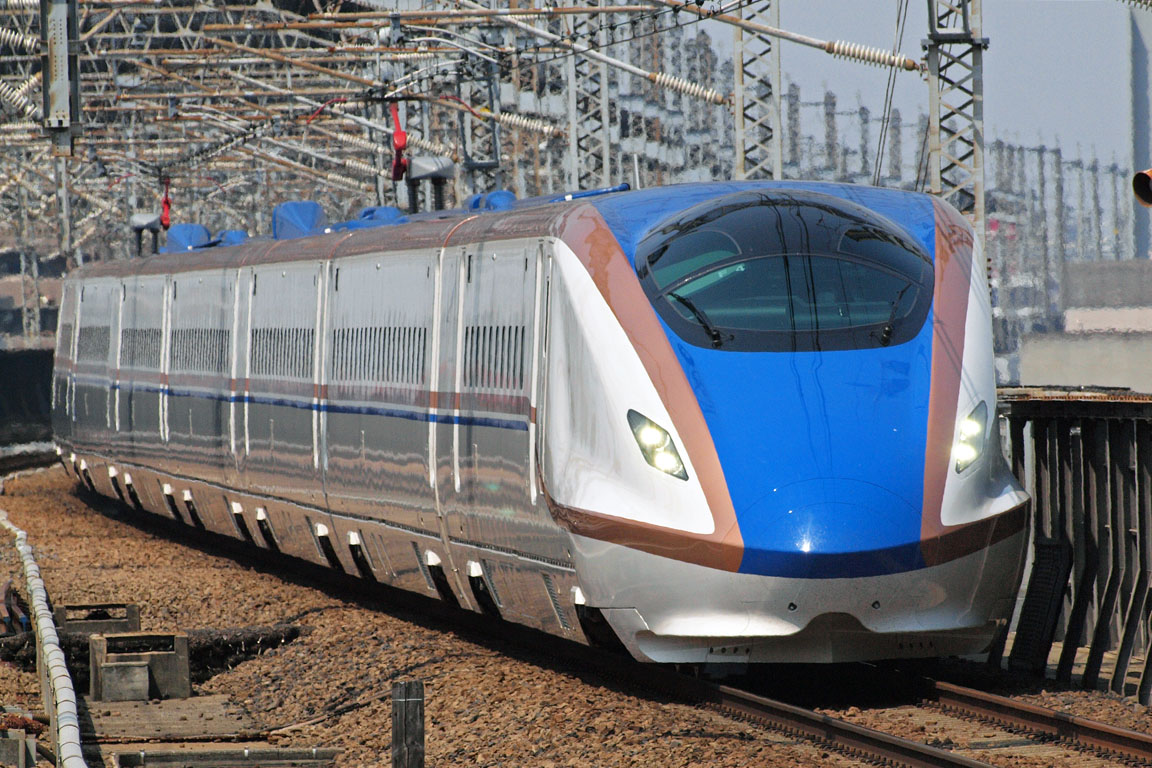
New E7 Series Shinkansen in service. Photo by Tokyo Sakura, CC by 2.0
For example, you could opt to travel from Tokyo to Kanazawa, spend the day there, head to Kyoto in the evening, and then return to Tokyo by direct bullet train. Or you could spend a night at any of these stations if you want to pace yourself a bit… in this way, for example, you could try visiting Kanazawa’s Kenroku-en in the early morning before the tour groups arrive. Whether or not you visit any attractions, you can potentially save some money on accommodations compared to big cities like Tokyo and Kyoto by stopping over at one of these cities. Remember that the Japan Rail Pass will cover pretty much everything for your travels, except for Nozomi trains and for any service with the GranClass premium cabin.
As a general rule, Tokyo to Kanazawa is 2 1/2 hours on the fastest shinkansen service, and Tokyo to Toyama is 2 hours. Kanazawa to Kyoto by Thunderbird limited express service is around 2 hours 15 minutes, with Osaka a further 30 minutes down the line.
I hope I have given you a few ideas. Have fun exploring the new train route and unlocking all of the new secrets along it!
Note: All flags in this article are taken from Wikimedia Commons. Since there is no original ownership they are in the public domain. As per usual, all advice is given pursuant to the Japan Tips DISCLAIMER.
It’s sometimes hard to imagine that in a small, densely-populated country like Japan, they somehow find the room to carry out large transit improvement projects. Two major projects will be opening in March of 2015, that will make transit around Japan much easier – both for the locals and for the tourists.
New E7 Series Shinkansen in service. Photo by Tokyo Sakura, CC by 2.0
New Shinkansen Line Opens between Nagano and Kanazawa
On Saturday, March 14, 2015 – the Saturday in March selected next year for all Japan Railway lines to carry out an across-the-board revision of their train timetables – Japan’s flagship bullet train system, or Shinkansen, branches out with the opening of a new extension between Nagano and Kanazawa. The current Nagano Shinkansen, operating between Tokyo and Nagano, will thus extend itself and be known as the Hokuriku Shinkansen. It is the first opening of a bullet train line since 2011, when the Kyushu Shinkansen link between Fukuoka and Yatsushiro became operational.
The bullet train opening will bring with it seven new stations in Nagano, Niigata, Toyama and Ishikawa prefectures. The terminal city, Kanazawa, has preserved much of its heritage as the city was spared from World War II allied bombings. Its main attractions are Kenroku-en Garden, known as one of the Best Three Gardens in all of Japan, and Kanazawa Castle Park. Many other sites to visit in Kanazawa can be found on the official Kanazawa Tourism website.
The bullet train will also open in Toyama, a beautiful city whose prefecture is part of the Japanese Northern Alps. The new bullet train line will make the city a more important transfer point to the city of Takayama and the world heritage site of Shirakawa-go. Another station of interest to to tourists will be Kurobe-Unazukionsen. The station will connect to the private Toyama Chiho Railway for Unazuki Onsen, a small hot spring town. This town, however, is also the start of the Kurobe Gorge Railway, which winds its way around the mountains and the Kurobe Gorge, one of the deepest gorges in all of Japan, where the views of nature are stunning. It is only operational from May until November.
Currently, if you are traveling from Tokyo to Kanazawa, you have two options: Ride the Tokaido Shinkansen “Hikari” service to Maibara and change to the “Shirasagi” train for Kanazawa, or the Joetsu Shinkansen to Echigo-Yuzawa and change to the Hakutaka train. Both of these options take approximately 4 to 4 1/2 hours. However, the new bullet train on the Hokuriku Shinkansen will link Tokyo to Kanazawa in only 2 hours, 28 minutes on the fastest service! Tokyo to Toyama will only be two hours, compared to about 3 hours 20 minutes currently.
If you have the Japan Rail Pass, they have not made an official announcement about validity but I would presume that it would be valid for all trains on the new Hokuriku Shinkansen route. The route will have new trains with GranClass, a premium first class experience that is not fully covered by the Rail Pass (to experience GranClass you have to pay an additional fare, as the pass will just cover the basic fare).
And now for the train name lesson – there will be FOUR different kinds of trains operating on the route. These are:
Kagayaki (かがやき) – This is the fastest service that will make the fewest stops, primarily Tokyo, Omiya, Nagano and Toyama. Selected trains will also stop at Ueno, north of Tokyo station. Hakutaka (はくたか) – This service will typically serve Tokyo, Ueno and Omiya then run express to Nagano. After Nagano it will make all local stops to Kanazawa. Selected trains will also make stops between Takasaki and Nagano. Asama (あさま) – This service currently operates on the Nagano shinkansen route from Tokyo to Nagano, and will continue to operate between these two cities only making a mix of local and express stops. Tsurugi (つるぎ) – This will be the new shinkansen shuttle service that runs throughout the day linking the cities of Toyama and Kanazawa only.
Note that when the Hokuriku Shinkansen opens, several JR lines will be changed over to new private railways, which has been a standard practice over the years. This includes the stretch between Kanazawa and Toyama. Limited Express trains from cities such as Osaka, Kyoto, Maibara and Nagoya will no longer operate between Kanazawa and Toyama, and so passengers (including Rail Pass holders) continuing to Toyama will have to change to the bullet train – primarily the Tsurugi, or whatever is available.
Also, since a few overnight trains from the Kansai region to Hokkaido will now run over private railways, Rail Pass holders will have to pay supplements for using non-JR track if using trains on these lines. Though in a few years, when the bullet train line from Tokyo is extended into Hokkaido, these overnight trains will probably cease to exist.
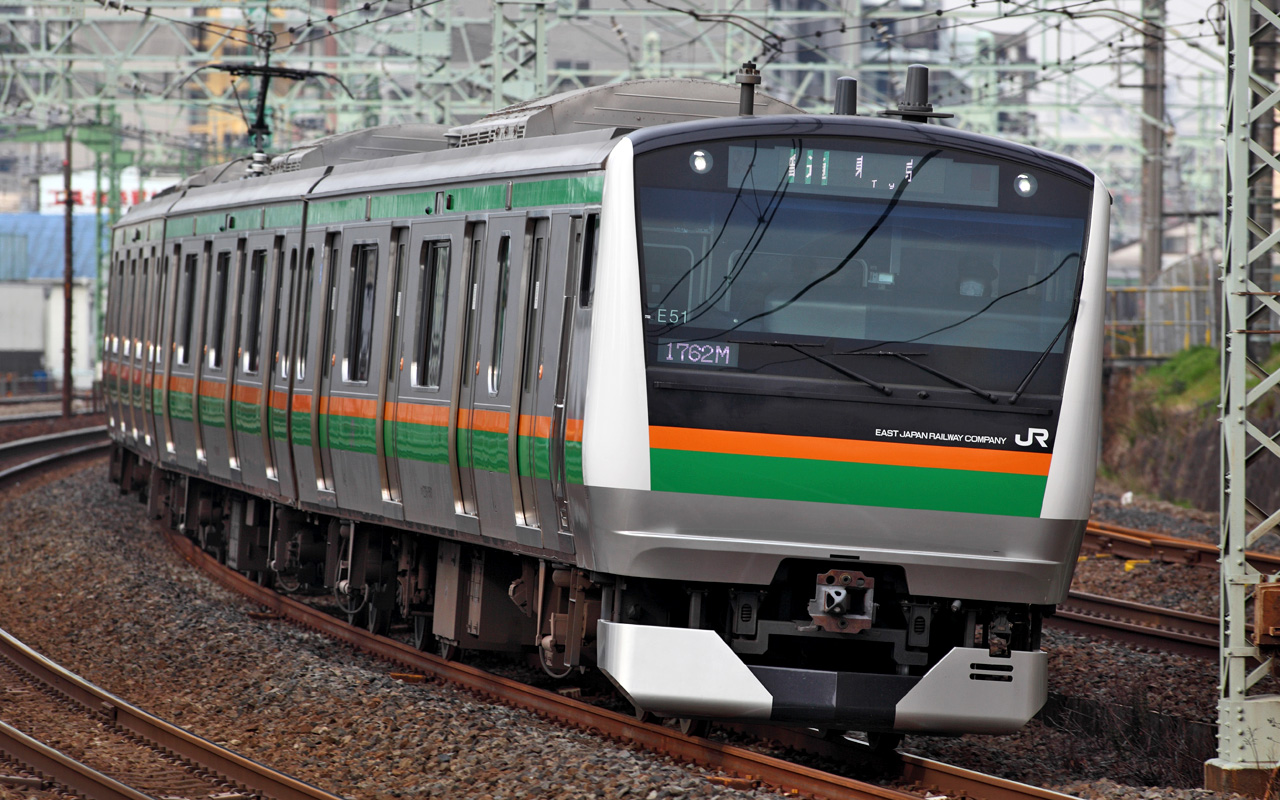
JR East E233-3000 train that will typically be seen on the new Ueno-Tokyo Line. Photo by Tennen-Gas, CC BY-SA 3.0
Ueno-Tokyo Through Line Opens
The second major development that is expected to dramatically improve transit within Tokyo is the opening of the Ueno-Tokyo Line. This line will connect local JR trains running from the northern and eastern parts of Tokyo to the Tokaido Main Line that runs south to Yokohama.
Why is this so significant? Many travelers who are traveling over these routes currently have to get off at Ueno, change to a loop line train like the Yamanote Line that goes to Tokyo, then change again to the Tokaido Line. This poses a capacity problem between Tokyo and Ueno, especially during rush hours. The opening of this line will mean no more transfers to the Yamanote Line will be necessary, meaning congestion should see a significant reduction. Ueno-Tokyo through trains will shorten travel times for passengers by a few minutes, which is important in a country where time is essential.
Many of the trains from the north and east that run into Tokyo will continue on to Shimbashi and Shinagawa. It looks like many trains will end at Shinagawa, with a few trains continuing on to Yokohama as well.
Those are some of the improvements that are coming to Japan Railways in March of 2015. Usually, all of the changes that will come with the national timetable revision will be announced by the JR rail companies in simultaneous press releases around mid-December.





 Jose's Japan Tips