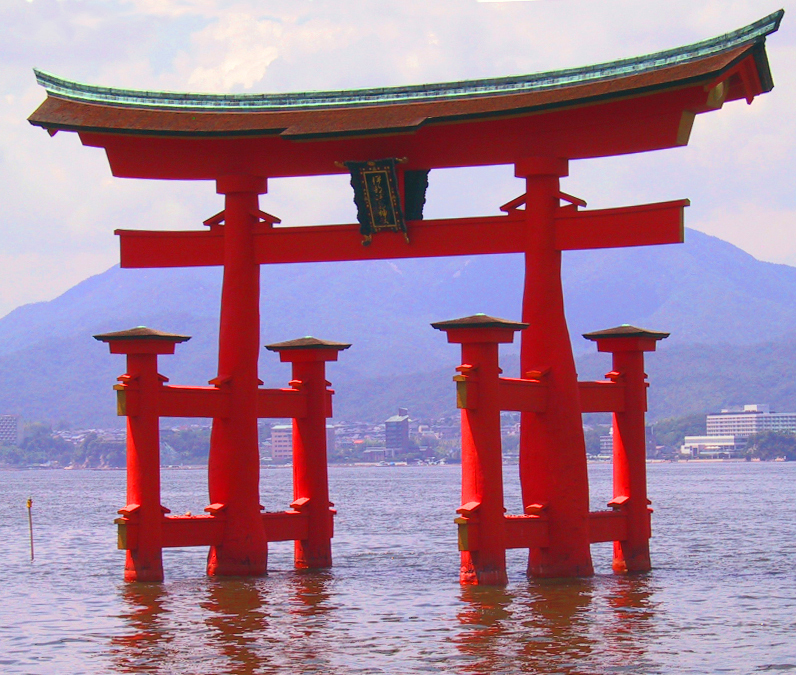
Japan Itinerary: The Three Gardens

This itinerary was updated for current pricing and travel options in February 2017.

The original list of Japan’s Three Views is mirrored by a countless number of lists with the top three of everything in Japan. In this post I will introduce what is agreed to be Japan’s best three gardens, or Sanmeien, and suggest itineraries to visit these three gardens in a limited amount of time. All information is provided according to the DISCLAIMER and all information contained in this post is accurate as of the date it is posted.

I really love Japanese gardens. They help to define tranquility and serenity in their settings, no matter what their purpose. I’ve been to a few in Japan, notably Rikugien in Tokyo, and in a good number of the buddhist temples that I’ve visited around the Kyoto area. I must confess though that I’ve never been to any of these three defined as the best. I will definitely mark at least one of these on my list of places to visit in Japan during my future travels. But even if you don’t visit these three, there are plenty of gardens around the country to whet your appetite.
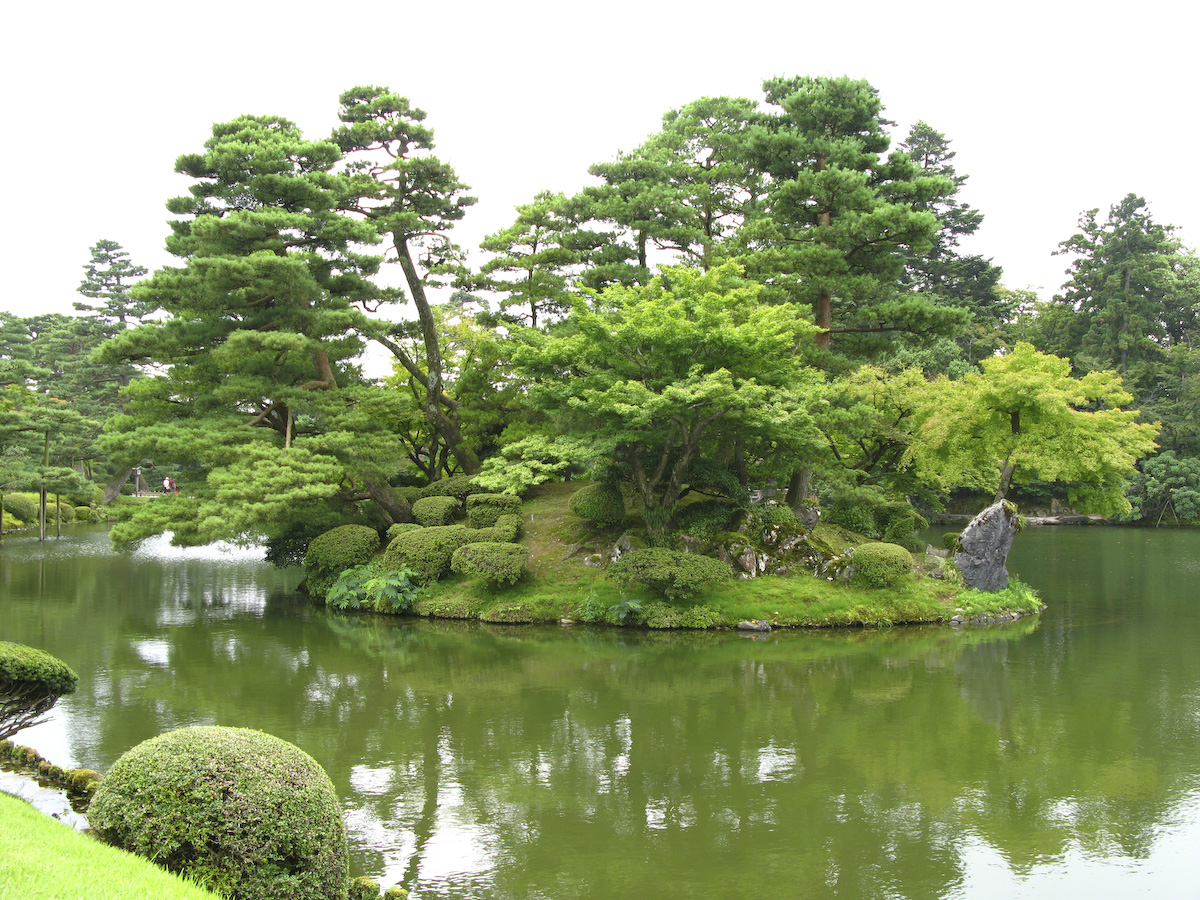
Kenroku-en Kasumi-ga-ike. Photo by Wikipedia user Fg2, released under Public Domain

KENROKU-EN

Kenroku-en is a Japanese garden in the city of Kanazawa, in Japan’s northern Chubu region. It was originally a private garden for one of the country’s most powerful samurai clans. A restoration project begun in the late 1700’s after it was destroyed by fire. It was opened to the public in 1874, a few years into the Meiji Restoration which brought the era of samurai and feudal lords to an end.

It is open from 7 AM to 6 PM during the summer months, and 8 AM to 5 PM during the winter months. Admission is 310 yen; for 500 yen you can buy a “Kenroku-en Plus One” ticket, which also includes admission to one additional attraction in the Kanazawa area.

In March of 2015, Kanazawa was linked to the country’s high speed rail network, making for a quick trip from Tokyo… but since Kenroku-en is a considerable distance from Kanazawa station the best way to access the garden is by public transportation. Numerous buses operate on a frequent basis between the train station and the garden: trips take approximately 15-20 minutes at a cost of 200 yen. JR Bus operates a few buses per hour, but not as much as the other local buses operated by Hokutetsu Bus. These JR buses are free if you have the Japan Rail Pass, although the cost of the bus is cheap enough that you can just pay for the next trip to the garden and back. Perhaps the easiest way to get around, though, is on the Kanazawa Loop Bus. These buses for tourists run every 15 minutes at a cost of 200 yen per trip – or for 500 yen you can hop on and off the bus as many times as you want in one day, as well as any local Hokutetsu bus in the area served by the loop bus. Passes can be purchased from the Hokutetsu Ekimae Center, at Kanazawa Station’s east exit.

There is also a shuttle bus that goes directly between Kanazawa Station and Kenroku-en every 20 minutes for 200 yen (100 yen on weekends and holidays), though it looks like the One Day Pass for the Loop Bus is not valid for this shuttle bus.

Kenroku-en official web site: http://www.pref.ishikawa.jp/siro-niwa/kenrokuen/e/index.html
Official Kanazawa City Tourism web site: http://www.kanazawa-tourism.com/
English route map of Kanazawa Loop Bus (in PDF): http://www.hokutetsu.co.jp/bus/e_pamphlet.pdf
Wikipedia: http://en.wikipedia.org/wiki/Kenrokuen

Koraku-en with Okayama Castle in the back. Photo by Wikipedia user Fjkelfeimvvn, released under CC Attribution 3.0 unported.

KORAKU-EN

There are several popular locations in Japan referred to as Koraku-en. If you ask for Koraku-en in Tokyo, you’ll be taken to Japan’s most famous sports venue for boxing and professional wrestling. But if you search for a famous garden called Koraku-en, you’ll be directed to a location in the city of Okayama, in the Chugoku region.

Like Kenroku-en, Koraku-en was built as a pleasure garden by a feudal lord, and was a private garden until it was completely opened to the public during the Meiji Restoration. And like Kenroku-en, it has suffered through destruction (twice!) and been rebuilt. One of the striking features of the garden is the presence of nearby Okayama Castle, which appears to blend in to the scenery. It is open from 7:30 AM to 6 PM during the summer months, and 8 AM to 5 PM during the winter months. Admission is 400 yen, with combination admission tickets available with nearby attractions including Okayama Castle and the prefectural museum.

The nearest major train station is Okayama, a major stop on the Shinkansen (bullet train). From here, you have a few options: You can walk the entire distance to the garden in approximately 30 minutes, you can take a city bus from the station to the garden (15-20 minutes on Bus #18, 140 yen, departs every 20 minutes), you travel halfway to Koraku-en on the tramway (100 yen to Shiroshita station, 5 minutes) and walk to Koraku-en in about 15 minutes, or you can go the entire way by taxi for around 1000 yen.

Koraku-en English web site: http://www.okayama-korakuen.jp/english/
Koraku-en / Okayama Castle information at official Okayama Prefecture Tourism web site: https://www.okayama-japan.jp/en/spot/91
Wikipedia: http://en.wikipedia.org/wiki/K%C5%8Draku-en

Kairaku-en. Photo by Flickr user LuxTonnerre and released under CC-by-2.0.

KAIRAKU-EN

The final of Japan’s three great gardens is actually in Ibaraki prefecture, just a stone’s throw away from Tokyo. There are several differences between Kairaku-en and the two other gardens on the list: Kairaku-en was built much later, in the mid 1800’s. The garden has been open to the public since it first opened. It is widely known for its plum tree blossoms in February and March. There is a traditional building within Kairaku-en that requires an admission fee, otherwise the garden is completely FREE to enter. Operating hours are 6 AM to 7 PM during the plum blossom season and summer months, 7 AM to 6 PM during the winter months.

Kairaku-en suffered damage after the earthquake and tsunami of March 11, 2011. Full restoration work was completed in February, 2012.

The nearest train station to Kairaku-en is Mito Station, which is on the JR Joban Line. Joban Line trains are now directly linked to Ueno, Tokyo and Shinagawa stations: Limited Express “Hitachi” and “Tokiwa” trains are the fastest (70-90 minutes and 3,820 yen from Tokyo Station), while local trains reach Mito in 2 hours 15 minutes from Tokyo Station (2,270 yen). The trains actually pass Kairaku-en before arriving at Mito. You can reach Kairaku-en by walking for 30 minutes, by taking a bus (15 minutes), or by taxi in 10 minutes for around 1,000 yen. During the plum festival, a temporary station right next to Kairaku-en is opened for disembarkment.

There is also a highway bus that runs from Tokyo to Mito Station in approximately two hours. SOME of these buses stop at a stop called Daikumachi, which is almost to Mito station. The fare is 2,080 yen to either destination. From this stop you can walk SOUTH directly to Kairaku-en in 15-20 minutes along route 342.

Kairaku-en Web Site: http://www.koen.pref.ibaraki.jp/foreign_language/en/kairakuen/index.html
JR Bus Kanto website: http://www.jrbuskanto.co.jp.e.wn.hp.transer.com/
Wikipedia: http://en.wikipedia.org/wiki/Kairaku-en

And now for the short travel itineraries that cover just these three jewels of Japanese gardens. As in my previous post, there are four different routes suggested. Two each from Tokyo and Osaka, and two each using the train and the bus. For buses, note that bus companies sometimes offer discounts for advance purchases.

FROM TOKYO – BY RAIL/JAPAN RAIL PASS – 4-day Itinerary

Day 1: In the morning, depart from Tokyo station on a “Hitachi” or “Tokiwa” Limited Express service to Mito station (70-90 minutes, 3,820 yen, no charge w/Rail Pass) or by local train (2 1/4 hours, 2,080 yen). Walk from Mito Station for about 30 minutes to Kairaku-en, or take a taxi (around 1,000 yen one-way).
VISIT KAIRAKU-EN
Return to Ueno Station in the afternoon via “Hitachi”/”Tokiwa” or local train.
In the evening hours, depart Tokyo for Kanazawa on the Hokuriku Shinkansen “Kagayaki” or “Hakutaka” bullet train service. “Kagayaki” trains are the fastest, taking 2 1/2 hours, while the “Hakutaka” makes more stops and adds around 45 minutes to the trip. The fare of 14,120 yen is the same – there is no charge for Japan Rail Pass holders.

Spend TWO EVENINGS at a hotel in Kanazawa.

Day 2: Spend the entire day in Kanazawa, utilizing the Kanazawa Loop Bus to get around the city’s major sites, including Kenroku-en.
VISIT KENROKU-EN

Day 3: In the morning, depart for Okayama using the “Thunderbird” limited express between Kanazawa and Shin-Osaka, followed by the Shinkansen between Shin-Osaka and Okayama. The “Thunderbird” begins departures at 5:35 AM; the faster services leave Kanazawa just after the top of the hour at 8 AM and 9 AM. Be sure to change at SHIN-OSAKA, which is the shinkansen transfer station. By Nozomi it takes as little as 3 1/2 hours at a cost of 13,070 yen. Rail Pass holders can reach Okayama in around 4 hours, but using one of the morning “Thunderbird” trains to connect to a “Sakura” bullet train service will get you to Okayama a little sooner.
In the afternoon visit Koraku-en and nearby Okayama Castle.
VISIT KORAKU-EN

Spend the evening in Okayama.

Day 4: Return from Okayama to Tokyo on the bullet train at your leisure to complete the trip. By direct “Nozomi” the trip takes approximately 3 1/2 hours (17,130 yen). A direct “Hikari” service leaves every hour for Tokyo (4 hours) and is the best option for Japan Rail Pass holders – otherwise a change of trains at Shin-Osaka is necessary.
[If you wish, you can travel to Okayama at your leisure on Day 3, then spend the morning of Day 4 at Koraku-en before returning to Tokyo in the evening]

For this course, a 7 Day Japan Rail Pass is recommended (29,110 yen).

FROM TOKYO – BY BUS and LOCAL TRAINS – 5-day itinerary

Day 1: Depart from Tokyo for Mito using the bus from Tokyo Station (2 hours, 2,080 yen) or using the local train from Ueno, Tokyo or Shinagawa (2 1/4 hours, 2,080 yen from Tokyo Station). Walk from Mito Station for about 30 minutes to Kairaku-en or take a taxi (around 1,000 yen one-way). If you are on a bus that drops off at Daikumachi bus stop, you can walk south to Kairaku-en in 15-20 minutes.
VISIT KAIRAKU-EN
Return to Tokyo from Mito Station by bus or local train.

In the evening, leave Tokyo for Kanazawa by overnight bus. Options include the JR Bus and Willer Express. There are several nightly departures and buses reach Kanazawa in 7 1/2-9 hours. Fares typically start at around 5,700 yen for off-peak travel and increase during high demand.

Day 2: Arrive in Kanazawa. Spend the entire day in Kanazawa, utilizing the Kanazawa Loop Bus to get around the city’s major sites, including Kenroku-en.
VISIT KENROKU-EN

Spend the night in Kanazawa.

Day 3: Spend the day traveling from Kanazawa to Okayama, with a break in Osaka.

In the morning, depart Kanazawa for Osaka. Options include JR Bus (Fares start at around 4,700 yen for off-peak travel).
Spend the afternoon in Osaka. In the evening, depart for Okayama.
Options include JR Bus (around 1 bus per hour, with fares starting at around 2,400 yen)

If you are unable to secure a bus trip, the other option is to travel via the JR commuter train line all the way out to Okayama. You will want to depart on a “Shin-Kaisoku” or special rapid service – one change of trains will be required, usually in Himeji. The train fare from Osaka to Okayama is 3,020 yen and the ride takes approximately 2 1/2 hours if the connections are good.

The train trip is slightly faster than the bus… but unlike the commuter train the bus has reserved seating and, like most others, makes a rest stop at a service area along the highway.

Spend the night in Okayama upon arrival.

Day 4: Spend the day visiting Koraku-en and the nearby Okayama Castle.
VISIT KORAKU-EN

In the evening, depart for Tokyo via overnight bus. Options include JR Bus and Willer Express (Fares starting from around 5,400 yen).

Day 5: Arrive in Tokyo to complete your trip.

For this itinerary I suggest the following:
*Check to see if Willer Express’ 3-day Japan Bus Pass (starting at 10,000 yen) would be cheaper than individual tickets from Tokyo to Kanazawa [Day 1], and from Okayama to Tokyo [Day 4]. Otherwise purchase regular one-way bus tickets.
*A regular round-trip bus ticket OR train ticket from Tokyo to Mito [Day 1]
*A regular one-way bus ticket from Kanazawa to Osaka [Day 3] .
*A regular one-way bus ticket OR train ticket from Osaka to Okayama [Day 3].

FROM OSAKA – BY RAIL/JAPAN RAIL PASS – 4-day itinerary

Day 1: Depart Osaka in the morning for Okayama by bullet train. “Nozomi” and “Mizuho” trains take 45 minutes costing 6,230 yen. Rail Pass holders should use the “Sakura” or “Hikari” with frequent departures. “Sakura” trains are generally faster, reaching Okayama in 50 minutes or so.
Spend the day visiting Koraku-en and the nearby Okayama Castle.
VISIT KORAKU-EN

In the evening depart for Tokyo by bullet train.  By direct “Nozomi” the trip takes approximately 3 1/2 hours (17,130 yen). A direct “Hikari” service leaves every hour for Tokyo (4 hours) and is the best option for Japan Rail Pass holders – otherwise a change of trains at Shin-Osaka is necessary. Be sure not to get back to Tokyo too late! Spend the night in Tokyo.

Day 2: In the morning, depart from Tokyo station on a “Hitachi” or “Tokiwa” Limited Express service to Mito station (70-90 minutes, 3,820 yen, no charge w/Rail Pass) or by local train (2 1/4 hours, 2,080 yen). Walk from Mito Station for about 30 minutes to Kairaku-en or take a taxi (around 1,000 yen one-way).
VISIT KAIRAKU-EN
Return to Ueno Station in the afternoon via “Hitachi”/”Tokiwa” or local train.
In the evening hours, depart Tokyo for Kanazawa on the Hokuriku Shinkansen “Kagayaki” or “Hakutaka” bullet train service. “Kagayaki” trains are the fastest, taking 2 1/2 hours, while the “Hakutaka” makes more stops and adds around 45 minutes to the trip. The fare of 14,120 yen is the same – there is no charge for Japan Rail Pass holders.

Spend TWO EVENINGS at a hotel in Kanazawa.

Day 3: Spend the entire day in Kanazawa, utilizing the Kanazawa Loop Bus to get around the city’s major sites, including Kenroku-en.

Day 4: Return to Osaka at your leisure via the “Thunderbird” limited express to complete your trip. Trains take approx. 2 hours 40 minutes and cost 7,650 yen to Osaka station.

For this course, a 7 Day Japan Rail Pass is recommended (29,110 yen).

FROM OSAKA – BY BUS and LOCAL TRAINS – 5-day itinerary

Day 1: Depart for Okayama by bus or train. Bus options include JR Bus (around 1 bus per hour, with fares starting at around 2,400 yen).

If you are unable to secure a bus trip, the other option is to travel via the JR commuter train line all the way out to Okayama. You will want to depart on a “Shin-Kaisoku” or special rapid service – one change of trains will be required, usually in Himeji. The train fare from Osaka to Okayama is 3,020 yen and the ride takes approximately 2 1/2 hours if the connections are good.

The train trip is slightly faster than the bus… but unlike the commuter train the bus has reserved seating and, like most others, makes a rest stop at a service area along the highway..

Spend the afternoon in Osaka, visiting Koraku-en and the nearby Okayama Castle.
VISIT KORAKU-EN
In the evening, depart for Tokyo via overnight bus. Options include JR Bus and Willer Express (Fares starting from around 5,400 yen).

Day 2: Arrive in Tokyo, and depart from Tokyo for Mito using the bus from Tokyo Station (2 hours, 2,080 yen) or using the local train from Ueno, Tokyo or Shinagawa (2 1/4 hours, 2,080 yen from Tokyo Station). Walk from Mito Station for about 30 minutes to Kairaku-en or take a taxi (around 1,000 yen one-way). If you are on a bus that drops off at Daikumachi bus stop, you can walk south to Kairaku-en in 15-20 minutes.
VISIT KAIRAKU-EN
Return to Tokyo from Mito Station by bus or local train and spend the night in Tokyo.

Day 3: Spend your day in Tokyo, then leave in the evening for Kanazawa by overnight bus. Options include the JR Bus and Willer Express. There are several nightly departures and buses reach Kanazawa in 7 1/2-9 hours. Fares typically start at around 5,700 yen for off-peak travel and increase during high demand.

Day 4: Arrive in Kanazawa. Spend the entire day in Kanazawa, utilizing the Kanazawa Loop Bus to get around the city’s major sites, including Kenroku-en.
VISIT KENROKU-EN
Spend the night in Kanazawa.

Day 5: Depart Kanazawa for Osaka to complete your trip. Options include JR Bus (Fares start at around 4,700 yen for off-peak travel).

For this itinerary I suggest the following:
*Check to see if Willer Express’ 3-day Japan Bus Pass (starting at 10,000 yen) would be cheaper than individual tickets from Okayama to Tokyo [Day 1] and from Tokyo to Kanazawa [Day 3]. Otherwise purchase regular one-way bus tickets.
*A regular one-way bus ticket OR train ticket from Osaka to Okayama [Day 1]
*A regular round-trip bus ticket from Tokyo to Mito [Day 2]
*A regular one-way bus ticket from Kanazawa to Osaka [Day 5].

Japan Itinerary: The Three Views

This blog post was updated in February 2017 to reflect new travel information and fares.

In what will hopefully be the first of a few blog posts, I will present suggested itineraries that will allow you to experience the best that Japan has to offer. These are, as per usual, offered pursuant to the blog DISCLAIMER and transit timings are valid and current as of the date of this post.

This itinerary is for lovers of landscapes and views. Indeed, this itinerary covers the three top views that Japan has to offer. The original list of the “Three Views” can be attributed to the Hayashi family of scholars that penned the list in the 1600’s.

One of Matsushima’s many islands. Photo by Jose Ramos, October 2008

MATSUSHIMA: This city is known for its hundreds of small islands in the bay dotted with pine trees, and a destination that I can personally vouch for. The city is near where the 2011 earthquake and tsunami struck, however Matsushima did not suffer significant damage and it is currently business as usual.

Matsushima can be accessed by the JR Senseki line operating out of Sendai station, which is a stop for the bullet train. The most convenient stop is Matsushima-Kaigan, from which a ferry can take you on a loop around the bay. Tours usually take 40-50 minutes, while a shortened 30 minute tour is sometimes available. Near the dock is a revered Zen buddhist temple, Zuiganji.

An alternate route (which I used) is to exit the train at Hon-Shiogama and walk a few minutes to the pier there. You can then take a one-way cruise to Matsushima which covers a different part of the bay; this is called the “Basho Cruise”.

Highway buses to the area are sparse, so I suggest taking a bus to Sendai and then taking the JR Senseki Line from there.

Ferry information: http://marubun-kisen.com/english/index.html
Wikipedia: http://en.wikipedia.org/wiki/Matsushima

The sand bar at Amanohashidate. Photo by kentin, released under CC-by-SA 3.0 unported

AMANOHASHIDATE: Located in northern Kyoto prefecture, Amanohashidate is a long sand bar topped with pine trees. There are several viewing points from which to view the “bridge in heaven,” as it is translated. The common ritual for visitors is to stand with your back to the sand bar, then bend forward and view it from between your legs, to make it appear as it is indeed “floating”.

There are direct limited express trains to Amanohashidate from Kyoto station on the JR, with connections also available from Osaka. Tankai Bus and Hankyu Bus operates highway bus services from Kyoto Station (2h 20m), Shin-Osaka Station (3h) and the Hankyu Umeda Bus Terminal (3h 15m).

Amanohashidate Tourism Website with descriptions of major destinations: http://www.amanohashidate.jp/lang/en/
Wikipedia: http://en.wikipedia.org/wiki/Amanohashidate

Itsukushima Shrine Torii Gate. Photo by Rdsmith4, released under CC-by-SA 2.5 generic

MIYAJIMA: Also known as the island with the floating red torii gate in front of it, Miyajima (also known by its official name ITSUKUSHIMA) is located in the Chugoku region just off the coast of Hiroshima. It is known for Itsukushima shrine, a world heritage site with one of Japan’s most famous icons, the red torii gate in the bay. It appears to “float” in the water during times of high tide. Several popular ryokans are also available to make your stay more memorable.

Miyajima is best accessed by taking the local JR Sanyo line from the Hiroshima train station to Miyajima-guchi station, then taking a ferry across to Miyajima. There are a few ferry companies that do the trip, but one company – JR Ferry – offers free travel if you have a Japan Rail Pass. A cheaper and longer transit route is to take the Hiroshima Tramway, aka Hiroden, Line #2 from Hiroshima Station to Miyajima-guchi. (Approx. 70 minutes and 270 yen, compared to about 30 minutes and 400 yen by JR)

Bus travelers are best taking a bus into Hiroshima and then continuing to Miyajima-guchi by train or tram.

Miyajima Tourist Association: http://www.miyajima.or.jp/english/
Miyajima Hotels Association: http://www.miyajima-yado.com/english.html
Wikipedia (Itsukushima/Miyajima): http://en.wikipedia.org/wiki/Itsukushima

Here are some suggested itineraries that will allow you to enjoy these wonderful views.

FROM TOKYO – By Rail/Japan Rail Pass – 4 Day Itinerary

Day 1: Travel from Tokyo to Sendai by Shinkansen, then travel by JR Senseki Line to Hon-Shiogama (Approx 2 1/4 hours, 11,520 yen) or Matsushima-Kaigan (Approx 2 1/2 hours, 11,520 yen)
VISIT MATSUSHIMA
In afternoon, Travel to Sendai by JR Senseki Line, to Tokyo by Shinkansen, then to Kyoto by Shinkansen. (Approx 4 1/2 hours, 22,620 yen using the Nozomi Tokyo-Kyoto; Japan Rail Pass approx 5 1/2 hours using the Hikari Tokyo-Kyoto)
Japan Rail Pass holders should depart Matsushima by 4 PM, others should leave by 5 PM

Day 2: Travel from Kyoto to Amanohashidate by the “Hashidate” limited express. (2 hours, 4,500 yen; Japan Rail Pass holders must pay 1,480 yen supplement)
VISIT AMANOHASHIDATE
In the afternoon, return to Kyoto by “Hashidate” Limited Express.

If you cannot take the “Hashidate” then you can alternatively take two trains, changing at Fukuchiyama station. The fare is the same, including the JR Pass supplement.

Day 3: Travel from Kyoto to Hiroshima on one of the morning shinkansen services (100 minutes, 11,410 using the Nozomi; Japan Rail Pass holders should take one of the direct Hikari services to Hiroshima that run in the morning, taking approximately 2 hours)
From Hiroshima, travel to Miyajima-guchi station and take the ferry across to Miyajima. Japan Rail Pass holders should use the JR Ferry, as it is free with the pass. Note that the Hiroshima Tram (Hiroden) sells a one day unlimited tram and ferry pass for 840 yen, in which case you must use the other ferry service, Matsuden Ferry.
VISIT MIYAJIMA
Spend the rest of your day and night in Hiroshima, or if you’re lucky try spending the night at a Ryokan on Miyajima itself!

Day 4: If you stayed in Miyajima during the last evening, spend the day in Hiroshima, notably at the Hiroshima Peace Park, before returning to Tokyo. Head back using the Nozomi (4 hours, 19,080 yen) or if you have a Japan Rail Pass you’ll have to take a Sakura or Hikari service and change en-route to another Tokyo-bound Hikari service (5-5 1/2 hours). The final Nozomi departure from Hiroshima to Tokyo leaves at around 8 PM, and the last trip valid with the Rail Pass leaves at around 7 PM.

A 7 Day Japan Rail Pass is recommended for this course (29,100 yen).

FROM TOKYO – By Bus – 6 Day Itinerary
When published in 2012, this was originally a 5 day Itinerary. I have since increased it to a 6 day plan.

Day 1: Travel from Tokyo to Sendai by bus, then travel by rail from Sendai on the JR Senseki Line to Hon-Shiogama (30 minutes, 320 yen) or Matsushima Kaigan (35-40 minutes, 400 yen). Be sure to take an early bus.
Bus options include these morning departures from Shinjuku Highway Bus Terminal: JR Bus (Departs 8:30 AM, arrives 2:20 PM, fares start at 3,500 yen) and Willer Bus (Leaving 7:30 AM, arriving 1:25 PM, fare starts at ~3,700 yen)
VISIT MATSUSHIMA
In the evening return to Sendai and take a direct bus from Sendai to Osaka. The only bus that runs between the two cities is the Kintetsu Bus (Leaving Sendai 7:30 PM, arriving at Osaka’s Higashi-Umeda station 7:12 AM the next morning, fare 12,500 yen). The other alternative is to take a bus to Nagoya, which is offered by a few companies including Willer Express (Leave Sendai 9:30 PM, arrive Meitetsu Bus Center 6:50 AM the next morning, fare 9,500 yen).

Day 2: If you are on the Kintetsu Bus: arrive in Osaka in the morning.

If you are on the Willer Bus to Nagoya: 

Travel between Nagoya and Osaka during the day at your leisure. Willer Buses depart from Nagoya Station Taikodori Exit a few times a day towards Umeda (3 1/2 hours, 2,500 yen). These buses offer convenient drop-offs near Osaka along some commuter train routes: Kosoku Nagakyo is a short walk to the Hankyu Railway, and Momoyamadai conveniently links to the Midosuji Subway. Alternatively, JR Bus runs hourly trips from Nagoya to Osaka (3,000 yen but can sometimes be discounted to 1,500 yen).

Plan to spend two nights in Osaka.

Day 3: Depart for Amanohashidate on the Hankyu Bus (Leaving Hankyu Umeda Bus Terminal 9:50 AM, arriving Amanohashidate Station 12:30 PM).
VISIT AMANOHASHIDATE
Return from Amanohashidate to Osaka on the Hankyu Bus (Leaving Amanohashidate Station 4:45 PM, arrive Osaka/Hankyu Umeda Bus Terminal 7:25 PM).
The round-trip bus fare is 5,300 yen.
Spend the rest of your evening in Osaka.

Day 4: Depart from Osaka on a bus to Hiroshima, then travel to Miyajima using one of the methods described earlier. Options include JR Bus (Leaving Osaka Station JR Highway Bus Terminal 7:30 AM, arriving Hiroshima Station 12:32 PM, fares start from 4,600 yen) and Willer Express (Depart Willer Osaka Terminal 8:20 AM, arriving Hiroshima Station 1:55 PM, fares start from ~3,600 yen). NOTE that the JR Buses stop at the Hiroshima Bus Center first, where you can connect directly to the tram for Miyajima-guchi – it’s a shorter trip compared with a start from Hiroshima station.
VISIT MIYAJIMA
Spend the rest of your day and night in Hiroshima, or if you’re lucky try spending the night at a Ryokan on Miyajima itself!

Day 5: Spend your day in Hiroshima before returning to Tokyo via overnight bus. Options include the JR Bus (Depart Hiroshima Bus Center 8:20 PM and Hiroshima Station 8:35 PM, arrive Shinjuku 7:30 AM/Tokyo 8:05 AM, Regular fare 11,900 yen) and the Willer Express bus (Depart Hiroshima Station 7:35 PM, arrive Shinjuku Station 8:30 AM, fares starting at ~7,900 yen).

Day 6: Arrive in Tokyo to complete your trip.

For your trip I recommend a 3-day Willer Express Japan Bus Pass (Starting at 10,000 yen) to cover your trips from Tokyo to Sendai [Day 1], Sendai to Nagoya [Day 1], Osaka to Hiroshima [Day 4] and Hiroshima to Tokyo [Day 5]. Then purchase a regular bus ticket on either Willer or JR from Nagoya to Osaka [Day 2], and the bus tickets from Osaka to Amanohashidate and back [Day 3].

FROM OSAKA – By Rail/Japan Rail Pass – 4 Day Itinerary

Day 1: Travel to Amanohashidate by rail. Take the “Konotori” limited express from Osaka to Fukuchiyama in the morning. At Fukuchiyama station, change to the “Hashidate” limited express for the run to Amanohashidate. (2 1/4 hours, 5,380 yen – Japan Rail Pass holders must pay 1,480 yen supplement)
VISIT AMANOHASHIDATE
Return to Osaka in the evening in a similar fashion.

Day 2: Travel from Kyoto to Hiroshima on one of the morning shinkansen services (100 minutes, 11,410 using the Nozomi; Japan Rail Pass holders should take one of the direct Hikari services to Hiroshima that run in the morning, taking approximately 2 hours)
From Hiroshima, travel to Miyajima-guchi station and take the ferry across to Miyajima. Japan Rail Pass holders should use the JR Ferry, as it is free with the pass. Note that the Hiroshima Tram (Hiroden) sells a one day unlimited tram and ferry pass for 840 yen, in which case you must use the other ferry service, Matsuden Ferry.
VISIT MIYAJIMA
Spend the rest of your day and night in Hiroshima, or if you’re lucky try spending the night at a Ryokan on Miyajima itself!

Day 3: If you stayed in Miyajima during the last evening, spend the day in Hiroshima, notably at the Hiroshima Peace Park. In the afternoon head back to Tokyo using the shinkansen; either the Nozomi (4 hours, 19,080 yen) or if you have a Japan Rail Pass you’ll have to take a Sakura or Hikari service and change en-route to another Tokyo-bound Hikari service (5-5 1/2 hours).

Spend the night in Tokyo.

Day 4: Travel from Tokyo to Sendai by Shinkansen, then travel by JR Senseki Line to Hon-Shiogama (Approx 2 1/4 hours, 11,520 yen) or Matsushima-Kaigan (Approx 2 1/2 hours, 11,520 yen)
VISIT MATSUSHIMA
In the evening, travel to Sendai by JR Senseki Line, to Tokyo by Shinkansen, then to Osaka by Shinkansen to complete your journey. (Approx 5 1/2 hours, 22,950 yen using the Nozomi Tokyo-Osaka; Japan Rail Pass approx 6 1/2 hours using the Hikari Tokyo-Osaka).

A 7 Day Japan Rail Pass is recommended for this course (29,100 yen).

FROM OSAKA – By Bus – 6 Day Itinerary

Day 1: Depart for Amanohashidate on the Hankyu Bus (Leaving Hankyu Umeda Bus Terminal 9:50 AM, arriving Amanohashidate Station 12:30 PM).
VISIT AMANOHASHIDATE
Return from Amanohashidate to Osaka on the Hankyu Bus (Leaving Amanohashidate Station 4:45 PM, arrive Osaka/Hankyu Umeda Bus Terminal 7:25 PM).
The round-trip bus fare is 5,300 yen.

Day 2: Depart from Osaka on a bus to Hiroshima, then travel to Miyajima using one of the methods described earlier. Options include JR Bus (Leaving Osaka Station JR Highway Bus Terminal 7:30 AM, arriving Hiroshima Station 12:32 PM, fares start from 4,600 yen) and Willer Express (Depart Willer Osaka Terminal 8:20 AM, arriving Hiroshima Station 1:55 PM, fares start from ~3,600 yen). NOTE that the JR Buses stop at the Hiroshima Bus Center first, where you can connect directly to the tram for Miyajima-guchi – it’s a shorter trip compared with a start from Hiroshima station.
VISIT MIYAJIMA
Spend the rest of your day and night in Hiroshima, or if you’re lucky try spending the night at a Ryokan on Miyajima itself!

Day 3: Spend your day in Hiroshima before departing for Tokyo via overnight bus. Options include the JR Bus (Depart Hiroshima Bus Center 8:20 PM and Hiroshima Station 8:35 PM, arrive Shinjuku 7:30 AM/Tokyo 8:05 AM, Regular fare 11,900 yen) and the Willer Express bus (Depart Hiroshima Station 7:35 PM, arrive Shinjuku Station 8:30 AM, fares starting at ~7,900 yen).

Day 4: Arrive in Tokyo and spend your entire day in Tokyo.

Day 5: Travel from Tokyo to Sendai by bus, then travel by rail from Sendai on the JR Senseki Line to Hon-Shiogama (30 minutes, 320 yen) or Matsushima Kaigan (35-40 minutes, 400 yen). Be sure to take an early bus.
Bus options include these morning departures from Shinjuku Highway Bus Terminal: JR Bus (Departs 8:30 AM, arrives 2:20 PM, fares start at 3,500 yen) and Willer Bus (Leaving 7:30 AM, arriving 1:25 PM, fare starts at ~3,700 yen)
VISIT MATSUSHIMA
In the evening return to Sendai and take a direct bus from Sendai to Osaka. The only bus that runs between the two cities is the Kintetsu Bus (Leaving Sendai 7:30 PM, arriving at Osaka’s Higashi-Umeda station 7:12 AM the next morning, fare 12,500 yen). The other alternative is to take a bus to Nagoya, which is offered by a few companies including Willer Express (Leave Sendai 9:30 PM, arrive Meitetsu Bus Center 6:50 AM the next morning, fare 9,500 yen).

Day 6:If you are on the Kintetsu Bus: arrive in Osaka in the morning to complete your trip.

If you are on the Willer Bus to Nagoya: 

Travel between Nagoya and Osaka during the day at your leisure to complete your trip. Willer Buses depart from Nagoya Station Taikodori Exit a few times a day towards Umeda (3 1/2 hours, 2,500 yen). These buses offer convenient drop-offs near Osaka along some commuter train routes: Kosoku Nagakyo is a short walk to the Hankyu Railway, and Momoyamadai conveniently links to the Midosuji Subway. Alternatively, JR Bus runs hourly trips from Nagoya to Osaka (3,000 yen but can sometimes be discounted to 1,500 yen).

For your trip I recommend purchasing bus tickets for the trip from Osaka to Amanohashidate and back. Use a 3-day Willer Express Japan Bus Pass (Starting at 10,000 yen) to cover your trips from Osaka to Hiroshima [Day 2], Hiroshima to Tokyo [Day 3], Tokyo to Sendai [Day 5] and Sendai to Nagoya [Day 5]. Then purchase a regular bus ticket on either Willer or JR from Nagoya to Osaka [Day 6].

Tokyo Sky Tree

The hottest ticket in Tokyo right now is its newest attraction, and the world’s tallest tower: the Tokyo SkyTree.

Intended to be the new location from which major television stations will broadcast their television signals over the air (switched from Tokyo Tower), the Tokyo SkyTree was built in a total of four years. Construction started in 2008 (go figure, the last time I was in Japan). Three years later, it would become the world’s tallest freestanding tower at a staggering height of 2,080 feet (634 meters).

Tokyo SkyTree opened to the public on May 22, but a reservation system was in place for people to visit it. Now, millions of people have already visited the SkyTree, making it a must see destination for your next Japan vacation.

The Tokyo SkyTree is located in the Sumida Ward of Tokyo, near the Asakusa area where you can find the popular Senso-ji buddhist temple. The closest station to the SkyTree is, appropriately, Tokyo SkyTree station. It is just one station away from Asakusa station on the private Tobu railway. The fare is just 140 yen, a fare easily paid with a prepaid PASMO or Suica card. The alternative station to access the SkyTree is Oshiage station, a station on the Asakusa and Hanzomon subway lines. You could step off of the plane at either Narita or Haneda airport and potentially take a direct train to Oshiage if you wanted to.

The easiest way for foreigners to access the Tokyo SkyTree’s observation decks is with a same-day ticket. The tower is open from 8 AM to 10 PM every day. Admission costs 2,000 yen for adults to the first observation deck, and 3,000 yen for adults to the first and second observation decks. If you purchase tickets for a specific time, a 500 yen surcharge is added.

More details about the Tokyo SkyTree can be found here: http://www.tokyo-skytree.jp/en/

It’ll be quite a view of Tokyo from the country’s newest tourist jewel. It will be on my list of places on my next Tokyo visit. But then again, with the strength of the yen it’ll be quite a dent in your wallet (USD $25 for the first deck, as of Aug 9 2012). So if you really want to save your money when viewing observation decks in Tokyo, there are a few alternatives.

TOKYO TOWER: The old standby offers cheaper access to their observation decks: 820 yen to the main observatory and 1,420 yen to both observatories. http://www.tokyotower.co.jp/english/

MORI TOWER AT ROPPONGI HILLS: This busines tower offers an observatory on its top decks: 1,500 yen to the observatory and an additional 300 yen to the open-air sky deck, which is open weather-permitting. http://www.roppongihills.com/tcv/en/

TOKYO METROPOLITAN GOVERNMENT BUILDINGS: West of Shinjuku Station, one or both of the two government building towers is open to the public on a daily basis. What’s more: It’s FREE. http://www.metro.tokyo.jp/ENGLISH/TMG/observat.htm

Enjoy the view of Tokyo from up high!

Tip #1: Get a Passport!

Hello everyone! Here is my quick tip of the day for travel to Japan.

I’ve been to a few anime-themed conventions in my time, and at two of these I have gone to whatever panel is dedicated to people interested in visiting Japan. For some reason or another, at least HALF of the one-hour panels were spent on discussing passports and immigration. By the time the panels were ready to get deep down into Japan travel, time ran out.

If you plan on visiting Japan in the future, now is the time to take your first step. Whether you’re planning on going in two months, two years, not sure, not at all….. GET A PASSPORT. There’s no need to discuss it… Passports are good for a very long time and it’s best to start the process NOW to obtain one. It’ll be one less step to worry about in the long run!

The end. 🙂

New Japan Rail Pass goes on sale this month

A new version of the Japan Rail Pass restricted to the western part of Japan will go on sale this month, offered by Japan Railways to foreign visitors of Japan: The “San’yo-Shikoku-Kyushu Rail Pass”.

This new rail pass permits unlimited travel on main JR lines west of Osaka, all JR lines in Shikoku, and depending on what pass is purchased, all or part of Kyushu.

It is available as a 5 day consecutive pass for standard class travel, so if you want to travel in First Class (Green Car) then you would have to pay the appropriate surcharges.

The validity is as follows for the full version of the pass:

1) San’yo and Kyushu Shinkansen line between Shin-Osaka and the end of the line, Kagoshima-Chuo. You can use any bullet train: Nozomi, Mizuho, Sakura, Hikari, Tsubame or Kodama.

2) The main JR conventional rail line that runs along the San’yo Shinkansen from Shin-Osaka into Kyushu, mainly referred to as the San’yo Line.

3) In the Kansai area: The JR Osaka Loop Line, Yumesaki Line spur to Sakurajima, JR Tozai Line from Kyobashi to Amagasaki, JR Hanwa Line from Tennoji to Hineno and Kansai Airport (where the Haruka service runs) and spur to Higashi-Hagoromo.

4) The JR Seto-Ohashi Line from Okayama south to the island of Shikoku.

5) All JR Trains in Shikoku.

6) All JR Trains in Kyushu.

7) JR’s ferry service to Miyajima island.

So as you can see, this pass packs a punch. It costs 25,000 yen for 5 consecutive days and you can make unlimited seat reservations within the area covered by the pass.

Another version of this pass covers just the northern part of Kyushu, and costs 22,000 yen for 5 consecutive days. You can use JR lines in Kyushu as far south as Kumamoto and Oita.

If you plan to travel extensively in western Japan, then this new rail pass will prove worthy. For example if you were to travel from Shin-Osaka into almost anywhere in Kyushu and back, then this rail pass is completely justified as it will work out to be a cheaper trip.  Even a round-trip between Osaka and the historical city of Matsuyama in Shikoku would end up cheaper with the rail pass. As I have mentioned before, your goal would be to research the trains you’d want to take in advance (using an engine such as Hyperdia) and see if the cost of the trains you want to use would be more than the cost of the pass, in which case the pass is the way to go.

The advantages of this new rail pass is that you’d have access to all trains on the Shinkansen between Osaka and Kagoshima, including the Nozomi and Mizuho trains that are barred from use with the regular Japan Rail Pass. You also have the option of purchasing the rail pass while you are in Japan, in addition to purchasing an exchange order before entering the country.

Of course, the disadvantage is that the rail pass is not valid EAST of Osaka, i.e. the heavily-trafficked Tokaido Shinkansen that runs into Tokyo… in this case you will want to consider getting the regular Japan Rail Pass anyway. Another important thing you should note is that the rail pass is NOT valid for trains between Osaka and Kyoto, so you will have to pay separate fares to travel to Kyoto, either with JR or a private railway such as Hankyu or Keihan.

I would recommend this rail pass if you happen to land somewhere in western Japan and plan on doing extensive train travel within those specific regions.

Thanks for reading!

Overnight by Train in Japan: The Options – March 2012 Update

The most up-to-date version of this article (from March 2016) can be found here.

Well, we’re just a short time away from the point where the national Japan Railway timetables will go under their annual revisions. With that in mind, it’s time to revisit the Overnight by Train in Japan post that I wrote in October 2010 and share some more opinions and suggestions when it comes to using the national Japan Rail Pass for overnight travel.

Overnight trains were once a staple of the country. Many stories have been told – real and fiction – about traveling life on these trains. Regular services peaked in the 1970′s, but then came the bullet trains – then cheap overnight highway buses – then aging train equipment – that sapped most life out of these so-called “Blue Trains” (nicknamed for their color).

My original article listed the overnight trains that were remaining in the country… but as of the upcoming March 2012 timetable revision, Japan will be losing two more trains in regular service: The Nihonkai, which runs from Osaka and Kyoto along the northern coast to Aomori, and the Kitaguni which runs from Osaka and Kyoto to Niigata. These trains will be scaled back to seasonal service, meaning that it will only run during high peak travel periods, such as Golden Week or the summer months.

This will leave Japan with the following overnight trains in regular service:

From Tokyo, the Akebono, which runs north to Akita and Aomori, the Hokutosei, which runs north to Sapporo in Hokkaido, and the Cassiopeia, a deluxe sleeper train that also runs to Sapporo. Going west from Tokyo are two trains coupled together: the Sunrise Seto and Sunrise Izumo. Both arrive at Himeji and Okayama during the early morning hours. At Okayama, the Izumo goes to Kurashiki and terminates at the city of Izumo, home to Japan’s oldest Shinto shrine, while the Seto crosses to the island of Shikoku, terminating at the port town of Takamatsu.

From Osaka and Kyoto there will now be only one overnight train, the Twilight Express, running from Osaka to Sapporo. At 21 hours it is Japan’s longest train journey.

Another express train, the Hamanasu, continues to run between Aomori and Sapporo during the overnight hours.

More details about the accomodations and fares available on the overnight trains can be found in my original post. As reservations are required for many of these services, you may find yourself out of luck when you want to book one of them. After all, you can’t make reservations for any of these overnight trains until you arrive in Japan and can make the reservation at the “Midori-no-Madoguchi” – the JR ticket reservation counters.

I once again propose an alternative travel option for these overnight journeys, and it will work if you have a Japan Rail Pass. The idea? Split up your long overnight journey into an evening segment and a morning segment, stopping at an intermediate city to rest… preferably at a cheap business hotel near the station where you get off. You’ll get your own bed, your own toilet, and your own shower. And you probably won’t have to pay the higher room charges you might encounter at good hotels in your origin or destination city. Do this split journey a few times and the savings in your wallet might add up… not to mention you’ll be visiting a Japanese city you’d never think to visit in the first place. Who knows, you might even get to try something – food for example – that’s unique to that particular region or city. And remember, as long as your rail pass covers the day of travel AND the following day, your rail fare will be fully covered.

For these examples I will once again use the reputable Toyoko Inn hotel chain, which is continuing to open new hotels all the time in Japan. They have 24-hour reception, online booking in English, and check-in times are between 16:00 and 24:00, so you can arrive during the late hours. Keep in mind, Toyoko Inn reservations are cancelled and a cancellation charge is applied if you do not arrive by your scheduled time and do not contact the hotel.

Okay, let’s start brainstorming and see what we can do 🙂

TOKYO to KYOTO

The essential trip that a foreigner must take when visiting Japan for the first time. Let’s use the Japan Rail Pass and leave Tokyo at 9:30 PM on one of the final Hikari train services of the day. This train stops at Hamamatsu at 10:48, where we could go off and rest at the Toyoko Inn there (3,980 yen single; 3,490 yen p/p double occupancy)… or perhaps we could exit at Toyohashi at 11:01 and stay at the Toyoko Inn there (4,980 yen single; 3,490 yen p/p double occupancy)… Say, why don’t we just go all the way to Nagoya and stay at the Toyoko Inn that is closest to the bullet train exit? (6,730 yen single; 4,240 yen p/p double occupancy) In the morning we can leave at our leisure… if we choose to take one of the first bullet trains of the day, we could get into Kyoto before the first trains of the day from Tokyo pull in! Leave Hamamatsu at 6:32 or Toyohashi at 6:45 and we can get to Kyoto at 7:58 in the morning… or we could leave Nagoya at 6:35 and reach Kyoto in just 45 minutes!

TOKYO to TAKAMATSU (and Shikoku)

The port city of Takamatsu is one of the major cities on the Japanese island of Shikoku. Previously only accessible by ferry, Shikoku was connected to the Japanese mainland in 1988 with a series of bridges known collectively as the Great Seto Bridge. Two more bridges connecting Honshu and Shikoku would open in the late 1990’s, but the Seto Ohashi bridge is the only one able to accomodate both vehicular and railroad traffic.

JR’s “Sunrise Seto” overnight train connects Tokyo and Shikoku on a daily basis, running via Okayama over the Great Seto Bridge to Takamatsu. If you find it hard to secure an accomodation on this train and pay the hefty surcharge for a room or a bunk, why not split up the trip? Here is the overnight suggestion: Leave Tokyo at 6:30 PM on a Hikari service to Shin-Osaka. Upon arrival, transfer to the Kodama departing at 9:33 PM. The Kodama will take you to Himeji, Aioi and Okayama, all of which have Toyoko Inn hotels. The one in Himeji charges 5230 yen for a single and 3990 yen p/p double occupancy. The Aioi Toyoko Inn charges 5230 yen for a single and 3740 yen p/p double occupancy. There are three Toyoko Inns in Okayama, two of which are in close proximity to the station: The Nishi-guchi Hiroba (5230 yen single, 3740 yen p/p double occupancy) and the Higashi-guchi (5230 yen single, 3365 yen p/p double occupancy).

On the next morning, take the “Marine Liner” rapid train service to reach Takamatsu, or if you are heading to another destination on Shikoku then take one of the Limited Express trains in that direction. The first two Marine Liner trains for Takamatsu at 5:28 and 6:01, arriving Takamatsu at 6:32 and 6:56 respectively – before the 7:27 arrival of the Sunrise Seto. For a more comparable arrival time compared with the overnight train, the 6:37 Marine Liner departure from Okayama arrives in Takamatsu at 7:34. Marine Liner trains depart on a regular basis to Takamatsu so you can rest a little more on the overnight leg if you wanted to.

From Himeji, a “Sakura” train departs from Himeji at 7:20, arriving in Okayama at 7:41 – this allows you to connect to the 7:55 Marine Liner, arriving Takamatsu at 8:50. From Aioi, you can take the 7:20 “Kodama” arriving in Okayama at 7:37.  If you wake up early enough, you also have the option of taking a local train service from Himeji or Aioi into Okayama, but you’ll want to check websites such as Hyperdia for potential connections.

TOKYO to FUKUOKA (and Kyushu)

Using the above stopovers, you can also go further west into the Chugoku region of Honshu, and end up on the southern island of Kyushu. Using Okayama as a stopover point, you can catch the “Hikari” or “Sakura” to bring you to stops such as Hiroshima, Fukuoka (Hakata station), Kumamoto and Kagoshima. From Okayama the first departure to Hiroshima is a Kodama leaving at 6:10 and arriving at 7:11. The first “Sakura” service leaves Himeji at 6:54 and Okayama at 7:16, arriving Hiroshima at 7:56, Fukuoka at 9:13, Kumamoto at 9:50 and Kagoshima-Chuo at 10:49. From Aioi you can take a local train to Okayama to take this first Sakura service if it’s available, or you can leave on a Kodama at 7:20 and go one stop to Okayama to connect with the following “Sakura” service, or you can go the opposite direction to Himeji on a 6:20 Kodama service to pick up the 6:54 “Sakura” departure listed above.

TOKYO to SAPPORO (and Hokkaido)

No doubt this is a great – and extremely popular – overnight route of choice. This is a route that can be done for no extra yen, thanks to the overnight Hamanasu service that runs from Aomori, at the tip of Honshu, to Sapporo. To get to the Hamanasu, you’ll need to take a late bullet train north from Tokyo: the 6:56 PM “Hayate” to the end of the line at Shin-Aomori station. Once there, a local train will shuttle you to the main Aomori train station where you can immediately connect to the “Hamanasu” train (connection time only three minutes). You will be in Sapporo just after 6 AM the next morning.

If you want to overnight in your own room with a bed and shower – or if you can’t get Hamanasu tickets – there’s a Toyoko Inn next to Aomori station where you can stay the night (5480 yen single, 3740 yen p/p double occupancy). The first train from Aomori to Hokkaido leaves at 8:24 in the morning – with a connection in Hakodate to another train, you’ll be in Sapporo by 2 PM.

If you leave earlier from Tokyo on the other hand, you can spend the evening in Hakodate, Hokkaido: The 3:56 PM “Hayate” from Tokyo gets you in to Shin-Aomori by 7:28 PM, from which you can connect to a limited express train arriving in Hakodate at 9:41 PM. Stay at the Toyoko Inn there (4980 yen single, 3240 yen p/p double occupancy), and then depart on the first Sapporo-bound train leaving at 7:04 AM, arriving in Sapporo at 10:18 AM. As of this writing, taking the 3:56 PM “Hayate” service from Tokyo will allow you to ride the latest bullet train, the E5.

OSAKA to SAPPORO

This journey is long – but easily done with the bullet train services, thereby saving you thousands of yen that the Twilight Express would normally charge. You could stay at the Toyoko Inn in Hakodate or Aomori (listed above), or any other stop along the route of the bullet train if the price is right.

You can travel from Osaka to Sapporo at a pace that is relatively comparable to the Twilight Express if you leave from Shin-Osaka at 12:40 PM (or Kyoto at 12:56 PM) on a “Hikari” service. This will arrive in Tokyo at 3:40 PM, giving you 16 minutes to connect to the “Hayate” train service as described above. If you want an extra cushion you can leave 30 minutes earlier, giving you about 45 minutes to mull about Tokyo station.

Here’s an interesting itinerary suggestion: What if you wanted to follow the route of the Twilight Express as closely as possible and enjoy all that a view of the Sea of Japan has to offer? Let’s see what I can figure out here (and prove in the process how much of a geek I really am).

Alas, it will sadly take you up to a day and a half to do this course, and therefore you’ll need to sacrifice time… but on the other hand this first itinerary comes at little to NO cost.

Thunderbird #3, depart Osaka 7:41 AM (Shin-Osaka 7:45, Kyoto 8:11), arrive Kanazawa 10:25 AM
Hokuetsu #3, depart Kanazawa 10:34 AM, arrive Niigata 2:19 PM
72-minute layover
Inaho #7, depart Niigata 3:31 PM, arrive Akita 7:15 PM
Tsugaru #7, depart Akita 7:26 PM, arrive Aomori 10:08 PM

Upon arriving in Aomori you have the option of taking the “Hamanasu” to Sapporo, departing 10:42 PM and arriving 6:07 AM, or you can stay overnight in Aomori and leave for Hokkaido the next day at 8:24 AM, arriving in Sapporo by 2 PM.

If you want a shorter journey but an earlier arrival in Sapporo then you’ll have to sacrifice a good part of the journey along the coast – in this case you will want to break off the route on the spur that goes to Echigo-Yuzawa, connecting there to the bullet train. Note that since a section of this journey is NOT over JR tracks, you will need to pay an extra surcharge of between 2,080 and 3,580 per person depending on the class of travel.

Thunderbird #9, depart Osaka 9:12 AM (Shin-Osaka 9:16, Kyoto 9:40), arrive Kanazawa 12:01 PM
Hakutaka #13, depart Kanazawa 12:07 PM, arrive Echigo-Yuzawa 2:51 PM (extra surcharge required)
Toki #328 (bullet train), depart Echigo-Yuzawa 2:59 PM, arrive Omiya 3:54 PM
27-minute layover
Hayate #33 (bullet train), depart Omiya 4:22 PM, arrive Shin-Aomori 7:28 PM
Super Hokuto #33, depart Shin-Aomori 7:38 PM, arrive Hakodate 9:41 PM

Here you can stay in Hakodate and then continue on to Sapporo as described above, arriving at 10:18 AM.

Want a third leisurely way to travel? Take a detour through the mountains of Central Japan using the “Wide View Shinano”, which runs one daily service out of Kansai in the morning, and pay NO train surcharges:

Wide View Shinano #9, depart Osaka 8:58 AM (Shin-Osaka 9:02, Kyoto 9:25, Nagoya 11:00), arrive Nagano 1:53 PM
33-minute layover
Asama #530 (bullet train), depart Nagano 2:26 PM, arrive Omiya 3:46 PM
36-minute layover
Hayate #33 (bullet train), depart Omiya 4:22 PM, arrive Shin-Aomori 7:28 PM
Super Hokuto #33, depart Shin-Aomori 7:38 PM, arrive Hakodate 9:41 PM

Here you can stay in Hakodate and then continue on to Sapporo as described above, arriving at 10:18 AM.

For the above itinerary you can cut some time by taking the bullet train from Shin-Osaka or Kyoto to Nagoya to connect to the Wide View Shinano – Hikari #462 leaves Shin-Osaka at 9:40 AM and Kyoto at 9:56 AM, arriving in Nagoya at 10:33 AM.

Wishful thinking? Of course! If you don’t have time, use the first option of taking an afternoon bullet train departure and going via Tokyo. If you have time on your hands and want to see more of Japan at a leisurely pace, then one of the above options is for you.

Thanks for reading – now do your homework, and whatever you decide, ENJOY JAPAN!

And always remember one thing…. everything that I write is pursuant to the good ol’ DISCLAIMER which you can read by clicking on the link at the top of the page.

Hakone Travel Tips

Welcome once again to another (far and few in between!) installment of Jose’s Japan Tips.

For this segment I will give you some tips and suggestions about travel to and from Hakone. I visited Hakone on my first trip in 2004 and did the traditional one-day “circuit” that I will describe in just a moment. Lately, the transportation system in the Hakone region has become more tourist-friendly, helping to make a potential trip – be it for a few hours or a few days – very enjoyable.

Hakone is one of Japan’s most popular tourist destinations – maybe even THE most popular. Hot springs abound, natural beauty, and of course a mountain named “Fuji” majestically lurks as a symbol of the region and the country.

How you want to enjoy yourself depends on your time available, and more importantly, how much money you would be willing to spend.

The traditional round-trip course to sample the beauty of this region is defined as follows: From the area’s major train station of Hakone Yumoto, a switchback train ride up the mountain to Gora, a cable car ride further up the mountains to Souzan, several aerial tramways to Owakudani and Togendai, a boat across Lake Ashi, and finally a bus back to Hakone Yumoto train station.

An inexpensive way of traveling around the Hakone region on your own is to purchase a Hakone Free Pass. Available in two or three-day versions, the pass gives you unlimited travel on these transit systems and many more buses that scour through the Hakone region and discounts on attractions and meals.

The Hakone Free Pass is available from Tokyo, costing 5,000 yen for 2 days or 5,500 yen for 3 days to travel from Shinjuku Station on the Odakyu Railway. This free ticket includes one round-trip between Shinjuku Station and Odawara station on regular Odakyu trains, and unlimited travel within most of the Hakone region for the term of the pass. Note that I say REGULAR trains, because if you take regular trains from Shinjuku it could take you as much as two hours to reach Hakone-Yumoto train station… so for a day trip an average of 4 hours or so can easily be eaten up on the train. On the other hand, if you pay a supplement you can travel on the Odakyu limited express train, the iconicly dubbed “Romance Car”. These trains offer more comfortable seats and in just about all cases you can stay on the train all the way to its destination. This will shave about 20 or 30 minutes off of the trip from Shinjuku, and the surcharge is 870 yen each way. So if you were to use a Romance Car both ways, your total cost would be 6,740 yen and 7,240 yen respectively.

On the other hand, Hakone Free Pass tickets also exist from Odawara station, which not only is a stop on Odakyu Railway but also a gateway station on the iconic bullet train. A Hakone Free Pass from Odawara station is 3,900 yen for 2 days and 4,400 yen for 3 days. With this particular Free Pass your travel would have to originate from Odawara station, but you would still get the unlimited travel privileges and discounts in the region. This Odawara starting option is great for holders of the Japan Rail Pass, who can whisk themselves directly to Odawara on a bullet train instead of having to take slower Odakyu trains.

Hakone has an extensive bus network, and nearly all of its bus routes are now letter coded for the benefit of tourists. This color coding can be seen by visiting the Hakone Navi web site and reading the tourist bus map. The bus map easily shows the names of bus stops around the region, and can be beneficial if visiting a hotel or resort as you can get a sense of what bus you should take and where you should get off.

Here are the bus lines that I feel are the most important: First is the H bus, which is a frequent bus that runs from Odawara and Hakone Yumoto to the south part of Lake Ashi making many stops along the way. Once off of the sightseeing boats an H bus can get you back to your starting point. If you are lucky, though, you may be able to pick up the occasional R bus, which is an express bus that travels between the south of Lake Ashi and Hakone-Yumoto/Odawara via the Hakone Toll Road in a faster time than the H bus. Finally, if you want to take in a piece of old history, the K bus uses a third route along the Old Tokaido Road, which was the route that the Japanese used centuries ago to travel between Edo (now Tokyo) and Kyoto.

If you are interested in staying in the Hakone region, perhaps at an onsen hotel, then you will want to check a few web sites and do comparison shopping to find the place that’s best for you. My suggestions: go to Google Maps and search for “Hakone, Kanagawa Prefecture, Japan”. Then zoom in on the Hakone region and do another search for “Hotel” or “Ryokan”. This will give you a few options. Alternatively you can use Rakuten and Japanican which can usually give you some good deals.

If you are looking for a tour package to visit Hakone, then you may want to consider those offered by JTB, including their flagship one-day tour of Mount Fuji and Hakone. The base tour from Tokyo costs 13,000 yen per person and includes bus transportation to Mount Fuji, sightseeing, lunch, then a trip to Lake Ashi where you can take an aerial tram to Mount Komagatake for more sightseeing before finally heading back to Tokyo by bus. A cheaper option exists at 11,000 yen but the option does not include lunch.

There are several variants of this JTB tour. One option is to “Return by Shinkansen” which increases the cost to 16,000 yen (or 14,000 yen without lunch), but includes return tickets to Tokyo by bullet train. Another option is to “Disband at Odawara” which costs the same as the standard tours, only here you exit the tour at Odawara station and continue on your own; if you have a Japan Rail Pass you can head back to Tokyo on your own, or you can head the other direction and head towards Nagoya, Kyoto and Osaka to continue your journey in Japan.

Appealing, though, are packages that include the tour and an overnight stay in the region. For 26,000 yen per person double occupancy you can combine the Mount Fuji-Hakone tour with an overnight stay in a western-style room at Hotel Kowaki-en. For 39,000 yen double occupancy you can stay in a Japanese-style room at Yunohana Onsen. If you want a change of pace, for between 29 and 30,000 yen per person double occupancy you can do the tour and spend a night at an onsen hotel on the Izu peninsula, which has a charm of its own and commands some very scenic views. These Izu hotel options offer a bullet train transfer to Shizuoka at the end of the trip, or a bullet train ride back to Tokyo.

Finally, this particular tour is also included in the longer travel packages offered by JTB. All of the JTB packages can be reviewed on Japanican‘s web site.

That’s about all for now… hopefully I’ll provide some more travel ideas and review some Japan travel deals in my next post. ^_^

Live Japan Travel Show – November 6 on Extreme Anime Radio

I’m pleased to announce that on Sunday November 6 at 7:00 PM Eastern Standard Time I will be taking to the airwaves on my radio station, Extreme Anime Radio, with what I believe to be my third live Japan Travel Show. If you’ve ever wanted to visit Japan and need some tips on what to do, where to go, where to stay and how to get around, then please tune in. I will be answering questions from people who write on Extreme Anime Radio’s Facebook page, and will also answer questions asked in the station’s Chatroom on Rizon. I might even give away a few prizes to some lucky participants!

Here are the links to the Japan Travel Show. I hope you can join me on Sunday November 6 at 7 PM Eastern!

Japan Travel Show Web Page

Extreme Anime Radio Facebook Page

Extreme Anime Radio Facebook Event Page

Extreme Anime Radio Website

Extreme Anime Radio Tune-In Links (Loudcity)

Extreme Anime Radio Chatroom Access

The Good and Bad of Visiting Japan – September 2011

Greetings to all viewers of my Japan Tips blog. It’s September 2011, about three months or so since my last blog post. Many events have happened personally over the last 3 months which is why I’m tardy in this post. A big thank you to everyone for supporting this blog and a special thank you to those who have kept me informed about the travel situation in Japan.

As I write this blog on September 23, 2011, there are good and bad things about visiting the wonderful country of Japan. The good is that most of Japan is back to normal following the March earthquake and tsunami. Tourism areas – except some directly affected by said disaster – are back to normal. The demand for electricity has passed the summer peak, and train services that had been cutting back and using power saving measures have returned to their regular timetables. All Narita Express and Skyliner trains, for example, have resumed normal service, and in fact as of Today the Tohoku Shinkansen, which suffered significant damage, completes all repairs in a span of 195 days and returns to a regular operating timetable.

Then there is the bad, which some people like myself find hard to fathom. With the way the economy is, the US Dollar is so weak and the Japanese Yen is so strong. The latest check as of this writing was 76.26 yen to the dollar. There appears to be little chance that the yen will reverse course against the dollar in the short term, which leaves serious questions about whether or not a trip to Japan is feasible at this time. If you have lots of money, then it’s a consideration. If not, then you may have to wait for the economy to rebound – or if you really have the passion or desire to go, you will have to search all around the Internet to get the best deals for your trip. You may have to make some sacrifices – for example, spending your entire trip in Tokyo instead of venturing out into other cities for example.

Airfare is perhaps the biggest cost that one will face at the moment, which is why a prospective tourist may want to look into frequent flyer programs and credit cards that come with them. A plus is that some airlines are now offering special perks for using their credit card: for example Delta Air Lines Gold Credit Card holders now have the benefit of priority boarding even if they are sitting in the middle of Economy… which is good if you want to jump on board and snatch that space in the overhead luggage bin before somebody else does.

Here are some of the sample airfares that I have looked up from New York and Los Angeles. From New York the lowest airfare at the moment is offered by Japan Airlines at $1147 + taxes (Approx $1243) for travel by December 15. Interestingly enough the lowest fare I quoted for that round trip was broken down as $477 for the airfare, $670 in fuel surcharges, and the rest in other taxes (PFC’s, etc). After that you’ll be looking to spend at least $1300 to travel to Tokyo by way of Delta Airlines. From Los Angeles Korean Air offers the cheapest round trip fare at $710 + tax for travel through November 15, thereafter going up to $779 for travel through December 8. It’s important to note that these airfares will likely go down a little bit starting in October when lower fuel surcharges go into effect.

Can we find a deal that’s somewhat more reasonable? A search on Kayak gives us a trip to Tokyo on Air China, flying from New York and flying via Beijing. A random query in November offers a round-trip for $927 including taxes on Vayama.com. Note however that this round trip takes an incredible amount of time… you leave New York on Day 1, arrive in Beijing at night on Day 2, then stay overnight in Beijing and then depart for Tokyo on Day 3. A similar situation exists on the return trip. The benefit is, of course, the lower fare… also keep in mind that if you connect in Beijing you do not require some sort of Chinese visa.

In the past we have mentioned that a second option exists for visits to Tokyo – flying to the closer Haneda airport instead of Narita. Air China offers flights to Haneda from Beijing at a reasonable hour compared to nonstops from the US that generally arrive in Haneda very late in the evening.

What about flying into another airport on another airline? China Airlines offers a November trip from New York to Osaka’s Kansai Airport for $1030 including all taxes and fees… this is a service that was initiated a few months ago on China Airlines, which flies three times per week from New York nonstop to Osaka, then on to Taiwan. You can find the same trip for flying in January. You can then use the money saved on something like the Japan Rail Pass to travel to Tokyo or anywhere around Japan.

Now that the airfare is settled, it’s time to look into hotels. With the way the economy is going, what seems to be a budget option may in fact turn out to be a huge expense… a business hotel that runs 7,500 yen per night, for example, will set you back $100. Once again, check carefully. Now is a good time to search for hotels, as Japan is recovering from the March Earthquake and Tsunami and is attempting to lure prospective travelers with interesting deals. You can search through my earlier blog articles for the different types of accomodations that are available.

For Transportation, you will want to make a list of destinations that you would like to visit, then see if purchasing some sort of rail pass or discount ticket will make the cost cheaper for you. The Japan Rail Pass is good for making a lot of train trips in a short amount of time, but if you plan to focus on a specific area of Japan, then something like an all-day city bus or train pass may do the trick. Also, if you have lots of time on your hands, Willer Express offers the Japan Bus Pass, which allows you to take a certain number of long-distance bus journeys at very low rates.

If you do decide to get a Japan Rail Pass, then I continue to offer the suggestion of doing a split overnight trip to your next long-range destination. For a long-distance journey from Tokyo, for example, you can take an evening bullet train and stop at a non-descript city where you are likely to find cheap, no-frills accomodations before continuing to your destination on the first train the next day.

I now offer updated example itineraries of my… er… example.

TOKYO west to KANSAI (i.e. Kyoto, Osaka)
Leave on a Hikari service departing Tokyo at 8:03 PM, arriving in Hamamatsu at 9:38 PM. Stay at the Toyoko Inn in Hamamatsu for as low as 4000 yen for a solo traveller or 3500 yen per person double occupancy. In the morning, leave on the 6:32 AM Kodama service which will get you to Kyoto just before 8 AM, and Shin-Osaka just before 8:15 AM. You can just hop onto almost any car of the Kodama train with your rail pass, as the seats are unreserved except for First Class (Green Class)… if you have a Green Car rail pass, reserving the Green Car for this service is the plan.

TOKYO west to CHUGOKU, KYUSHU and SHIKOKU (i.e. Hiroshima, Fukuoka)
Leave on a Hikari service departing Tokyo at 6:03 PM, and arrive in the city of Aioi (which is not one of the top cities that comes up in tourism books) at 10:07 PM. A new Toyoko Inn just opened near there offering rooms for as low as 4980 yen solo or 3740 yen per person double occupancy. The first bullet train, a Kodama, leaves from Aioi at 6:50 AM; a quick connection at the next station – Okayama – to a Hikari service will bring you onward to Hiroshima and Fukuoka on the island of Kyushu. Change at Fukuyama Station instead and you can pick up the Sakura service that runs further into Kyushu; you can get all the way down to Kagoshima by 11:30 in the morning. A transfer at Okayama will also get you to the trains that run across the Seto Sea to the island of Shikoku.

TOKYO north to HOKKAIDO
Leave on a Hayate service departing Tokyo at 7:56 PM, and arrive at Hachinohe at 10 PM. Stay at Hachinohe’s Toyoko Inn for 4480 yen per solo traveller or 3240 yen per person double occupancy. The next morning take the 7:28 AM all stations Hayate to Shin-Aomori, then connect to the Super Hakucho which will bring you to Hakodate, at the southern part of Hokkaido, by 10:30 AM.

I am more than happy to answer any questions about travel to Japan. Although I haven’t done much actual travel in Japan, I research everything about Japan travel in my spare time and so I will do my best to find the answers to any questions.

Thanks for reading. Ganbare Nippon!

Narita Express, Bullet Trains to return to normal

A quick update from JR East which will be good news for travelers in Japan: Narita Express trains will return to their full timetables on September 3, while bullet trains operating north of Tokyo on the Tohoku, Akita and Yamagata Shinkansen lines will return to normal on September 23. You’ll be able to enjoy the full benefits of these services such as timely departures of the Narita Express and maximum operating speeds on the Shinkansen.

There is no word yet from Keisei regarding the resumption of the full Skyliner service timetable out of Narita Airport.