This is a short post to remind people traveling to Japan that the Japanese consumption tax, otherwise known as ‘sales tax’ or ‘GST’, will be increasing from 5% to 8% on April 1st. Everything and anything sold in Japan will go up in price slightly, from train and bus fares to convenience store products and lodging.
In most metropolitan areas, actual fares are rounded up to the nearest 10 yen. This practice will continue, though in Tokyo some of the major transit companies, including the subways and JR East, will introduce a special fare structure for those using contact-less IC cards (such as Suica and Pasmo) that round fares up to the nearest 1 yen, as they say this will more accurately reflect the new prices. This means that fares paid with IC cards will be slightly cheaper than paying with regular paper tickets.
For the casual tourist this may not be much, but continue using public transit frequently and the new savings will become more apparent.
Of course you could use a Japan Rail Pass… but of course, the consumption tax will be raising THOSE prices on April 1st as well. For example a 7-day ordinary rail pass for the Japan Railways will increase from 28,300 yen to 29,110 yen, while a 14-day ordinary pass goes up from 45,100 yen to 46,390 yen.
JR East has published some information in English, which can be viewed on their website, http://www.jreast.co.jp/e/
On a side note, I am hoping to continue sharing my Japan Diary soon. I’ve been swamped lately with marriage preparations 😦 Thanks for being patient!
I am re-posting my diary from my September 2013 trip to Japan. This is the report from September 14 with my girlfriend (now fiance) Jordan which recounts our visit to Hanshin Racecourse and Namba in Osaka.
Start of the 2nd race at Hanshin Racecourse. Photo by Jose Ramos, September 14, 2013
It was an early start this morning as Jordan and I took a visit to the Hanshin Racecourse, one of Japan’s horse tracks. I was invited to the facility by representatives of the Japan Racing Association (JRA) through connections at work.
On the way to the track I noticed a lot of younger Japanese greeting older people with ‘Ohayou Gozaimasu” (Good morning) … this weekend is a holiday known as “Respect for the Aged”, so that’s probably one way it ties in.
I was surprised at the amount of people who exited the train at the stop next to the racecourse! The crowd that exited the train for the ordinary Saturday races would be typical in the US if a big race were being run… think the Belmont Stakes.
As promised, Mr. Tanaka, representative from the JRA, was waiting at the entrance and escorted us through the paddock area to the front of the grandstand.
The infield “Turf Vision” at Hanshin Racecourse. Photo by Jose Ramos, September 14, 2013
The entire place was enormous, and the popularity of the sport in Japan justifies the very long grandstand. Mr. Tanaka pointed out the “Turf Vision” HD screen in the infield, then escorted us to our seats on the fourth floor, right in front of the CCTV operation.
After a few minutes, he brought us in for a tour of CCTV… there are about 20 control room operators and 20 camera operators at the track, and broadcast control was very spacious. Towards the end of our visit, Keisuke Morimoto, the CCTV producer that I met during his visit to Aqueduct earlier in the year, stopped by to say hello.
We stayed for 8 races, including the featured Hanshin Jump Stakes which we enjoyed very much.
Of course, Jordan left very happy as she had a 3,000yen ($30) winner in one of the races! And of course I was broke….
Much thanks to the JRA for accommodating us, and for leaving us with some presents prior to our departure.
After the races Jordan looked to try some Okonomiyaki again, as today was our last full day in the Kansai region. We took a detour to the southern part of Osaka city, to Namba, home of a large shopping arcade and what Jordan would refer to as “The Times Square of Japan, only much larger”
We did some shopping and one of the shopkeepers recommended we go to Fugetsu Okonomiyaki… the same chain that we visited a couple of days ago in Tempozan.
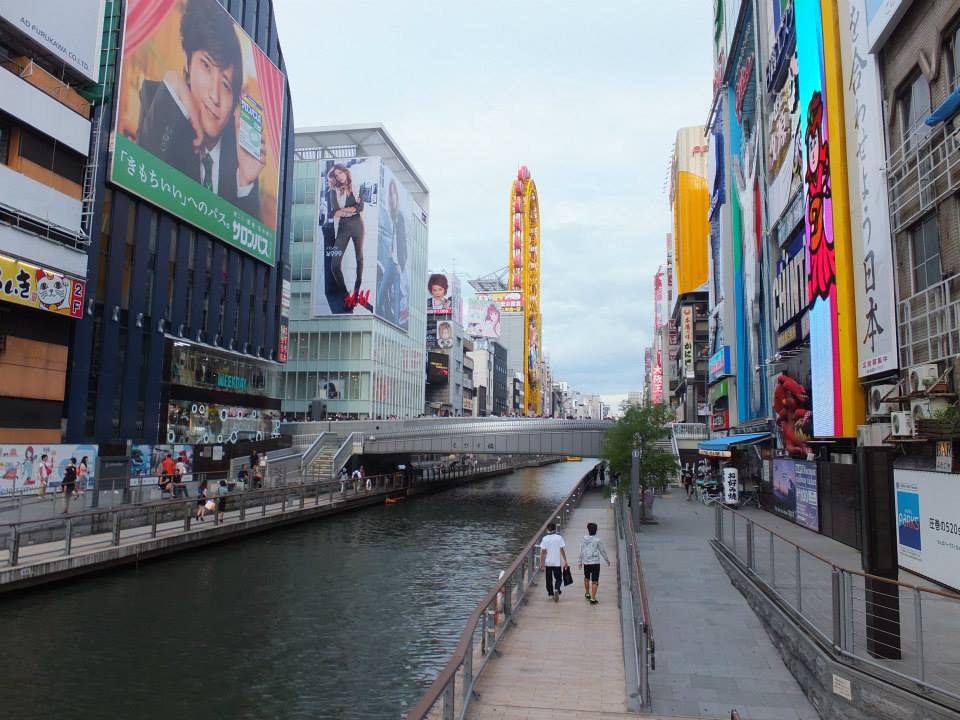
Dotonbori Canal in Osaka. Photo by Jose Ramos, September 14, 2013
After that it was a quick trip over to see Dotonbori canal and the “Glico Man”, one of the trademarks of Osaka – it is a neon advertisement of a running man that has been standing in Osaka since the 1930’s.
After some more shopping, we returned to Kyoto and called it an evening.
Tomorrow we go to Tokyo! I am starting to get a little worried since there is a hurricane heading straight for Tokyo… there will be rain tomorrow, and it looks like the heavy stuff will start hitting around Sunday night/Monday… hopefully we’ll make it in before the hard stuff hits…
ADDITIONAL COMMENTS
As you read, my first visit to a racetrack outside of the United States was phenominal. Jordan and I were both stunned, struggling to see how we could compare Hanshin to other tracks in the United States. We just could not. The atmosphere was great, and the fans were friendly and passionate.
Much as we would have loved to stay for all 12 races – which is typical of a JRA card – we had to press on with our plans.
It was nice to visit Namba and Dotonbori for the second time – Dotonbori is the area around the canal near Namba. We picked up a bag from a store in the shopping complex at Namba station for Jordan’s sister. It was the sales clerk that eventually redirected us to what winded up being another Fugetsu for another dose of okonomiyaki!
The Kansai Thru Pass ended up being a tremendous benefit for us today, as we had to do a lot of traveling to get around. Our route:
– Kyoto Subway to Karasuma
– Hankyu Kyoto Line to Juso (outside of Osaka)
– Hankyu Kobe Line to Nishinomiya-Kitaguchi
– Hankyu Imazu line to Nigawa – the station for Hanshin Racecourse
Then to Namba:
– Hankyu Imazu line to Nishinomiya-Kitaguchi, connecting to Imazu
– Hanshin Main Line to Osaka-Namba via Namba Line
When we were finished, we opted to take Kintetsu back to Kyoto
– Kintetsu Nara Line to Yamato-Saidaiji, outside of Nara
and finally
– Kintetsu Kyoto Line to get us back to Kyoto Station
Needless to say, we saved a lot of money today by using the Thru Pass for foreigners!
Since we had a little bit of extra money we opted to pay a surcharge to take Kintetsu’s premium train services back to Kyoto. A little circuitous, but it was very fast, very comfortable, and we were able to avoid the commuter train crowds during the evening hours. Oh yes, we could eat too. 🙂 I believe the surcharge was 870 yen per person to go back this way.
As you may know, the storm I was worried about at the end of the post ended up being the powerful typhoon that lashed across Japan. Let’s see how we ended up…. 🙂
I am re-posting my diary from my September 2013 trip to Japan. This is the report from September 13 with my girlfriend (now fiance) Jordan which recounts our visit to Hikone and Kyoto Tower.
The “tenshu” or main keep at Hikone Castle, undamaged through the centuries. Photo by Jose Ramos, September 13, 2013
Today we rested somewhat after spending the last two days bouncing around at a breakneck pace. This morning I walked the very short distance to (a very small) McDonalds to bring back some breakfast… a sausage McMuffin for Jordan and a sausage, egg and cheese mcgriddle for me. The noticeable difference from the US is that most McDonalds breakfast sandwiches in Japan have the same egg white/yolk one would normally find on a McMuffin.
We went to Kyoto station and departed for our trip to one of Japan’s national treasures, Hikone Castle. It was a surprise for me as the visit was wonderful. Hikone Castle is one of only 12 castles in Japan whose original keep has been undamaged and preserved through the centuries, and one of 4 castles designated as a national treasure. Jordan made a great call on visiting Hikone… the other alternative is the more famous Himeji, although Himeji is currently housed under large scaffolding for reconstruction works.
We opted to take the short ride on the bullet train from Kyoto to Maibara in both directions in order to relax… it was only a 20 minute ride between the two stations; Maibara is connected to Hikone by a 3 minute ride.
After returning to Kyoto station and partaking of some pork buns (again!), it was off to Kyoto Tower, the observation deck that is adjacent to Kyoto station. Apparently it was refurbished AGAIN, so I can now say that I have been to Kyoto Tower three times with three different scenarios: Before renovations (2004), after the first renovation (2008) and this year after the second renovation.
We then decided to go back to hotel and call it a day, but not before making seat reservations for our bullet train trip to Tokyo on Sunday.
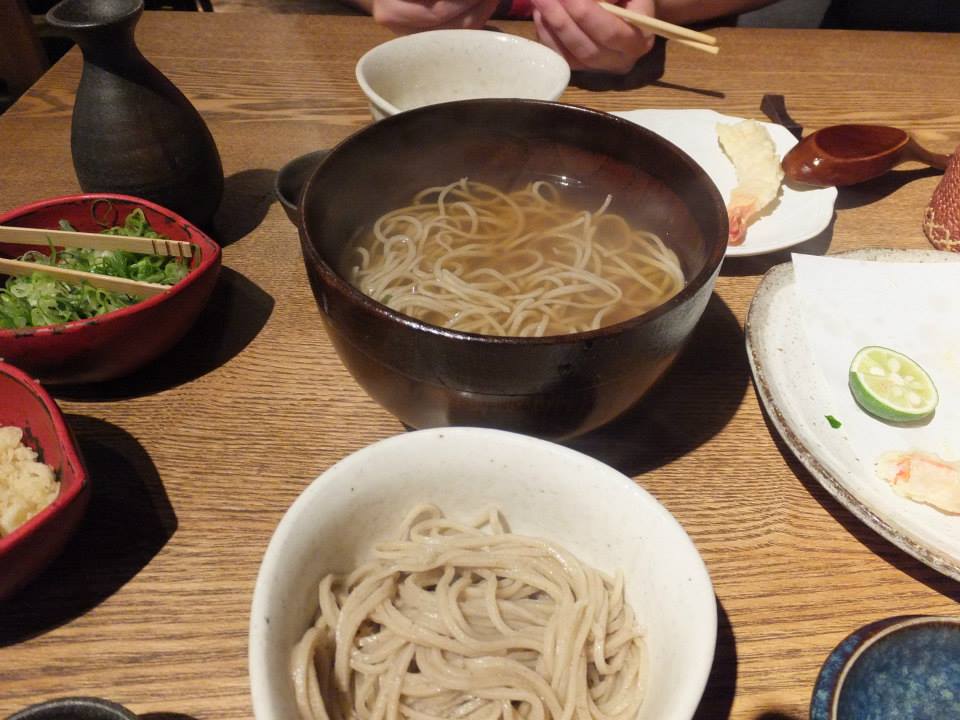
Noodle dinner at Yoshimura, Kyoto. Photo by Jose Ramos, September 13, 2013
Jordan and I just came back from a noodle restaurant called Yoshimura, which is between the McDonald’s and our hotel. It is a small place but very charming. It’s a two story restaurant.. chefs prepare the noodles from scratch in an open viewing room on the first floor, and then the chefs cook them upstairs where we sat. The set meal included hot or cold soba (we went for hot), prawn and vegetable tempura, a sashimi appetizer and a drink – we went for the specialty drink known in the country as “Nihonshu”… which us Americans call SAKE. We were a bit nervous at first when ordering, but one of the waitresses had a fairly good command of English which was a big plus.
Tomorrow we forward part of our luggage to our Tokyo hotel for Sunday arrival, and then spend a good part of the day visiting the Hanshin Racecourse near Osaka.
ADDITIONAL COMMENTS
What a treat it was to seem to be away from the bustle of Kyoto and discover the charm of Hikone. Of course, Himeji is a must on the typical itinerary of a visitor to Japan. Since 2010, though, Himeji’s castle has been covered by large scaffolding for a big renovation project. Many parts of the Himeji keep were closed to visitors at the time of our visit to Japan, and it is estimated that the entire renovation will not be completed until March, 2015.
It is a bit of a hike to get from the Hikone train station to Hikone castle… but it really is a pleasant walk to get there. Hopefully videos documenting this, and many other aspects of our trip, will be shared soon 😦
If going from Kyoto to Hikone, the easier option is to just take a JR commuter train (50 minutes, 1110 yen) that will take you the entire way. We opted for an alternative: we took the bullet train a short hop to Maibara, which actually goes past Hikone station a bit, then retraced and took a JR commuter train the opposite direction and went just one stop to Hikone station.
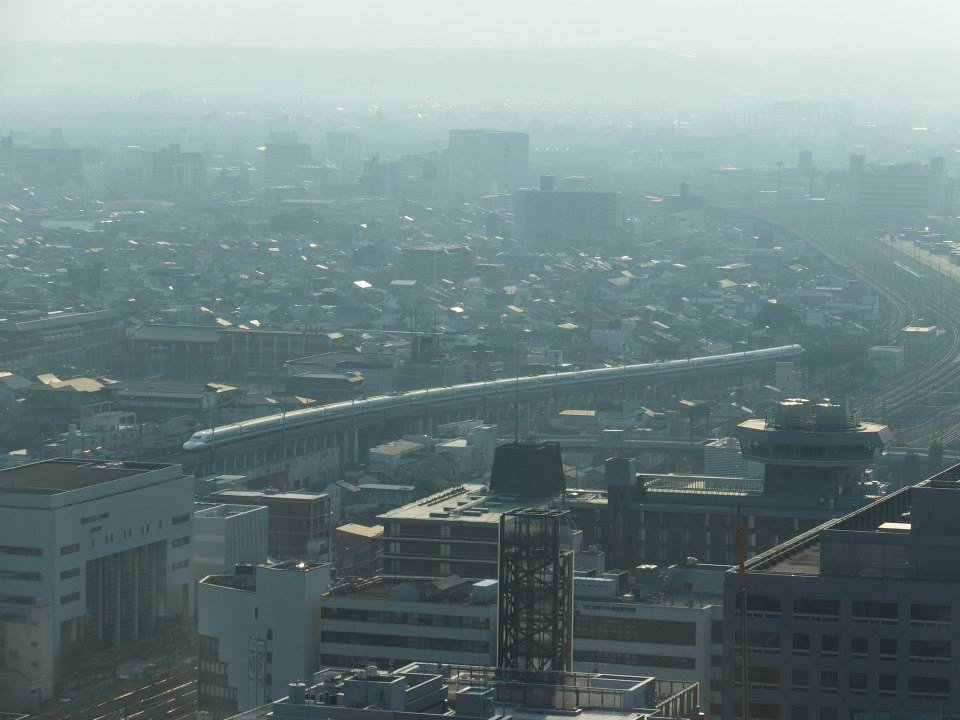
The “shinkansen” or bullet train as seen from Kyoto Tower. Photo by Jose Ramos, September 13, 2013
The bullet train selected for Kyoto-Maibara was the Kodama, which is the all stations bullet train service. A good majority of the seats on the Kodama are un-reserved – and cheaper – so the un-reserved tickets let us sit in any un-reserved seat on the train. This surcharge on top of the regular 1,110 yen fare is only 950 yen – so we paid 2,060 yen each for these tickets to Maibara. Then we purchased separate tickets (180 yen each) to go from Maibara to Hikone on the regular train. This was repeated for the journey back to Kyoto.
We opted for this alternative not just for the faster speed, but for the comfortable seating – not to mention the tray tables that allowed us a quick snack while on the 20 minute bullet train trip. These were things that we would not have gotten if just sticking on a commuter train for the entire trip.
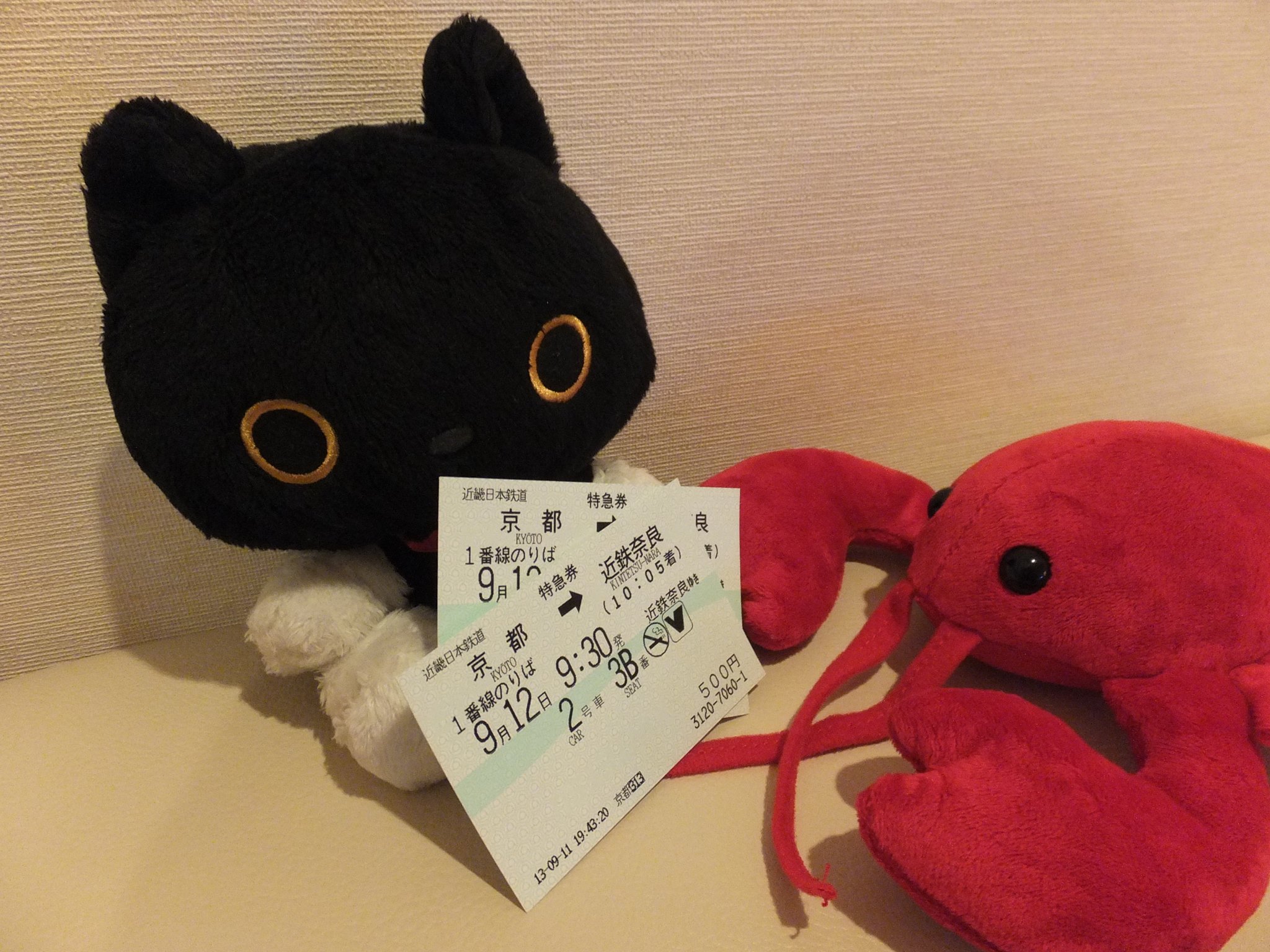
The reserved seat tickets for our trip to Nara. Photo by Jose Ramos, September 11, 2013
I am re-posting my diary from my September 2013 trip to Japan. This is the report from September 12 with my girlfriend (now fiance) Jordan which recounts our day trip to Nara and Osaka.
This morning we boarded the “Vista Train” at Kyoto station for the quick 35 minute hop to Nara, home of Todaiji Temple, and the Great Buddha statue housed in the world’s largest wooden building. It was quite a hike from the station, and again the weather was hot and humid.
We received a brief explanation from an English-speaking assistant at the entrance about the cultural significance of the temple. One of the more interesting facts that we learned is that the hall housing the great buddha statue is the third incarnation… previous builds were about 40% larger than what currently stands. The walk around was nice, and I can recall back to the last time I visited this hall in 2004.
Jordan interacts with deer in the city of Nara. Photo by Jose Ramos, September 12, 2013
On the way back and forth, we ran into a signature trademark of Nara: Deer on the road. Jordan and I bought deer snacks and the animals were happy to partake in the feast
Then it was on to Tempozan near the port of Osaka, home to one of the world’s tallest ferris wheels, one of the world’s largest aquariums, and a small mall to boot. It was here that we had the Osaka staple, Okonomiyaki, for lunch. Basically a cooked cabbage pancake filled with whatever ingredients one chooses… in this case the main ingredient was beef. It was Jordan’s first crack at the meal and both of us really enjoyed it. It was also the time that I reunited with green soda, melon flavored!
After the ferris wheel it was on to Kaiyukan (the aquarium), and we spent a good deal of the afternoon making our way around the tanks. She was happy to point out the large whale sharks that were on display, and other fish that were of particular interest. My favorite moment was the dolphin feeding, which I captured on video. We arrived just in time for it and the handlers were more than happy to feed them and have them do tricks for everyone!
The skies were dark as we left…. my feet were numb from standing in the commuter train as we got back to Kyoto. The day finished with dinner that Jordan was looking forward to partaking since we arrived, when she noticed a store selling large pork buns! Very delicious and professionally made, we might try this one more time before heading to Tokyo on Sunday.
Tomorrow’s plans…. not decided yet. We’ll rest and see what we decide to do.
ADDITIONAL COMMENTS
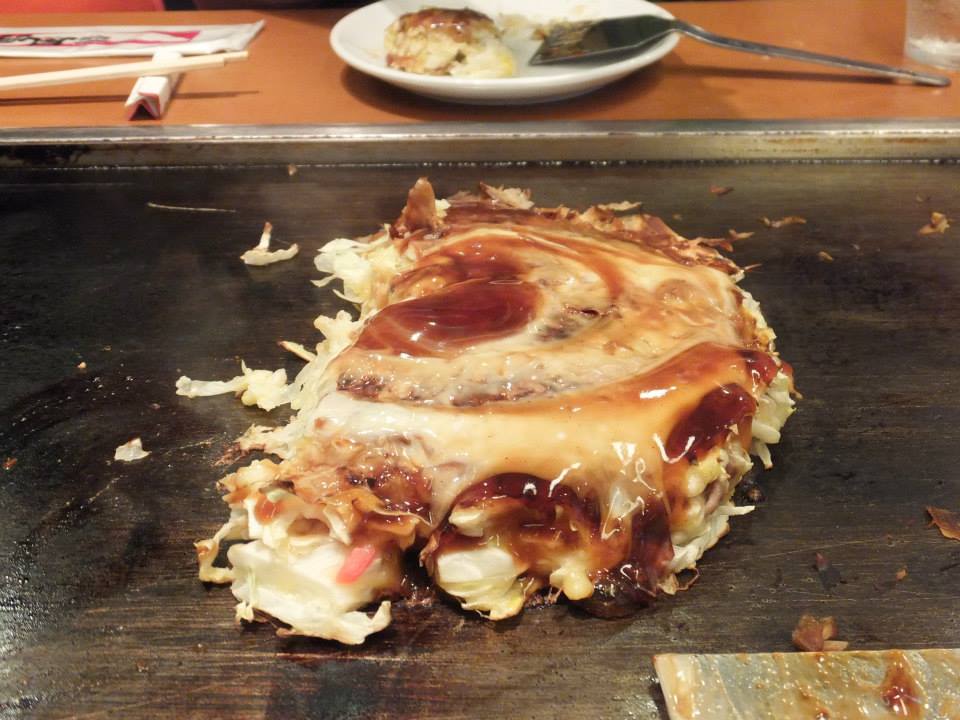
Okonomiyaki served at the Fugetsu restaurant at Tempozan Marketplace, Osaka. Photo by Jose Ramos, September 12, 2013
I am pretty sure that on my last trip to Japan in 2008, an old friend of mine – Sachiko – introduced me to Okonomiyaki. It’s been a few years… and I never realized how delicious it can be! It was a bit of an interesting experience the first time, with our lackluster (at best) command of the language… though after this visit we’d go back for Okonomiyaki in Kansai and Tokyo a few times before our flight back to New York. Jordan and I have yet to figure out what New York restaurants offer good Okonomiyaki 🙂
I should also mention that the routes we used for a majority of this day’s trip were fully covered by the Kansai Rail Pass. This included the Kintetsu from Kyoto to Nara, and again from Nara to Tempozan/Kaiyukan in Osaka. Many of the urban and suburban transit systems in Japan will often run on to other train lines. Case in point – from Nara we took the Kintetsu to an intermediate station, Ikoma – in the suburbs – where we switched to the Kintetsu Keihanna Line. 10 km and 4 stations west of Ikoma, the same train that we were on continued on to the Chuo Line of the Osaka Subway. This took us directly to Osaka-ko, the station for Tempozan and Kaiyukan, and eliminated the need to change between lines in the middle of Osaka. If you do your research, you can find alternates like this that will make your travel a little easier.
It got pretty late for us this day, so we opted paying for the faster (and as it so happened, crowded) JR line to go back to Kyoto.
Jose posing in front of Kinkakuji in Kyoto, September 11, 2013. Photo by Jordan Martin
I am re-posting my diary from my September 2013 trip to Japan. This is the report from September 11 while staying in Kyoto with my girlfriend (now fiance) Jordan.
Today was a whirlwind day of sightseeing that left us tired at the hotel when everything was all said and done.
First order of business was to go to Kyoto Station to purchase the three-day Kansai Thru Pass. This is an economical pass that allows unlimited travel on private railways in the Kansai region for 2 or 3 days, and it is only available to foreign tourists. With that done, we were on our way to the first destination, Kinkakuji Temple. We could have joined the long lines for the city bus at Kyoto Station, but instead we opted to take the subway, then take the bus. I can see why this method of travel is recommended… Hassle-free and room to sit (on a weekday morning, granted) and the trip was actually quicker.
Kinkakuji was a wonderful place – a first for me as I’ve never been there. The gold leaf plating was a sight to behold… of course, so impressive that we were not allowed within a good 20 feet of it…
Next stop was Ryoanji, which was a pretty quick trip on the then crowded bus. Ryoanji was our first stop in which our shoes had to be removed before entering.
The rock garden was beautiful… there are a total of 15 stones in the garden and it’s said that when viewing the garden from the angles provided, one rock is always hidden from view. Ryoanji was actually quite a small place otherwise. One thing I did notice was that there was a row of about 15 red water buckets lined up along the side of the main temple…. fire buckets in case the worst should happen.
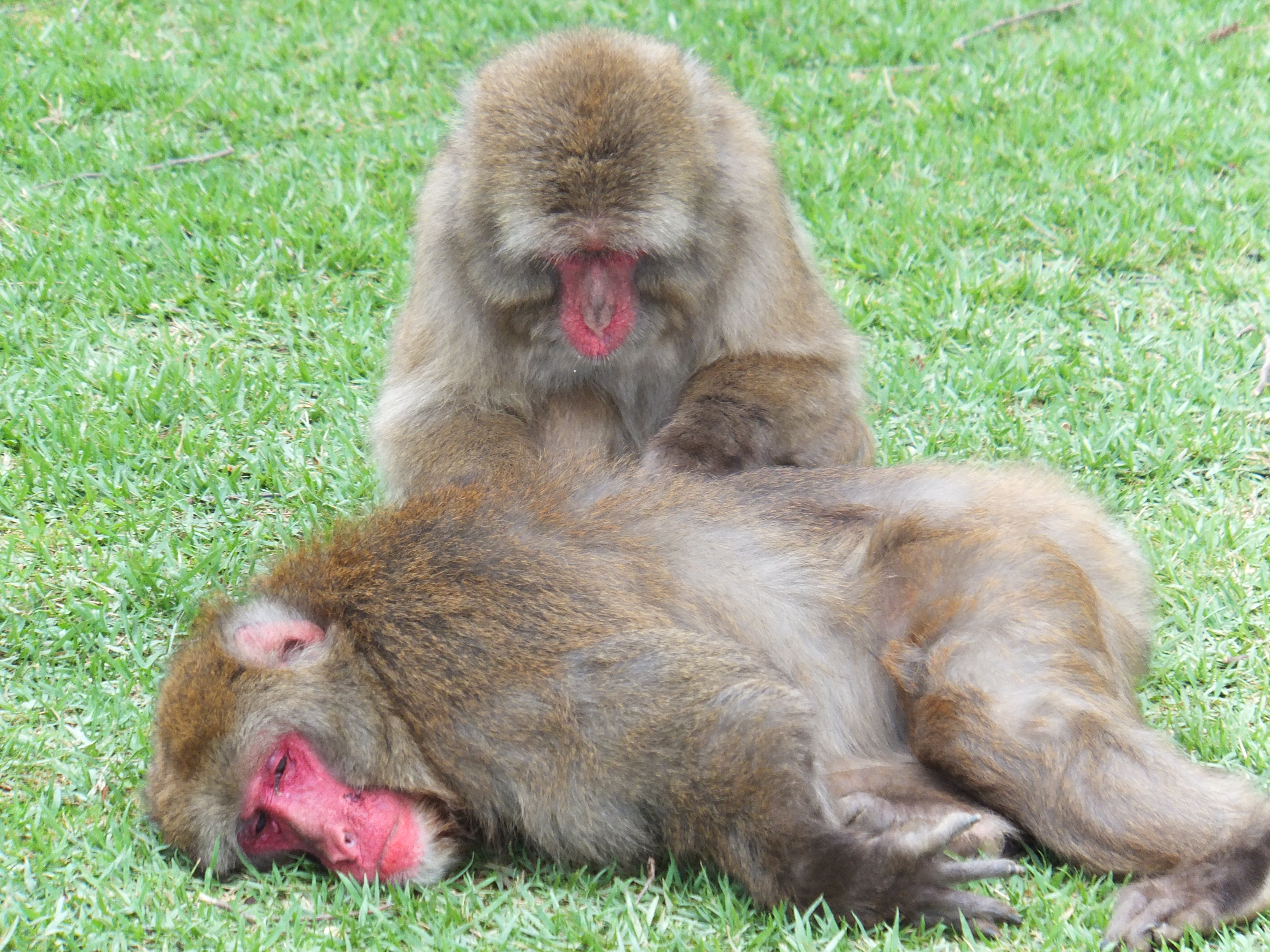
Monkeys at Iwatayama Monkey Park in Kyoto, September 11, 2013. Photo by Jordan Martin
From there we walked to the tram for the trip to Arashiyama. After having a delicious curry lunch next to the station, we went to the Monkey Park. A long, looong uphill climb (for me at least… Jordan was fine) – but we were rewarded with monkeys and an impressive view of Kyoto City and the surrounding mountains from a height of approx. 520 feet above sea level.
We returned on the Hankyu Railway which zipped us back to the subway for the ride to the hotel.
This evening we went to Kyoto Station again for dinner at a rotating sushi restaurant, which was fun for the both of us – this is a place that I’ve been to now in each of the three trips I’ve made here, but the first time I’ve seen all of their menu items translated to English.
After the sushi we went to the Kintetsu Railway station to purchase our “Vista Car” limited express tickets for tomorrow’s journey to Nara, and called it a day.
Over the next few days I am hoping to re-post my diary from my September 2013 trip to Japan. Here’s the first post, written the morning after my arrival in Kyoto.
My travel companion is my girlfriend (now fiancé), Jordan, along with the unofficial ‘trip mascots’, a plush lobster and cat. We are joined by our friend Daniel from Canada later in the trip.
Ok everyone! Here’s a summary of our Japan trip so far….
Check-in at LaGuardia went well and we got to Detroit with no issues.
When we got onto the plane in Detroit, it was discovered that in the business class cabin a few rows ahead of us, one of the overhead baggage bins was missing a federally-mandated weight limit sticker.
That’s right, we were delayed a little more than an hour just because there was a small sticker missing on the plane.
Soon after I saw an airport worker use packing tape to put the new label on the plane, we were on our way.
The flight was a little rough… we tried to sleep but it was difficult. Especially because there was a (insert bad word here) directly across from us on the opposite side of the plane that would open his window fully every 20 or 30 minutes. Didn’t seem like he needed to sleep at all, cause this happened from start to finish. NO consideration whatsoever!
We landed in Nagoya in the evening (only 20 minutes late), and were bowed to by the airport workers as we stepped off of the plane, which was a nice treat.
Immigration and customs went smoothly, we got our big bag sent through to the luggage delivery service, and only 70 minutes or so after we landed we were on our way to Nagoya station by way of the Meitetsu “Myu-sky”.
We connected to the shinkansen in Nagoya city (Nozomi 253)… we were at Kyoto station by 9 PM and in our hotel by 9:30.
The good thing is that we both slept well, though I had to check on the air conditioning every few hours or so. Turns out the AC was in “HEAT” mode instead of “COOL” mode!
Off to breakfast, then to our plans for the day which will hopefully include Kinkakuji (Golden temple) and a monkey park.
We did not take photos or videos last night as it was pretty dark anyway, and we were both worn out. But we’ll be on the task today.
Say a prayer for us as we start the first full day in Kyoto!
ADDITIONAL COMMENTS (Feb. 2014)
Nagoya Airport – technically Chubu Centrair International Airport – was a real pleasure to fly into. The arrival formalities were very straightforward for an airport that is now Japan’s third major gateway for International flights behind Tokyo and Osaka… the airport had only opened in 2005.
Seeing the bowing airport workers was a surprise to be sure… What I liked especially about the airport was that all of the arrival procedures were on a single level – a very short walk from the airport to Quarantine, then Immigration, then Baggage Claims, then Customs, then the exit.
Luggage delivery service is a tremendous benefit for passengers with large suitcases. You can have your luggage delivered to any destination in Japan for a reasonable cost. This allows you to carry light luggage onto whatever mode of public transport being used – many of which don’t have spaces for large suitcases. If I remember correctly, it only cost us about 2,000 yen to transport our large suitcase from Nagoya to our hotel in Kyoto.
Our starting city was Kyoto. There is an airport much closer to Kyoto – Kansai Airport. But for some reason it would cost both of us several hundred dollars extra to fly there. Working out the expenses, it turned out to be a cheaper journey if we flew into Nagoya Airport, took the airport train to the center of the city, and then took the Shinkansen for the quick trip into Kyoto.
Our itinerary for the trip was ‘open-jaw’. By starting in Nagoya and ending in Tokyo, instead of doing a round-trip in and out of Tokyo, we were able to maximize our sightseeing time, not to mention the difference in airfare was only a few dollars.
In the airport’s access plaza is the entrance to Meitetsu and their airport train, as well as a Family Mart, one of the top convenience store chains in Japan with over 10,000 outlets. That’s where Jordan fell in love with the Family Mart-brand soy sauce crackers. None could be found in Kyoto, but there’d be plenty of these to snack on once we got to Tokyo later in the trip.
Well greetings to my first post of 2014. There have been so many events in my life, personally and professionally, over the last several months that I haven’t had the chance to write anything here. Hopefully that will change soon.
Oh and something else happened since my last post. I WENT TO JAPAN!
I did write some daily updates from my trip last September on my personal Facebook page, so perhaps the best thing for me to do is just copy these over for everyone to look at.
In the last few days I heard from a man named Dave, who discovered my blog and asked me questions about a potential trip to Japan later in the year. I was happy to help him out!
Hopefully I’ll review what I have here, make any updates to posts where required, and start sharing my trip journals shortly.
If you’ve read through the blog and have any questions about your trip, please ask and I’ll be happy to help you out the best that I can.
I’ve mentioned on this blog before about bus travel in Japan, including a sample fare breakdown on my (not sure why) popular post, Tokyo to Kyoto for 2,300 yen.
Lately, though, I’ve been noticing that the JR bus lines, whose main routes are prominently featured on a specific website (Japanese only), are offering different fares for different dates. To me, it’s a whole lot of confusion, especially when trying to plot trip budgets.
Perhaps this blog post is more of a vent, but here goes:
In the past, there used to be only one flat fare for certain buses, or two fares depending on the day of the week that the bus would depart. Now, many JR buses – in particular those traveling the heavy-trafficked route between Tokyo and Kansai – are offering…. ELEVEN different fare structures??
Clicking through to the standard overnight bus offering, the “Dream”, there is a section way at the bottom of the page where you click to see the fares… now listed in a PDF file.
A sample of the different fare structures for JR Bus’ “Dream” taken from their website.
And there you see the calendar… with different colors for different days of the week. I’ve included a snapshot here to list an example. Upon looking below at the fare chart, there are ELEVEN different colors – that’s eleven different fare structures – ranging from red, the most expensive, all the way down to blue.
Red is reserved for high-demand travel days. In the example shown, there are some days in August marked in red that center around the Obon travel holiday. These have the most expensive fares – 8,800 yen from Tokyo to Osaka, for example – and they do NOT offer discounts for advanced purchases. Next on the scale is pink, which on the calendar is marked on the week falling between the two red weekends in August. Now the fare is slightly lower at 8,600 yen, with a discounted fare of 8,000 yen for a 5-day advanced purchase.
The lowest fare on the calendar is the cream color… which can only be had on most weekdays in July, and a few weekdays in the last week of September. Now it’s only 7,200 yen for a Tokyo-Osaka trip. A 5 day advanced purchase runs 6,000 yen, and a 3 day advance is also offered for 6,300 yen.
Those are the facts… but it’ll all be a moot point when I say that you can’t do an online booking for JR buses in English anyway.
You can book seats on buses when you get to Japan… Either at a bus station or even at a JR railway station (green reservation counter)… but if you want to book a trip on a bus before you get there, Willer Express is now turning out to be the clear-cut willer… er, winner.
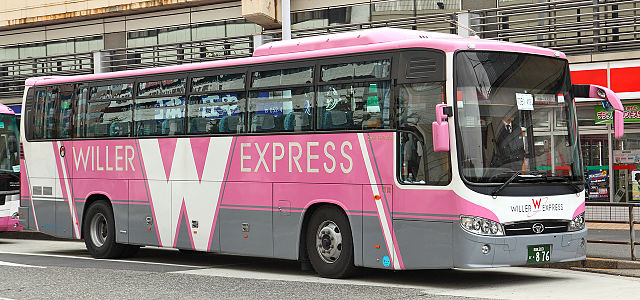
Willer Express bus. Photo by Wiki user Tennen-Gas, CC BY-SA 3.0
Willer Express’ website for English bus reservations is extremely easy to use, and I believe they are making a special commitment to accommodate non-Japanese passengers – especially with their Japan Bus Pass option that allows 3 days worth of bus travel for 10,000 yen or 5 days for 15,000 yen. Willer Express also has a lot of different seating types to choose from, not just the three or four seating types found on the JR bus lines – but these seats are clearly described for you on the site.
Just one caveat with Willer is that you are not allowed to request a certain seat assignment… window, aisle, or anything of the sort. Willer will assign seats on the date of departure based on the number of passengers in your group, and believe it or not, the gender as well. Willer will not seat men together with women unless they are in the same party.
But of course, the main point…. prices are clearly listed on the site for your intended date of travel.
Willer Express comes out on top in these categories, and I recommend that you check them out when it comes to long-distance budget travel in the country.
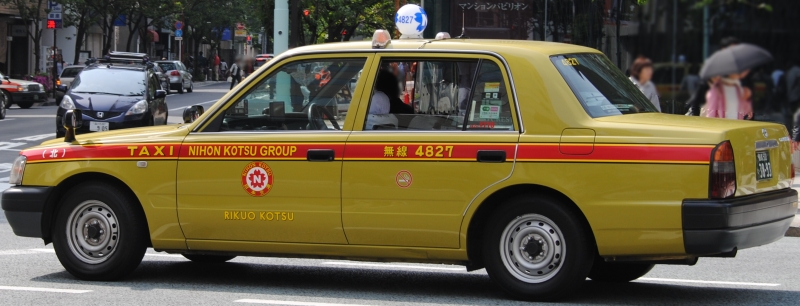
A typical Japanese taxi cab. Public domain photograph from Wikimedia Commons.
Today’s post is about the impeccable system of Japanese taxi cabs. I’ve been fortunate to take a few taxi rides in Japan, and I’ll probably have to rely on the taxis a little more when I visit next month.
Japanese taxi cabs are impeccable, and there are many types to choose from… from the standard, bright colored taxi cabs, to the black cabs, to the high-octane or hybrid variety… if you happen to visit Sapporo, you might stumble upon a taxi decked out with your favorite Anime character.
When you plan on using taxis in Japan, it might help you to figure out the cost beforehand. Public transit is the way to go in most cities in the country, as the fares for taxicabs are expensive (the usual “flag fare” is around 700 yen or so, racking up as you go). However, in rural areas a taxi might be the best way to your destination. Otherwise, traveling in groups of 3 or 4 in a taxi may prove to be as economic as regular public transit. And of course, in the late night when no public transit is to be had, it’s either the taxi way or no way.
Today I would like to introduce two websites that I would recommend for finding out taxi fares. One is easy to understand and gives a fairly rough estimate, while the second is a little more precise but in Japanese.
First, I recommend the Taxi Fare Finder website, which not only shows taxi fares for major Japanese cities but also for other cities around the world. Simply type in your starting and ending points (i.e. train stations, major attractions, etc) and it will plot the most direct route and show you an estimate of how much you can expect to pay.
The other one, which I like especially, is the Japanese “Taxi Fare Simulator” offered by Nihon Kotsu (日本交通), which I believe is the largest consortium of taxi cabs in the Tokyo area. Note that I said: JAPANESE, which means you need to do this in Japanese…. Right? Well… there are a few tricks that you can use to get by.
First of course, you’ll want to make sure that your web browser is set up to display Japanese characters.
You will see this on the home page:
Input from Nihon Kotsu Taxi Fare Simulator.
Going over the form:
出発地 is your starting point 目的地 is your destination 経由地 is the “via” point, or the area that you would like to pass through on the way to your destination.
Below those, there are two check-boxes: 深夜割増 applies the Nighttime surcharge, which taxicabs in Japan apply during late night and early morning hours (in Tokyo, it is a 20% surcharge added to the fare for travel between 22:00 and 5:00 the next morning) 高速道路を使う asks the simulator to route you via the highway instead of regular roads, which may be faster but will probably cost more. Highway fares are not included in the fare estimate that it gives you, and will be added on to the fare at the end of the trip.
So now we need to plug in the information, which requires some Japanese… or does it?
The Nihon Kotsu simulator uses Google Maps… which means that your search may work if you type things out in English! Let’s take a look.
Say we are arriving into Tokyo on the Shinkansen and we want to take a taxi to the hotel that we are staying at. In this case my random selection is a hotel I’ve stayed at before: The Sutton Place Hotel Ueno, which is not too far from Ueno station.
Let’s try typing this in to the system: 出発地 : Tokyo Station 目的地 : Sutton Place Hotel Ueno
Now press the orange button. If you did not enter a “via” point in the field labeled 経由地 then the simulator will try to find the most direct route to your destination….
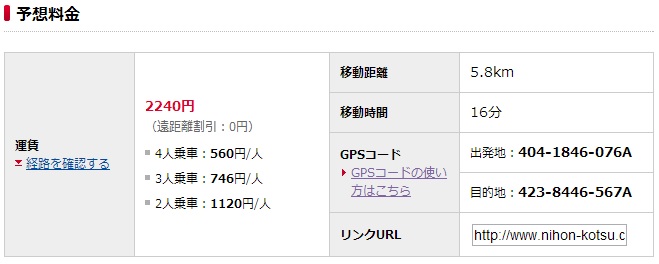
Sample result from Nihon Kotsu fare simulator
Well what do you know, it DOES work in English!
Let’s review what we see here:
The fare is estimated to cost 2,240 yen from Tokyo Station to the Sutton Place Hotel Ueno.
The figure below the fare marked 遠距離割引 indicates if your route is eligible for a long-distance discount (in this case, it’s too short to qualify)
Below the fare you will see the breakdown per passenger for groups of 2, 3, or 4 (the maximum number of passengers the regular taxis will carry). Wow, 560 yen per passenger for a party of 4 is not too bad!
Moving to the right side of the page:
移動距離 is the route distance, in this case 5.8 km 移動時間 is the estimated travel time, in this case 16 minutes
GPSコード
GPS Code? Now this is interesting. Nihon Kotsu’s taxis are monitored by a Global Positioning System. This is used so that Nihon Kotsu can keep track of their taxis, and to dispatch them to calls. Apparently, specific locations are given a unique GPS code number. So the GPS Code for Tokyo Station is 404-1846-076A and the code for the destination hotel is 423-8446-567A.
When taking a taxi, it helps to hand the driver a piece of paper with your destination printed or written in Japanese, as certain destinations in Japan can sometimes be difficult to find (especially in Tokyo where there are main roads and side roads all over the place!). But if you are traveling in Tokyo city on a Nihon Kotsu taxi, and you have this GPS Code written down, then it might be the easiest thing to show the driver the GPS code! Welcome to the wonders of modern Japanese technology.
By scrolling down on the page, you can see the direct route that the simulator has plotted.
You can try other destinations for yourself… Or if you are not satisfied with the route that you see, simply dragging points A and B on the map to desired start/end point will redraw the most direct route and re-calculate the fare.
One more thing to add about Nihon Kotsu… while you can hail a cab by yourself along the road side, join an official taxi queue at a train station, or have your hotel call ahead for a taxi on your behalf, you can also call for a taxi yourself. If you are in Tokyo and have access to a telephone, Nihon Kotsu offers a 24 hour reservation hotline… in ENGLISH! They are currently the only company in Tokyo to offer a taxi booking in the English language. The telephone number is: 03-5755-2336. Tell them where you are and they will dispatch a taxi to you. Note though that this booking service costs 400 yen, which is added on to the taxi bill at the end of your trip.
A few closing comments about taxi cabs, which apply to most trips:
– If you are hailing a taxi cab, look for one with a display on the front with the following Japanese characters:
空車 – this means that the taxi is available.
Other displays that essentially say “you can’t use this taxi” may include:
賃走 – the taxi is occupied 予約 or 迎車 – the taxi is already reserved for someone else 回送 – the taxi is not in service
– At night, a lit light on the top of the cab is also an indication that it is available.
– In most Japanese cabs, the driver will remotely open and close the left rear door, so don’t try to do this yourself. There are a small number of exceptions (i.e. MK Taxi cabs in Kyoto) where the taxi driver will come out and personally open the door for you.
– There is luggage space in the rear of the taxi cab that can fit a couple of regular suitcases.
– There is no tipping in Japanese taxi cabs… the fare that you see is the fare that you pay. Remember, any extra charges (such as highway tolls and reservation fees) are added in and paid at the end of your journey.
– Don’t be alarmed if the taxi driver wears a neat uniform… this is the norm in Japan. All taxi cabs are kept meticulously clean inside and out, and drivers typically wear white gloves.
In addition to the usual disclaimer, keep in mind that the fares shown in the above websites are estimates and may not factor in changes such as different routes, or driving in traffic conditions. Also, taxis may charge flat fares for certain trips (for example, from a major airport to the city, like Narita-Tokyo or Haneda-Tokyo).
One final suggestion… be nice and courteous to your driver! They are typically courteous and it’s nice to offer the same in return, especially since they typically work long hours during the day. My research of a couple of promotional YouTube videos for Japanese taxi companies, particularly in Tokyo, infer that cab drivers work in shifts of 20-22 hours at a time! No wonder there are so many Japanese taxi cabs and drivers to go around.
Just a quick note to say thanks for reading my Japan blog! It’s quite a busy time for me, as I am away at my summer job while simultaneously finalizing my plans for my third trip to Japan next month!
I also wanted to thank those who have been writing to me, either through this blog or via e-mail, with their questions about their upcoming Japan travel. I’d like to note that it may be difficult for me to answer any messages over the next few days, as I will be very busy with work… but I will do my best to answer any messages as soon as I am able.
Of course, I need to blog some more as well! I’m considering perhaps doing some updates here while in Japan, and there’s a certain topic that I want to get off of my chest before I make the trip!
Thanks again for reading, and for your patience! 🙂







 Jose's Japan Tips